

Ever since the creation of Pakistan and the ensuing problem of accession of the Princely State of Jammu and Kashmir, the Kashmiri people have been suffering under the unjust Indian occupation. Despite India’s military and political manoeuvres in the occupied Kashmir, the majority of the local population has been demanding its right to fair plebiscite […]
Pakistan’s nuclear strategy
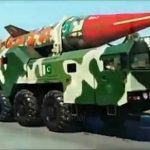
A nuclear South Asia has altered the strategic doctrine and culture in the region. For India, it was principally to discourage China and retaliate for the mortification it faced in 1962. For Pakistan, it was to ensure the larger state, i.e. India, would not get involved in any misadventure. Pakistan needed to wind up plainly […]
Nuclear deterrence in South Asia
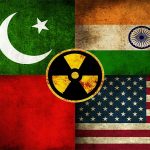
The deterrence equilibrium in South Asia serves as an assurance for peace and stability in the region. The strategic significance of nuclear weapons in the South Asian security equation is undeniable because these weapons reduce the chances of war and conflict between the belligerent states. In the South Asian security paradigm, nuclear deterrence is viewed […]
Dynamics of nuclear escalation in South Asia
In the past few decades, development in conventional and nuclear spheres have rapidly transformed the security scenario of the South Asian region. Deterrence is considered the key element to maintain stability and peace in the region. However, various ‘technical’ and ‘non-technical’ elements play a central role in determining the conventional and nuclear deterrence to achieve […]
Nuclear politics in South Asia
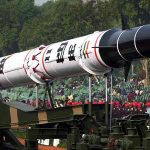
The strategic framework in South Asia is comprised of a bipolar equation between India and Pakistan, inter-connected with a regional security complex and other major powers. In South Asia, it is believed that peace and stability can only come about with nuclear weapons. Nuclear arsenal is characterised as a great equaliser and the ultimate tool […]
Pakistans TNW saga: facts and fiction
The existence of an action-reaction spiral between South Asian nuclear rivals has increased the fragility of regional strategic stability. India’s military modernization drive comprised of military stockpiling and war-prone military strategies such as Cold Start Doctrine (CSD) is considered alarming for deterrence stability in the region. The worrisome reality about India’s military modernization based […]
Indias membership of MTCR: Scope of Non-Proliferation and emerging regional Challenges
The concerns about nuclear proliferation have compelled the strategic thinkers to continuously strive for establishing multiple legal tools to prevent the nuclear proliferation. As a result of such efforts, various non-proliferation regimes have been established to counter the risk of proliferation of weapon of mass destruction (WMDs) and control the transfer of nuclear related material […]
Nuclear deterrence has brought stability
The month of May remains very important in Pakistan’s history from the point of view of national defence. On May 28, 1998, the defence of Pakistan was made invincible as Pakistan conducted six nuclear tests in response to five tests conducted by India. It is important to note that India had conducted nuclear tests […]
BMD and MIRV technology in South Asia
China, India and Pakistan share a history of military confrontations. A number of dynamics like conventional asymmetries, nuclear offensive and defensive capabilities, the arms race, ballistic missile development and an absence of crisis stability mechanism have increased the fragility of strategic stability in South Asia. In the South Asian region, the arms race is proportional […]
Irans Ballistic Missile Programme
Conflicting trends and deeply rooted threat perception play a key role in shaping the security and political matrix of the Middle East. These trends have let regional powers pursue defence modernisation. Whereas, amongst all elements, missile proliferation in the region is more evident because of two factors; first, perusal of confrontational asymmetric strategies against great […]