ISLAMABAD: Pakistan is urging the international community to adopt a three-pronged approach to Afghanistan following the Taliban takeover – quickly deliver aid to 14 million people facing a hunger crisis, promote an inclusive government, and work with the Taliban to counter terrorism in the country.
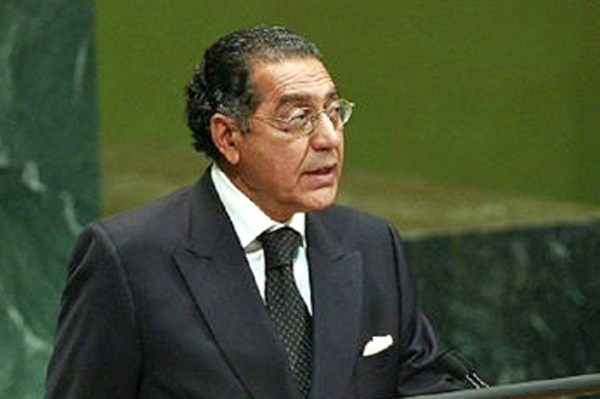
Pakistan’s ambassador to the United Nations Munir Akram laid out the vision of the government of Pakistan for a future international role in Afghanistan in an interview on Thursday, saying Pakistan had been in contact with regional countries and the broader global community on working together on the three priorities.
He stressed that humanitarian help must be the top priority and called it “very unhelpful” for Afghanistan’s assets to have been frozen, by the United States and others, because this leaves the Taliban with no access to dollars or foreign exchange to buy food or import oil.
“There will be inflation. The prices in Afghanistan will rise further. The poverty level will rise,” Akram warned.
“You will then have a refugee crisis which is exactly what the West is afraid of.”
He called his country’s influence on the Taliban “exaggerated”, though he said Pakistan had “a fairly relaxed policy” towards the three million Afghan refugees on its soil.
“We know better than others that you cannot force the Afghans to do anything, and I think the experience of the last 40 years has indicated that nobody actually from the outside can dictate to the Afghans,” he said.
“So, persuasion, yes. Talks with them, consultations, yes. But it’s very difficult to persuade the Afghans.”
Pakistan initially brought the Taliban to the negotiating table to get them to stop the onslaught and go back to talks. Akram said Pakistan’s prime minister and army chief went to Kabul to talk to former Afghan president Ashraf Ghani and invited the leadership to Pakistan.
But Ghani “remained intransigent about reaching a political settlement with the Taliban” and the Taliban also had “a very strong” position against negotiations, he said.
With the Taliban now in control of the country, Akram said Pakistan hopes its leaders “will listen to a sincere friend in trying to form an inclusive government” where all the ethnic groups and minorities including Tajiks, Hazaras and Shiite Muslims are represented.
“I think that if they are responsible, they will see the wisdom of inclusive government, and hopefully, we will have a government which can bring actually peace to the country,” he said in the virtual interview from Geneva.
On the education of women, he said, “I think that the Taliban at least are conscious of the fact that their policies towards women the last time were horrible, that they were unpopular within the country as well as outside the country, and that they have therefore promised that the rights of women will be respected within the framework of Sharia or Islamic.
“Of course, Sharia law is quite broad and can be interpreted in different ways,” he said. “We hope at the very least that there will be no coercion, there will be no imposition, and the basic fundamental rights of women to be able to work, to have freedom of speech, to have the ability to educate themselves will be respected.”
Akram repeatedly stressed that “one of the mistakes” the United States made in Afghanistan and Iraq was trying to impose Western democracy. “A foreign culture cannot be imposed on a people,” he said.
After the Sept. 11, 2001 attacks on the United States, Akram said the Americans also made “a fundamental mistake” by focusing on elites in the cities who benefited from the building of modern society while ignoring the development of 70 percent of the Afghan population who live in rural areas and whose lives in poverty remain unchanged after 20 years.
Akram said the Taliban’s support has been based in rural areas and villages where the “corrupt government” in Kabul “was unable to bring clear, transparent, honest governance.” Akram said the international community needs to help Afghans in rural areas educate themselves and acquire knowledge of the benefits of modern societies and modern values including human rights.
Another important objective for the international community “is to engage with the Taliban in order to address the problem of terrorism from Afghanistan,” Akram said, citing terrorist groups linked to al-Qaida and the Islamic State as well as others targeting China and Pakistan.
“We have to get a grip on all these terror groups, and we will not be able to do it by being selective,” he said, citing the U.S. saying it will attack the Islamic State affiliate that claimed responsibility for the Aug. 27 suicide attack outside Kabul’s airport that killed at least 169 Afghans and 13 U.S. service members.
He said Pakistan would wait to see how inclusive the Taliban government was and how well it was received in Afghanistan before deciding whether to recognize it.
“Our hope is that the Taliban with their actions, with an inclusive approach, will be able to bring together not only the whole country … but also the international community and the regional countries,” Akram said.