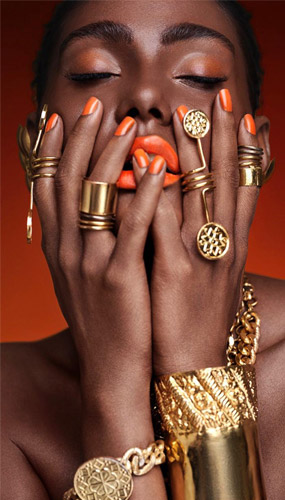
 Top model Zara Abid recently received a lot of backlash for promoting a blackface in such a way that it comes under cultural misappropriation.
Also phrased as cultural appropriation, it is the adoption of elements of one culture by members of another culture.
The dusky model did a photoshoot for Nabila’s which is aesthetically pleasing but she has been made to look like a black woman which she’s not.
People who called out the model and brand pointed out the problem which is, how it is appropriate to paint a fair-skinned model darker? Ideally, instead of enhancing Zara Abid’s skin tone, a model who’s already of the colour which the brand aimed for should have been utilised.
‘I’m distressed by the fact that I had to enhance Zara’s shade 6 (Zero Makeup) complexion into a shade darker, due to lack of acceptance by our local modelling agencies who hesitate to have a pool of dark skinned models. Moreover, it’s hard to find girls with diverse skin tones who are willing to model succumbing to societal norms’
Many argued that dark-skinned models already have limited opportunities and shouldn’t be deprived of the ones which celebrate their skin tone at least.
Abid responded to the backlash saying, “I’m a proud dark skinned model.” She shared that many refused to hire her when she started modelling due to her dark skin tone.
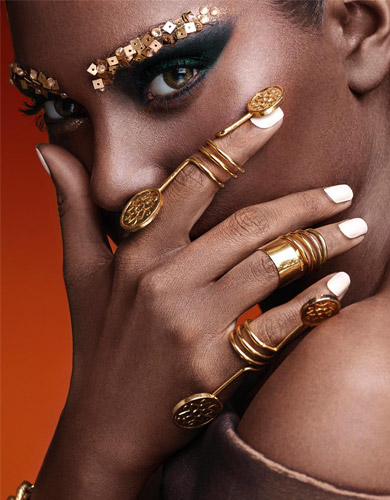 She wrote on Instagram, “I’m the first hand victim of discrimination and colourism that exists in the society. “The pictures shared of the shoot that have been circulating have been misconstrued and manipulated by the social media users who are often too quick to jump to conclusions.”
The model clarified that her skin tone has been enhanced because she wants to empower her dark complexion. “There is a lack of representation among our dark skinned girls. Why? Because people want to see fair faces donning products as there is a longstanding and deeply-seated colonial insecurity that has always been a part of our society.”
Abid questioned why people weren’t enraged when she was made two to three tones lighter at multiple occasions.
“Why didn’t people stand up when I was portrayed as a lighter skin tone and are only enraged when I’m trying to represent the darker side of my population?” the model asked. “It’s high time we stop shaming dark skin and embrace it with open hearts and mind.”
Intentional or not, this creative decision has been deemed as racially insensitive by many and regarded as a case of cross-cultural pollination gone wrong.
Tabesh Khoja, from Nabila’s who uploaded the images that received backlash, also responded, “I am compelled to address something that has been making the rounds on social media. The recent shoot that I uploaded became the target of cultural misappropriation and colourism/racism. The fact is that the reaction to the shoot has been blown out of proportion, largely misconstrued and heavily manipulated. Abid is a dark skin model. She’s stunning and utterly unapologetic about her complexion. However, people are ignoring her natural skin tone, choosing to lighten it up through makeup and Photoshop. This shoot is not a representation of any particular culture. As Pakistanis, we often overlook our very own diverse skin tones. Brown is beautiful, dark is divine and all complexions are equally stunning. Shame on you guys for shunning these dark skinned beauties. I’m distressed by the fact that I had to enhance Zara’s shade 6 (Zero Makeup) complexion into a shade darker, due to the lack of acceptance by our local modelling agencies who hesitate to have a pool of dark skinned models. Moreover, it’s hard to find girls with diverse skin tones who are willing to model due to succumbing to societal norms. Why? Because dark girls don’t sell. Why? Because clients don’t want dark skinned models. Leaving the industry without a diverse skin tone representation of our indigenous population. Where does this cycle of discrimination end? Our freedom of speech, expression and creativity must not be hijacked by narrow-minded, superficial, judgmental people. Stop bullying. Stop manipulating. Stop distorting facts and intentions and most importantly, stop colour shaming.