• Skip to primary navigation
  • Skip to main content
  • Skip to primary sidebar
  • Skip to footer
Trending:
  • Kashmir
  • Elections
Friday, June 5, 2026

Daily Times

Your right to know

  • HOME
  • Latest
  • Iran-Israel war
  • Gilgit Baltistan Election
  • Pakistan
    • Balochistan
    • Gilgit Baltistan
    • Khyber Pakhtunkhwa
    • Punjab
    • Sindh
  • World
  • Editorials & Opinions
    • Editorials
    • Op-Eds
    • Commentary / Insight
    • Perspectives
    • Cartoons
    • Letters to the Editor
    • Featured
    • Blogs
      • Pakistan
      • World
      • Lifestyle
      • Culture
      • Sports
  • Business
  • Sports
  • E-PAPER
    • Lahore
    • Islamabad
    • Karachi

Agencies

Indian cities urged to develop heat action plans as temperatures soar

Published on: June 14, 2019 2:53 PM


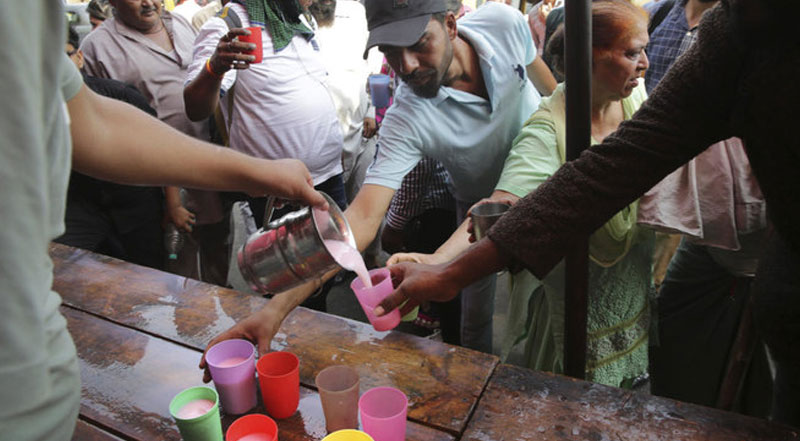
Indian cities need to implement heat action plans that include text-message alerts and cooling stations, to minimize deaths and illnesses related to rising temperatures, climate change experts and human rights activists said on Friday.

At least 36 people have died from a heatwave this year, with the nation’s capital Delhi recording its highest-ever temperature of 48 degrees Celsius (118 Fahrenheit), and temperatures in Churu in Rajasthan state hitting 51C.

Cities experience higher temperatures because paved surfaces and the lack of tree cover cause “urban heat islands,” said Sayantan Sarkar, who helped implement India’s first Heat Action Plan (HAP) in Ahmedabad in 2013.

“Cities bear the brunt of a heatwave because they are so densely populated, and because the effects are more pronounced,” he told the Thomson Reuters Foundation.

“But not all cities have the capacity to implement the measures needed, and the lack of comprehensive medical records makes it harder to target vulnerable groups such as the homeless and migrant workers,” he said.

Heatwaves in India typically occur in the pre-monsoon period from April to June.

Ahmedabad implemented its HAP after a heatwave in 2010 caused more than 1,300 heat-related deaths.

The plan included an early warning system using electronic displays in public places and text messages, training medical personnel to recognize and respond to heat-related illnesses, and “cool roofs” that used reflective surfaces or coatings to reduce temperatures in low-income and informal housing.

Since its launch, the HAP has helped prevented about 1,100 deaths each year in Ahmedabad, according to a study published in the Journal of Environmental and Public Health last year.

India’s National Disaster Management Authority (NDMA) issued guidelines in 2016 for heat action plans based on the Ahmedabad plan. They have since been adopted in more than a dozen states, said Arup Kumar Srivastava, a heatwave expert at NDMA.

“The casualties would be much higher were it not for the heat action plans that many cities have adopted,” he said.

“This year, night-time temperatures have also remained high, which poses additional risks. So the plans need to be modified accordingly,” he said.

A critical feature of Ahmedabad’s HAP is checking on vulnerable populations including the homeless and slum dwellers.

This is particularly relevant in cities such as Delhi, which has one of the largest homeless populations in the country, said Shivani Chaudhry, executive director of advocacy group Housing and Land Rights Network (HLRN).

At least six homeless people probably died from the heat every day from May 1 to June 10 this year in Delhi, with several more deaths going unreported, according to HLRN.

“Homeless persons are most vulnerable to the heat, as the majority live outdoors and do not have access to adequate shelter, drinking water and health care,” said Chaudhry.

“The city has a winter plan for the homeless, which includes setting up temporary tents, but there is no similar effort in the summer — even though they suffer as much, if not more in the severe heat,” she said.

Delhi government officials said in April they are preparing an action plan to minimize the impact of extreme weather conditions including heatwaves, which will be ready in 2020.

Filed Under: Top Stories, World Tagged With: action, develop, India

Submit a Comment


Primary Sidebar


Latest News

Oil falls on hopes of broader peace after Lebanon, Israel halt fighting

Meat exports grow by 4.16%

SBP-held foreign reserves rise by $43m to $17.9bn

Gold prices up by Rs 1,523 per tola

Rupee strengthens against dollar

Pakistan

Bilawal seeks heavy public mandate to protect GB’s rights

PM directs pilot launch of automated tax collection system in Islamabad

Federal budget on June 10

PM hails special ties with Washington at event marking US 250th anniversary

FO rubbishes reports of Dar sharing Iran nuclear information with Rubio

More Posts from this Category

Business

Pakistan’s exports to US up by 1.70% to $5.12bn in 10 months

Pakistan, Tajikistan set $200 million trade target, deepen ties at 8th JCM

Services’ exports up by 17.68% to $8.26bn

OGDCL’s new wells deliver record oil, gas output in FY26

Buying returns as PSX gains nearly 1,000 points

More Posts from this Category

World

No sign of progress in US-Iran talks as Hezbollah rejects truce

Vast accelerates race to replace ISS

Gulf crisis drives India-Venezuela oil partnership

More Posts from this Category


Footer

Home
Lead Stories
Latest News
Editor’s Picks

Culture
Life & Style
Featured
Videos

Editorials
OP-EDS
Commentary
Advertise

Cartoons
Letters
Blogs
Privacy Policy

Contact
Company’s Financials
Investor Information
Terms & Conditions

Facebook
Twitter
Instagram
Youtube

© 2026 Daily Times. All rights reserved.

Manage Consent
To provide the best experiences, we use technologies like cookies to store and/or access device information. Consenting to these technologies will allow us to process data such as browsing behavior or unique IDs on this site. Not consenting or withdrawing consent, may adversely affect certain features and functions.
Functional Always active
The technical storage or access is strictly necessary for the legitimate purpose of enabling the use of a specific service explicitly requested by the subscriber or user, or for the sole purpose of carrying out the transmission of a communication over an electronic communications network.
Preferences
The technical storage or access is necessary for the legitimate purpose of storing preferences that are not requested by the subscriber or user.
Statistics
The technical storage or access that is used exclusively for statistical purposes. The technical storage or access that is used exclusively for anonymous statistical purposes. Without a subpoena, voluntary compliance on the part of your Internet Service Provider, or additional records from a third party, information stored or retrieved for this purpose alone cannot usually be used to identify you.
Marketing
The technical storage or access is required to create user profiles to send advertising, or to track the user on a website or across several websites for similar marketing purposes.
  • Manage options
  • Manage services
  • Manage {vendor_count} vendors
  • Read more about these purposes
View preferences
  • {title}
  • {title}
  • {title}
We use cookies to ensure that we give you the best experience on our website. If you continue to use this site we will assume that you are happy with it.