• Skip to primary navigation
  • Skip to main content
  • Skip to primary sidebar
  • Skip to footer
Trending:
  • Kashmir
  • Elections
Friday, June 5, 2026

Daily Times

Your right to know

  • HOME
  • Latest
  • Iran-Israel war
  • Gilgit Baltistan Election
  • Pakistan
    • Balochistan
    • Gilgit Baltistan
    • Khyber Pakhtunkhwa
    • Punjab
    • Sindh
  • World
  • Editorials & Opinions
    • Editorials
    • Op-Eds
    • Commentary / Insight
    • Perspectives
    • Cartoons
    • Letters to the Editor
    • Featured
    • Blogs
      • Pakistan
      • World
      • Lifestyle
      • Culture
      • Sports
  • Business
  • Sports
  • E-PAPER
    • Lahore
    • Islamabad
    • Karachi

amar guriro/agencies

In Rwanda, a source of forgiveness after genocide

Published on: April 1, 2019 2:09 AM

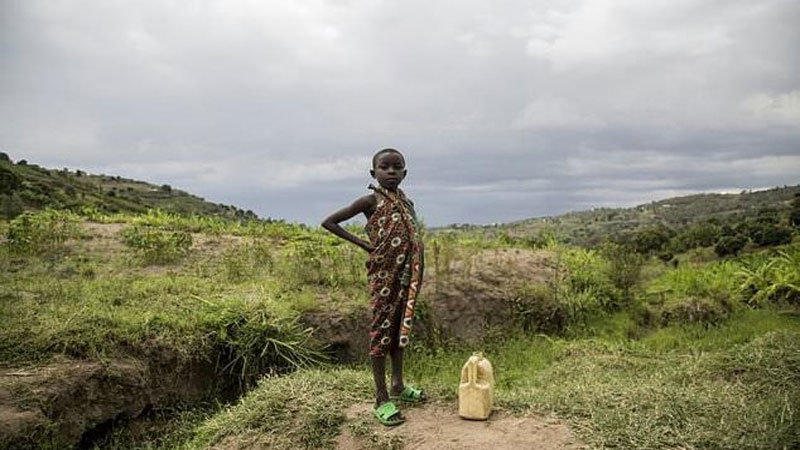
A trickle of water flows out of a lush green valley in Rwanda, the two villages on either side of the life-giving spring living peacefully with each other for years.

Then the horrors of the 1994 genocide changed all that. Those on one side of the valley in the village of Giheta turned on their neighbours across the way in the village of Ruseke.

Gangs of machete-wielding men hacked their neighbours to death following the outbreak of inter-ethnic violence, a genocide in which over 800,000 mainly Tutsi people were killed between April to July 1994, according to the UN.

Today, that water source brings the people back together.

But 25 years ago, the tranquil valley, its rich farmland lined with banana, mango and avocado trees about 40 kilometres (25 miles) west of Rwanda’s capital Kigali, became a killing field.

Whipped up by extremist propaganda, the people of Giheta — from the ethnic Hutu majority — attacked their longtime neighbours in Ruseke from the Tutsi minority. Some 70 people were massacred.

“It was a big shock for us,” said Daphrosa Mukarubayiza, 57, whose husband and son were killed. “These were people who we used to socialise and drink together with. We shared everything.”

Elders in the communities spoke of how people would gather to chat as they waited for their water containers to fill, exchanging gossip and news, a peaceful place that brought everyone together.

After the genocide, both villages still relied on the water, but took it in turn to avoid having to meet, if at all possible.

Fear and distrust

Jean-Claude Mutarindwa, 42, was a youth from the village of Giheta when the genocide took place. Unlike his brothers, he did not pick up a machete to kill and that helped him lay the foundation for reconciliation.

“I told myself that since I was part of the village, I had a duty to participate in this act of love, asking them what we could do for them to forgive us,” Mutarindwa said.

“The task was complicated.”

In 2005, the two villages relived the trauma of the killings when trials took place in the community-run courts called “Gacaca”.

That same year, the first concrete gestures of rapprochement also took place.

Mutarindwa convinced his neighbours in Giheta to cross over to Ruseke and help them farm their fields.

“To ask for forgiveness was not easy at all: the first time we crossed to ask for forgiveness, we were about 100 people,” Mutarindwa. “Amongst us, people were afraid.”

But when they came back home safely, the next time nearly 200 came. On the third trip, the whole village of Giheta came to help.

The two sides held a deeply emotional reconciliation — and a big party — in the centre of Ruseke.

For those in Ruseke, it seemed the right time to let go.

“I felt ready to forgive,” Mukarubayiza said, who knew Mutarindwa since they had met at the same church. “In a gesture of humanity, I told Jean-Claude to ask his people to come to ask forgiveness.”

After the ceremony of reconciliation, the children of each village led the way. Soon they were making friends across the shared waters of the spring. Life resumed its natural course.

Still, not everyone shares this optimism. Josepha Mukaruzima, 70, from the village of Ruseke argues that those who asked for forgiveness were not those guilty of the crimes.

Grudgingly she has accepted the situation, but feels true reconciliation requires more.

“It is far from being enough,” she said. “It misses many things, it is superficial.”

Filed Under: Uncategorized

Submit a Comment


Primary Sidebar


Latest News

Fahad Mustafa welcomes Punjab government's decision to extend cinema operating hours

Fahad Mustafa welcomes Punjab government’s decision to extend cinema operating hours

Shakira open to dating after breakup with Gerard Piqué?

Timothée Chalamet brings star power courtside at NBA finals

Mahira Khan says open to all kinds of roles, not just heroine characters

‘Michael Jackson: The Verdict’ reopens major career controversy

Pakistan

President, Prime Minister praise forces after anti-terror operations in KP

Gilgit-Baltistan election campaign reaches final stretch

Pakistan, Iran discuss stronger border security cooperation

Pakistan raised concerns over India’s proposed water infrastructure projects on Chenab River

Maryam Nawaz reaffirmed her govt’s commitment to environmental protection

More Posts from this Category

Business

Oil falls on hopes of broader peace after Lebanon, Israel halt fighting

Meat exports grow by 4.16%

SBP-held foreign reserves rise by $43m to $17.9bn

Gold prices up by Rs 1,523 per tola

Rupee strengthens against dollar

More Posts from this Category

World

Trump faces rising resistance from fellow Republicans

Trump legal team blocks BBC request in $10bn lawsuit

Xi to visit North Korea as China seeks closer ties

More Posts from this Category


Footer

Home
Lead Stories
Latest News
Editor’s Picks

Culture
Life & Style
Featured
Videos

Editorials
OP-EDS
Commentary
Advertise

Cartoons
Letters
Blogs
Privacy Policy

Contact
Company’s Financials
Investor Information
Terms & Conditions

Facebook
Twitter
Instagram
Youtube

© 2026 Daily Times. All rights reserved.

Manage Consent
To provide the best experiences, we use technologies like cookies to store and/or access device information. Consenting to these technologies will allow us to process data such as browsing behavior or unique IDs on this site. Not consenting or withdrawing consent, may adversely affect certain features and functions.
Functional Always active
The technical storage or access is strictly necessary for the legitimate purpose of enabling the use of a specific service explicitly requested by the subscriber or user, or for the sole purpose of carrying out the transmission of a communication over an electronic communications network.
Preferences
The technical storage or access is necessary for the legitimate purpose of storing preferences that are not requested by the subscriber or user.
Statistics
The technical storage or access that is used exclusively for statistical purposes. The technical storage or access that is used exclusively for anonymous statistical purposes. Without a subpoena, voluntary compliance on the part of your Internet Service Provider, or additional records from a third party, information stored or retrieved for this purpose alone cannot usually be used to identify you.
Marketing
The technical storage or access is required to create user profiles to send advertising, or to track the user on a website or across several websites for similar marketing purposes.
  • Manage options
  • Manage services
  • Manage {vendor_count} vendors
  • Read more about these purposes
View preferences
  • {title}
  • {title}
  • {title}
We use cookies to ensure that we give you the best experience on our website. If you continue to use this site we will assume that you are happy with it.