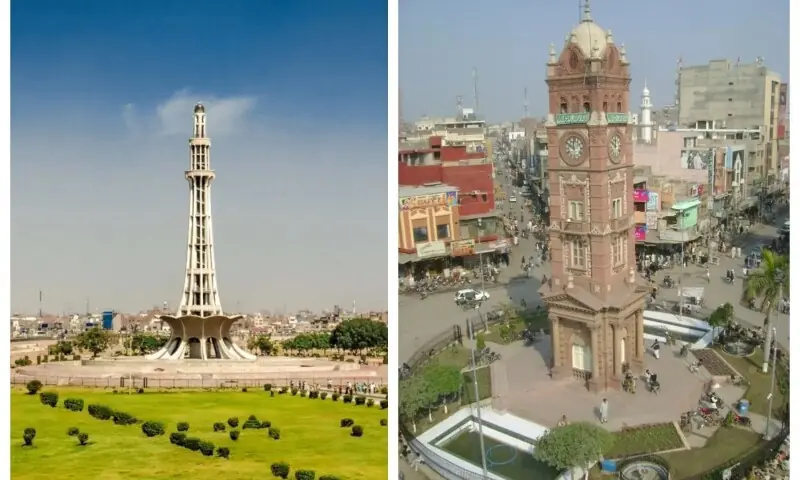
Claims circulating on social media that Lahore and Faisalabad are on track to become among the world’s hottest cities by 2050 have been found to be misleading, according to a fact-check conducted by iVerify Pakistan.
The claim gained traction after the Pakistan Meteorological Department issued a heatwave advisory on June 7, warning that temperatures across parts of Pakistan could rise significantly above seasonal averages. Several social media pages and news reports subsequently asserted that Lahore and Faisalabad would rank among the hottest cities globally by mid-century.
However, the fact-check found that these posts cited an unspecified “climate study” without providing a source, publication date or supporting evidence. Searches for the alleged study failed to identify any credible report ranking the two cities among the hottest in the world based on temperature projections.
Instead, the claim appears to stem from a March 2026 study by the Climate Impact Lab, which examined the projected impact of climate change on heat-related mortality rather than future temperature rankings.
The study estimated that Pakistan could experience a significant increase in temperature-related deaths by 2050 and identified several Pakistani cities among the most vulnerable globally to heat-related mortality. Faisalabad ranked highest among the country’s cities in projected additional heat-related deaths, followed by Multan, Gujranwala and Lahore.
Researchers stressed that the findings were based on vulnerability factors such as income levels, access to cooling, adaptive capacity and existing exposure to extreme heat. The report specifically noted that understanding climate-related mortality risks is not the same as identifying which locations will record the highest temperatures.
Climate change and disaster management expert Fatima Yamin also clarified that the study focused on projected heat-related deaths rather than temperature increases, highlighting Pakistan’s long-standing vulnerability to climate change impacts.
The fact-check concluded that while Pakistani cities face serious climate risks and rising heat-related mortality, the claim that Lahore and Faisalabad will become among the world’s hottest cities by 2050 is inaccurate and misrepresents the study’s findings.