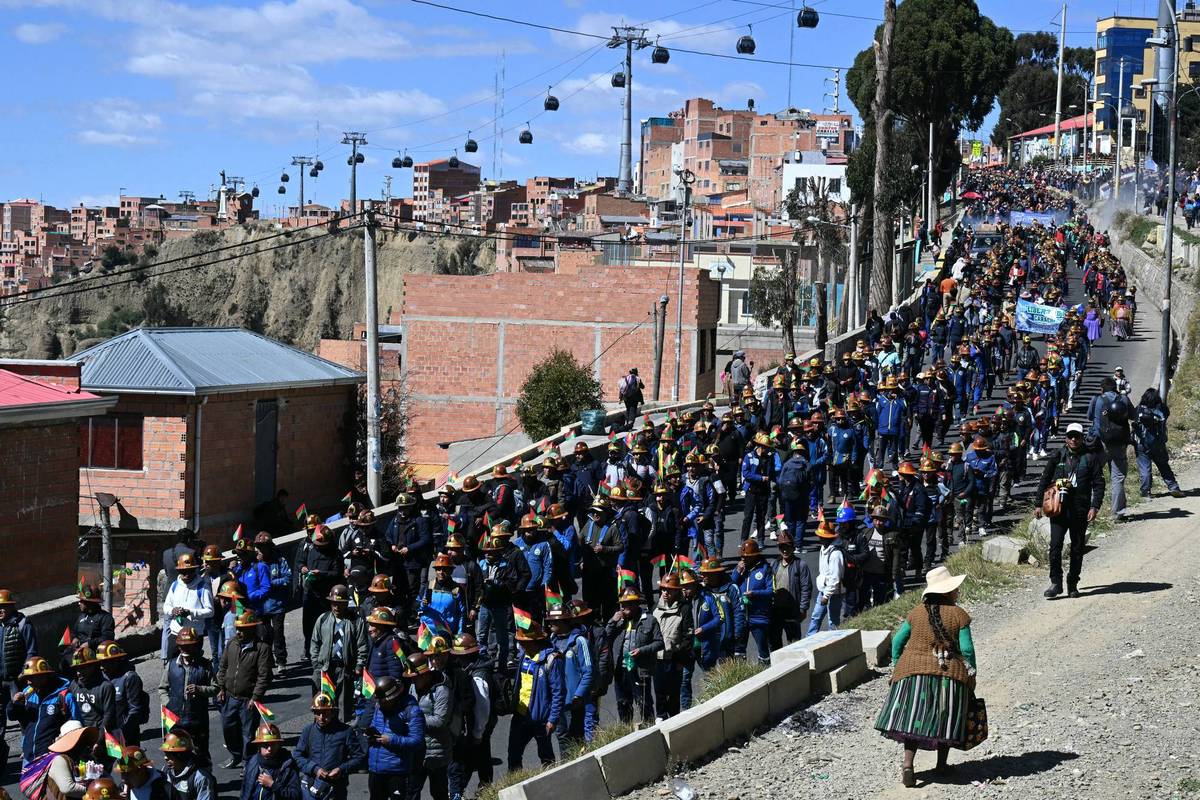
Anti-government protests intensified in Bolivia after mining groups and rural unions clashed with law enforcement in the capital, La Paz, amid growing anger over the country’s worsening economic crisis.
Read More: Rare curfew after violence in Colombia puts people on edge
Small explosions were heard during Thursday’s demonstrations as miners reportedly detonated sticks of dynamite while marching through the city. Protesters also attempted to move towards the presidential palace, prompting riot police to respond with tear gas.
The demonstrations were led by mining unions, farmers, teachers and rural workers demanding the resignation of President Rodrigo Paz, who came to power in October on promises of economic reform.
Day 3 of Bolivia’s general strike demanding the resignation of neoliberal President Rodrigo Paz.
All major highways blocked by protesters. An indigenous long march is heading to the capital, as it passes through each town and village more people join. pic.twitter.com/FQxNDTQtP6
— Ollie Vargas (@Ollie_Vargas_) May 14, 2026
Bolivia is currently facing one of its most severe economic crises in decades. Once a major exporter of natural gas, the country has seen reserves decline sharply in recent years, leading to reduced production and increased reliance on imported fuel.
Bolivian miners hurled firecrackers and clashed with police in La Paz as protests demanding President Rodrigo Paz’s resignation intensifies https://t.co/BvK8VTCx8H pic.twitter.com/PtTvYS3mY1
— Reuters (@Reuters) May 15, 2026
The downturn has triggered shortages of foreign currency, rising inflation and supply chain disruptions. Citizens have faced long queues at fuel stations, while hospitals have reported shortages of oxygen, medicines and other essential supplies.
The unrest follows weeks of road blockades and demonstrations across different regions of the country. Protesters have raised concerns over fuel subsidies, welfare support and agricultural reforms.
Earlier in the day, a delegation of miners was invited to the presidential palace for talks with President Paz. Government officials said they remained open to dialogue over the protesters’ demands.
However, authorities rejected calls for the president’s resignation, insisting the administration would continue efforts to stabilise the economy.
Some government allies have accused former president Evo Morales of fuelling unrest. Morales, who retains strong support in rural areas, denied orchestrating the protests and instead blamed the government for failing to address shortages and inflation.
Political tensions in Bolivia have escalated alongside the economic downturn, with protests reflecting widespread frustration over living costs and access to basic supplies.
Read More: 2019: a look back at a year of turmoil
Officials say further dialogue is expected, though demonstrations may continue if economic concerns remain unresolved. Security forces remain deployed in central La Paz as authorities monitor the situation and prepare for possible further unrest.