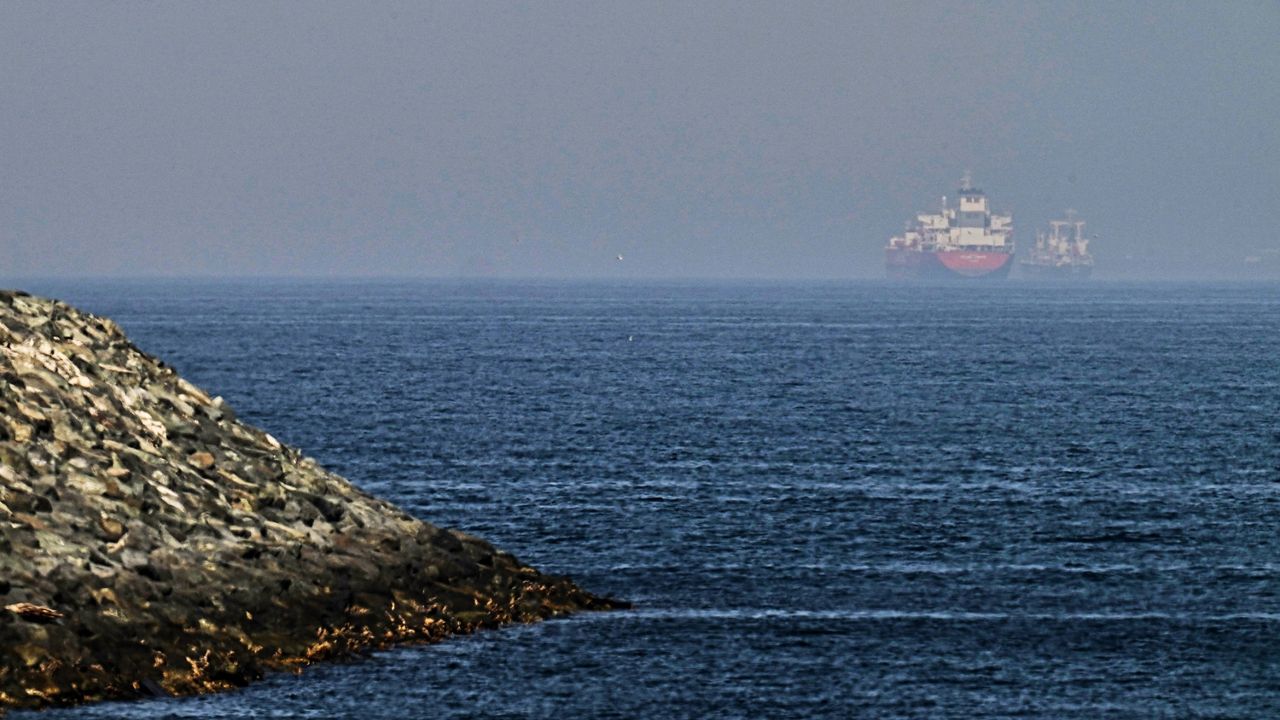
Commercial shipping activity through the Strait of Hormuz remained largely frozen on Monday despite a new US pledge to help restore navigation in the strategically vital waterway.
Read More: Iran hits UAE oil port as US moves to reopen Hormuz
US President Donald Trump recently announced efforts to reopen maritime traffic through the strait, a key route for global oil and gas supplies that has faced severe disruption during the ongoing Iran conflict. However, shipping data showed little immediate impact from Washington’s latest initiative.
According to vessel tracking information, only one sanctioned liquefied petroleum gas carrier, along with a handful of cargo and specialist vessels, transited into the Gulf of Oman during the day. No visible queue of tankers or major commercial ships was reported waiting to pass.
US Central Command said it had begun operations aimed at restoring freedom of navigation while maintaining pressure on Iranian maritime trade. Officials described the missions as defensive and said military coordination was being paired with diplomatic engagement.
Shipping companies remain cautious. German shipping giant Hapag-Lloyd said movement through the strait was still effectively impossible because there is no clear mechanism guaranteeing safe passage for commercial vessels.
Industry groups also expressed uncertainty. The Baltic and International Maritime Council said the sector has received little operational guidance from the United States and warned that Iran’s cooperation may be necessary before large-scale shipping resumes.
The International Maritime Organization estimates hundreds of vessels and as many as 20,000 seafarers remain stranded or unable to transit due to the conflict.
Regional security risks also remain elevated. The US-led Joint Maritime Information Center kept the threat level in the area at “critical” and advised vessels to consider alternative routing through Omani waters where possible.
Iran has warned foreign military forces, particularly the US Navy, against approaching the strait without coordination and said commercial vessels must communicate with Iranian authorities before transit.
Read More: US Plans New Alliance to Secure Strait of Hormuz Shipping
The prolonged disruption has heightened concerns over global energy security, with around one-fifth of the world’s oil supply typically passing through the Strait of Hormuz. Continued delays could further pressure shipping costs, insurance premiums, and international fuel prices.