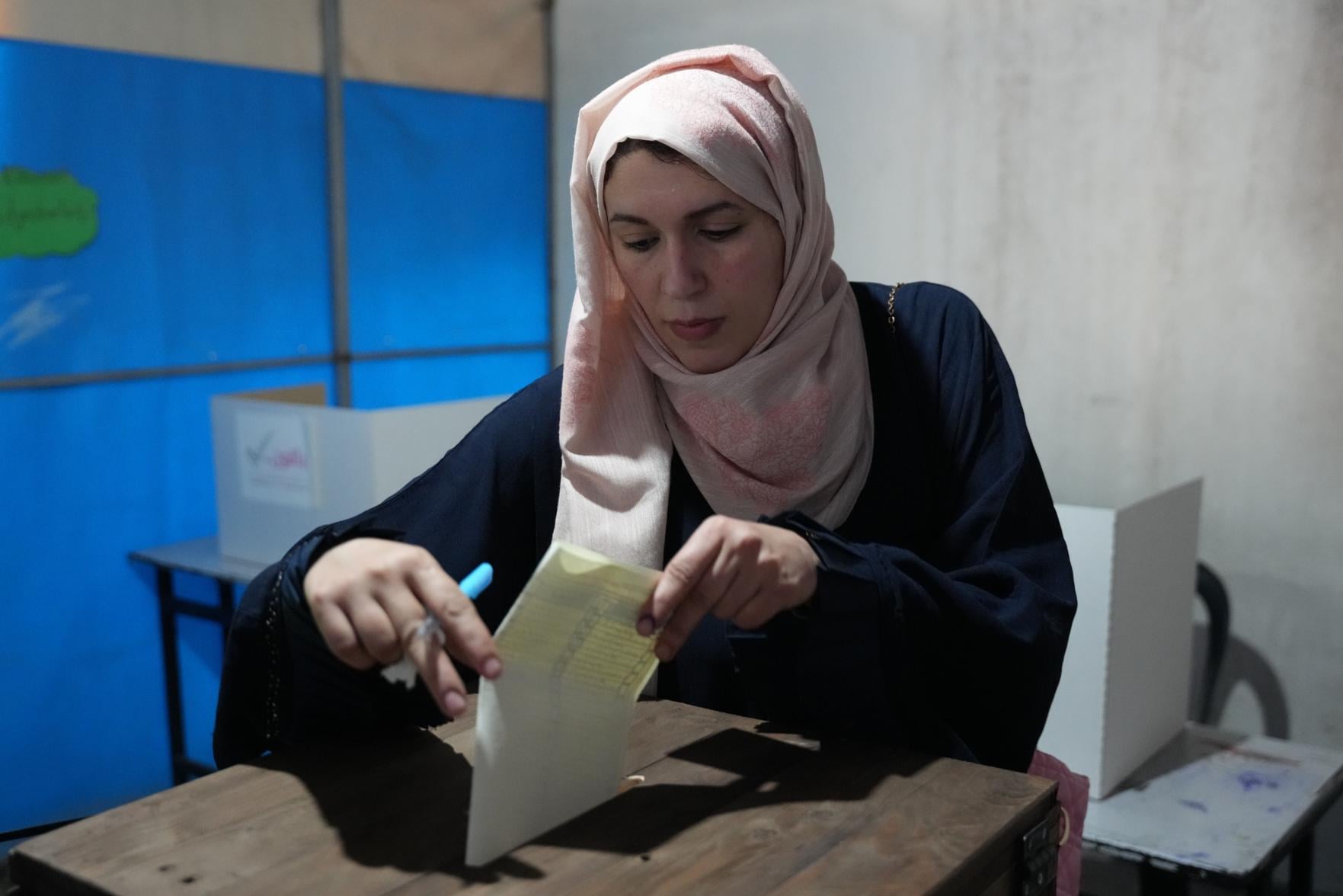
Residents of Gaza participated in municipal elections on Saturday, marking the first time in more than two decades that voters in the enclave have cast ballots. The vote took place in Deir el-Balah, the only location in Gaza included in the latest phase of Palestinian local elections, despite ongoing conflict and humanitarian challenges.
Read More: Govt steps up energy security planning amid ME war risks
Polling began early in the day, with around 70,000 eligible voters taking part. The election is part of a broader process overseen by the Palestinian Central Elections Commission, covering more than 400 local councils across Palestinian territories, including the occupied West Bank. Officials described the inclusion of Gaza as a step toward restoring elements of local governance after years without electoral participation.
Polls open in the ‘Israeli’-occupied West Bank area of Al-Bireh, north of Ramallah, as Palestinians begin voting in municipal elections in a first vote since the Gaza war, marked by a narrow political field and widespread disillusionment. pic.twitter.com/gxSoIz0Y4W
— Roya News English (@RoyaNewsEnglish) April 25, 2026
Voting conditions reflected the realities on the ground, with polling stations set up in tents and public buildings due to infrastructure damage and electricity shortages. Despite logistical challenges, authorities reported steady turnout, with results expected within a day.
Unlike previous elections, candidates did not run under formal party banners. While major factions such as Hamas and Fatah did not officially field candidates, many lists are believed to have informal affiliations. Each electoral list included 15 candidates, with a requirement for female representation, and voters were allowed to indicate preferences within their selected list.
The Palestinian Authority has framed the elections as part of broader reform efforts and an attempt to reinforce governance structures. However, some factions boycotted the process, citing political conditions tied to participation.
Read More: Hina Khawaja Bayat spends time with Turkiye quake victims
The vote comes amid an ongoing humanitarian crisis, with widespread displacement and damaged infrastructure. For many residents, the priority remains access to essential services, including water, electricity, and healthcare, regardless of the political outcome.