 The Foreign Office (FO) on Thursday categorically rejected the statement by US Director of National Intelligence Tulsi Gabbard over Pakistan’s missile capabilities posing a threat to the country.
Gabbard had listed Pakistan among states that pose a significant threat to the United States, warning US lawmakers that Islamabad’s evolving missile capabilities could potentially put the American homeland within range.
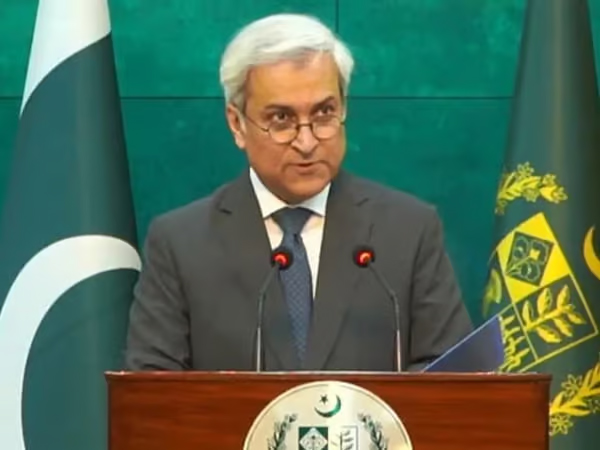
In a statement, FO spokesperson Tahir Hussain Andrabi said, “Pakistan categorically rejects the recent assertion by a United States official alleging a potential threat from Pakistan’s missile capabilities.”
He highlighted that Pakistan’s strategic capabilities were exclusively defensive in nature, aimed at safeguarding national sovereignty and maintaining peace and stability in South Asia.
“Its missile programme, which remains well below intercontinental range, is firmly rooted in the doctrine of credible minimum deterrence vis-à-vis India,” he said.
“In contrast, India’s development of missile capabilities exceeding 12,000 kilometres reflects a trajectory that extends beyond regional security considerations and is certainly a cause of concern for the neighbourhood and beyond,” he said.
“Pakistan remains committed to constructive engagement with the United States, anchored in mutual respect, non-discrimination, and factual accuracy. We urge a more measured and considered approach that aligns with South Asia’s strategic imperatives and advances peace, security, and stability across the region,” he said.
Earlier on Thursday, former caretaker foreign minister Jalil Abbas Jilani had also dismissed Gabbard’s statement.
In a post on X, the former foreign minister maintained that the assertion that the “US Homeland is within range of Pakistan’s nuclear/con missiles is not grounded in strategic reality”.
He said that Pakistan’s nuclear doctrine was “India-specific, aimed at maintaining credible deterrence in South Asia, not projecting power globally”.
On Wednesday, Gabbard, presenting the 2026 Annual Threat Assessment before the United States Senate Intelligence Committee said, “Russia, China, North Korea, Iran and Pakistan have been researching and developing an array of novel, advanced, or traditional missile delivery systems with nuclear and conventional payloads, that put our Homeland within range.”
“Pakistan’s long-range ballistic missile development potentially could include ICBMs with the range capable of striking the Homeland,” she said.