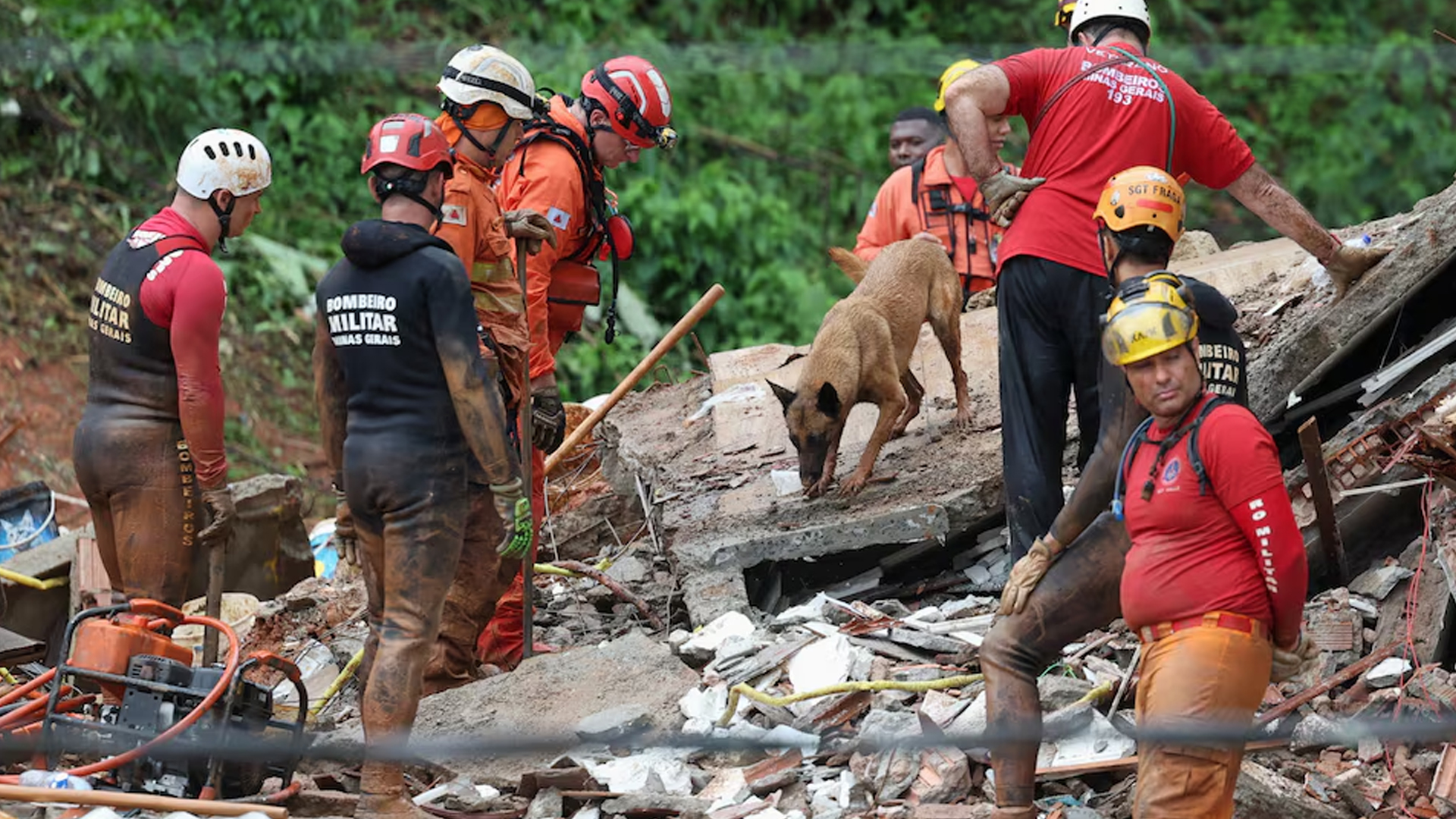
Rescue teams in southeastern Brazil continued searching for 39 missing people after heavy rains triggered deadly floods and landslides in the state of Minas Gerais. Officials confirmed that at least 30 people died in the cities of Juiz de Fora and Uba, while more than 200 residents have already been rescued. Moreover, firefighters deployed sniffer dogs and heavy machinery to locate survivors trapped under mud and debris.
In the city of Juiz de Fora, a river overflowed after record overnight rainfall, turning streets into fast-moving brown currents. Authorities reported that 12 homes were destroyed in a massive hillside landslide, leaving families buried under rubble. Consequently, emergency crews worked around the clock as volunteers joined the search efforts to support overwhelmed rescue teams.
Read more : Critical minerals cooperation inked by India, Brazil
Witnesses described scenes of devastation as excavators cleared mud from collapsed buildings and scattered belongings. Among the victims was a 20-year-old man whose father pleaded for recovery of his body to allow a proper burial. Meanwhile, officials warned that survival chances decrease over time, even though rescuers temporarily found a young boy alive during a two-hour operation.
Local leaders declared a state of emergency and mobilized resources to assist displaced families and restore essential services. Approximately 3,000 people left their homes due to flooding, landslides, and infrastructure damage across affected neighborhoods. In addition, authorities suspended school classes and isolated several communities where at least 20 landslides blocked roads and access routes.
Read more : How to navigate Brazil’s legendary city, packed with art, style, sights …
Heavy rainfall reached 584 millimeters in February, marking the wettest month on record for the region, according to local officials. Therefore, emergency services prioritized humanitarian aid, shelter support, and reconstruction planning to stabilize the affected areas. National leaders also expressed solidarity, while disaster management teams coordinated relief operations to ensure food, water, and medical assistance.
Brazil has experienced repeated extreme weather disasters in recent years, including severe floods and deadly landslides linked by experts to climate change impacts. Earlier tragedies in 2024 and previous years caused hundreds of deaths and displaced millions nationwide. As recovery efforts continue, authorities emphasize long-term resilience planning to reduce future risks and strengthen emergency preparedness across vulnerable regions.