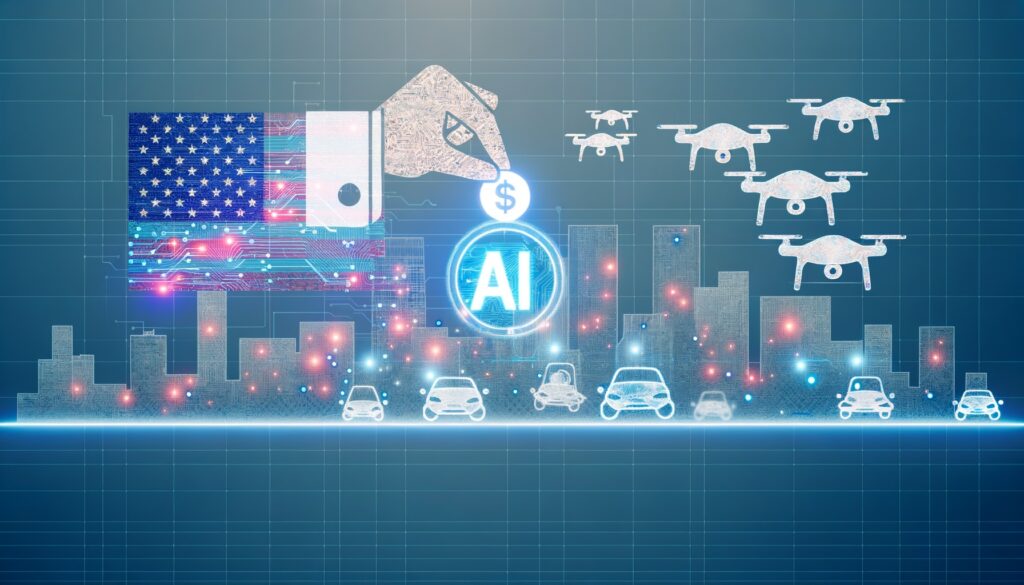
US tech giants including Meta, Amazon, Microsoft, and Alphabet are projected to spend roughly $670 billion in 2026, focusing primarily on artificial intelligence (AI) and data centers. Analysts say this surge represents the largest capital investment cycle since the Gilded Age, when US railroads transformed the economy and created the world’s first billionaires. The spending marks a significant shift in technology, driven by widespread adoption of AI and large language models.
Alphabet has financed part of its AI expansion using very long-term bonds, echoing IBM’s borrowing strategies in the 1990s. Analysts warn that while these investments may take years to pay off, they could reshape entire industries. Ethan Feller, equity strategist at Zacks Investment Research, estimated that AI infrastructure spending could reach roughly 2% of US GDP this year.
Read more: Nokia to invest $4 billion in US AI and network tech
The capital outlay is expected to benefit not only tech companies but also semiconductors, industrial firms, power infrastructure, and construction sectors. Amazon and Alphabet alone are projected to spend about $400 billion this year, reflecting strong demand for AI and cloud computing services. Large-scale enterprise AI deployments are already underway, according to market experts.
Experts note that AI advancements, including models from OpenAI and Anthropic, are changing workplace dynamics. Many engineers now rely on AI to perform technical tasks, and future applications may extend to knowledge-work professions such as accounting, legal services, content creation, and customer support. Analysts caution that profitability is not guaranteed, but the potential economic impact is significant.
Read more: OpenAI seeks $100 billion funding with Amazon talks
This massive investment cycle illustrates the tech sector’s confidence in AI as a transformative force for both business and society. As companies expand AI capabilities and data infrastructure, the ripple effects could redefine economic growth, labor markets, and technological innovation in the coming decade.