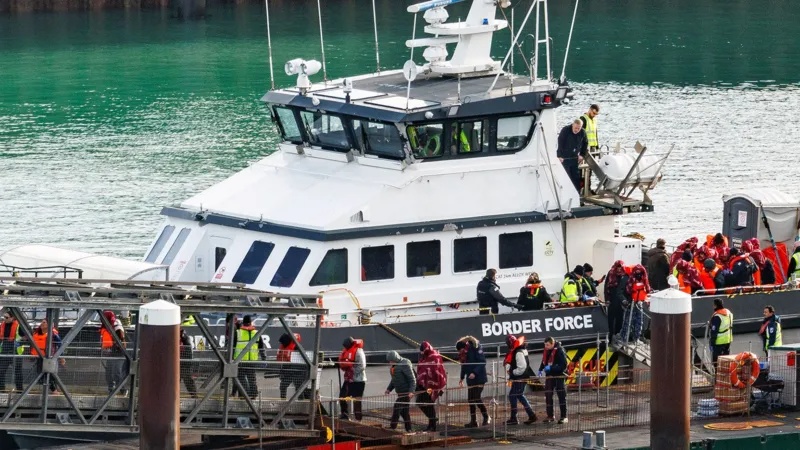
UK authorities are introducing new powers to seize phones and SIM cards from migrants arriving by small boats from northern France, in an effort to disrupt criminal gangs behind the crossings. The measures take effect Monday under the Border Security, Asylum and Immigration Bill, part of the government’s broader strategy to reduce migrant arrivals.
Read More: Customs crackdown: 10,000 smuggled phones seized
Over 41,000 people crossed the English Channel in 2025, the second-highest figure since records began in 2018. Police and immigration officers at the Manston processing centre near Ramsgate will be able to confiscate devices without making arrests. Officials hope to gather intelligence such as contacts, maps, and routes to target smuggling networks and prosecute ringleaders.
Today law enforcement will begin to seize mobile phones from illegal migrants.
We will use these powers to gather intelligence to track down and arrest people smugglers.
No thanks to the Tories who voted against them at every opportunity. pic.twitter.com/DYocDBS4zw
— Shabana Mahmood MP (@ShabanaMahmood) January 5, 2026
Border Security Minister Alex Norris described the new legislation as a tool to “intercept, disrupt and dismantle these vile gangs faster than ever,” aiming to restore control over UK borders. New criminal offences have also been created, including storing or supplying boat engines for migrant crossings, carrying penalties of up to 14 years in prison.
The measures have drawn sharp criticism from charities representing migrants. Refugee Action called the law “anti-refugee” and argued it criminalises people seeking safety. Opposition politicians have dismissed parts of the legislation as superficial, with some advocating for broader changes, including withdrawal from the European Convention on Human Rights (ECHR).
UK Interior Minister Shabana Mahmood also announced proposals to make refugee status temporary and reviewable every 30 months. Migrants seeking permanent residency could now face waiting periods of 10 to 30 years, depending on circumstances. The changes, modeled on Denmark’s strict asylum system, were described by Mahmood as the most significant reforms to the UK asylum system in modern times.
Read More: Karachi customs seize 564 smuggled phones from prado
While authorities hope the measures will reduce Channel crossings and weaken smuggling networks, critics warn they risk penalising vulnerable people and creating additional humanitarian challenges.