
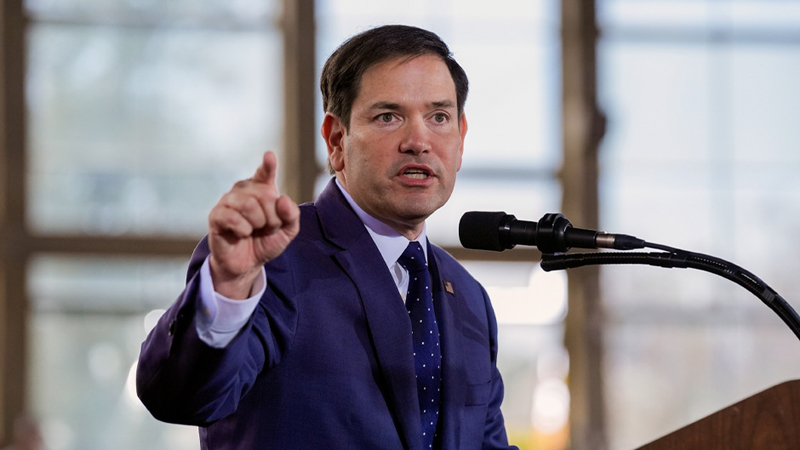
 The United States has not received formal consent from Pakistan to deploy troops to Gaza as part of a proposed international stabilisation force, but Islamabad has considered participating and remains a key potential contributor, US Secretary of State Marco Rubio said, as Washington works to define the mission’s mandate, funding and rules of engagement.
Asked whether Pakistan had agreed to send troops for peacebuilding in Gaza, Rubio told reporters during an end-of-year press conference that the US was “very grateful to Pakistan for their offer to be a part of it, or at least their offer to consider being a part of it,” stressing that no country has yet been asked to make a firm commitment.
“In all fairness to all the countries we have asked about being a part of, or having a presence on the ground,” Rubio said, “I think they want to know specifically the mandate and what the funding mechanism looks like. We owe them a few more answers before we can ask anybody to firmly commit.”
Rubio said Washington was confident it could assemble a multinational force acceptable to all parties involved in the conflict. “I feel confident that we have a number of nation-states acceptable to all sides,” he said.
Pakistan, Rubio emphasised, would be a central component of the force if it ultimately decides to participate.
“Pakistan is key, if they agree to do so,” he said.
The comments come amid growing pressure on allies and partners to contribute troops to what officials describe as an International Stabilisation Force for Gaza – a pillar of the Trump administration’s post-war plan aimed at maintaining security, enabling reconstruction and preventing the re-emergence of armed groups following Israel’s military campaign.
However, US officials acknowledge that the force cannot be finalised until a broader political framework for Gaza is in place.
Rubio outlined a step-by-step process that must precede any troop deployments, underscoring that discussions with Pakistan and other countries remain preliminary.
“The next step here is announcing the board of peace, announcing the Palestinian technocratic group that will help provide the daily governance,” Rubio said. “And once that’s in place, I think that will allow us to firm up the stabilisation force – including how it will be paid, what the rules of engagement are and what the role will be.”
US officials say the proposed technocratic Palestinian administration would manage civilian affairs in Gaza, creating the political and legal basis for an international security presence.
In Pakistan, the possibility of deploying troops to Gaza has raised concerns over domestic backlash, with strong public sympathy for Palestinians and deep scepticism about any mission perceived as aligned with US or Israeli objectives. Islamabad has publicly maintained that no final decision has been made and that any participation would depend on a clearly defined mandate and broad international legitimacy.
Analysts say Pakistan’s military leadership would play a decisive role in any decision, balancing strategic ties with Washington against significant internal political risks.