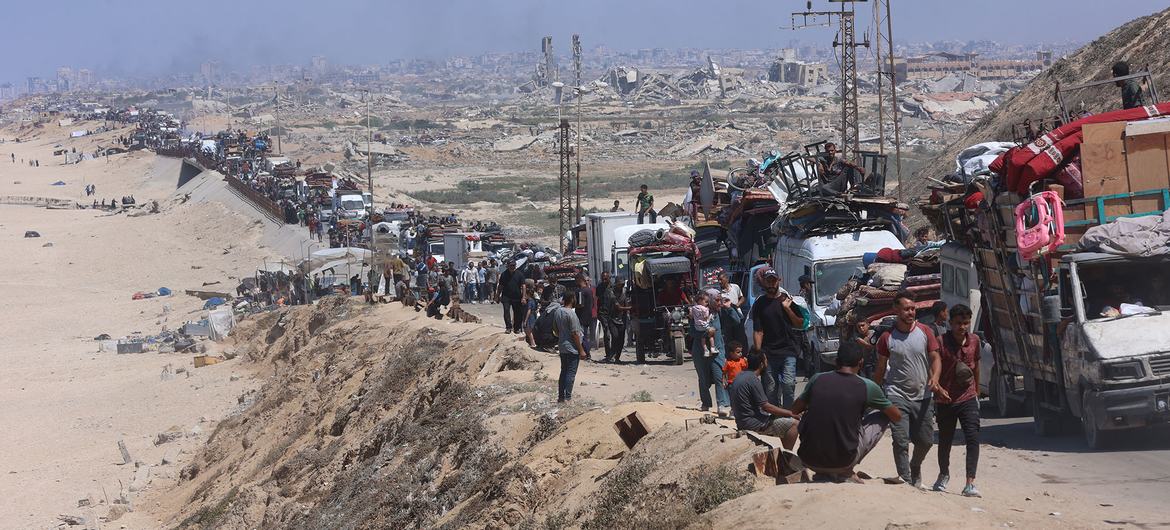
As winter deepens in Gaza, displaced Palestinians return daily to the shattered remains of their homes to pull out iron rods buried under layers of concrete. These metal bars have become essential for building makeshift tents or selling for a small income, as the enclave struggles through a devastating post-war reality. Moreover, residents say the long recovery ahead leaves them with no option but to salvage whatever they can.
The iron rods, once supporting multi-storey homes, are now twisted through millions of tonnes of rubble left by months of heavy Israeli bombardment. Many Gazans spend days breaking cement with basic tools such as shovels, hammers, and pickaxes. Furthermore, the work is painfully slow, yet it remains the only way many families can secure shelter or earn enough to buy essentials.
Read more : Gazans begin restoring historic Pasha Palace after war damage
Heavy rains and dropping temperatures have made the struggle even harder, as tents collapse and belongings are washed away. The United Nations estimates that Gaza’s war has produced around 61 million tonnes of rubble, which could take up to seven years to clear under stable conditions. Additionally, the lack of proper construction materials forces families to rely on scrap metal pulled from destroyed homes.
A single 10-meter iron rod now costs about $15, an unaffordable amount for most displaced families who barely have cash. Young workers say they negotiate with homeowners, clearing rubble in exchange for metal instead of money. This back-breaking labour often lasts more than a week, yet it remains their only dependable means to survive in a shattered economy.
Read more : Israel opens new corridor for Gazans amid heavy assault
Despite international promises of stabilisation forces and long-term redevelopment, Palestinians say their focus is on immediate survival rather than distant plans. They work daily to earn enough for food and basic needs, insisting on doing so through legitimate effort. Meanwhile, Israel restricts construction materials, arguing that items like iron rods could be used to rebuild Hamas tunnels, delaying their entry until later phases of the US-led peace plan.