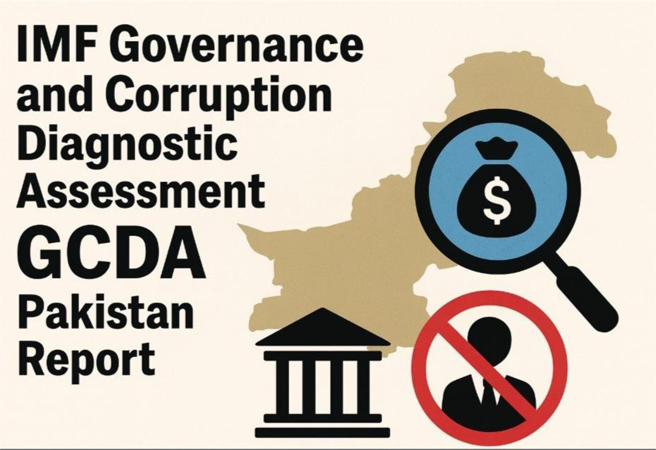
 The IMF’s Governance and Corruption Diagnostic Assessment (GCD) – Technical Assistance Report on Pakistan has triggered a debate with varied intents.
The IMF has pointed out governance weaknesses in state institutions and urged prioritizing a 15-point set of recommendations to address these issues tied to a heightened risk of corruption. The directions published in the IMF’s GCDA estimate that implementing the recommended reforms could raise Pakistan’s gross domestic product (GDP) by 5-6.5 percent over the next five years. Debate is shaping up in political as well as non-political quarters interested in improving the existing standards of governance. While the report identifies institutional vulnerabilities across public finance, regulatory frameworks, SOE governance and the rule of law, it also raises questions about how accurately it reflects Pakistan’s evolving landscape.
How State is Responding to the IMF’s Assessment?
The Pakistani government has publicly pledged to take corrective steps on all gaps highlighted in the IMF’s GCDA report.
Acknowledgement of Findings: Finance Minister Mohammad Aurangzeb acknowledged the report’s findings, stating that the points identified by the IMF require action and the government “will work to resolve them”.
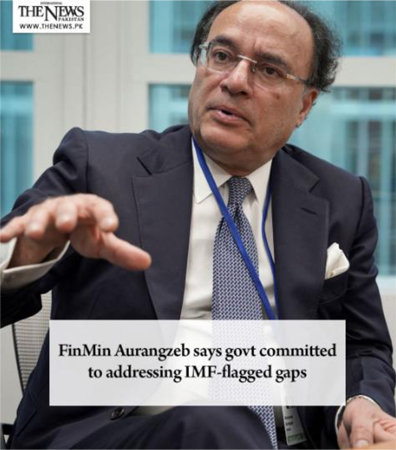
Commitment to reforms: As per official claims ,spade work is in hand for some of the required reforms placed in top priority. The government has committed to an action plan covering immediate, short-term, and long-term reforms to strengthen governance and reduce corruption vulnerabilities. Implementation of these reforms is a precondition for the release of further IMF loan tranches.
Publication of the report: an official report has been published on the Finance Division website, a key requirement for transparency and a precondition for the IMF Executive Board’s approval of the next loan disbursement.
Future Course of Action
The government of Pakistan has broadly accepted core message delivered through the report that economic recovery is dependent on moving towards open, predictable, and rules-based governance as briefly reflected in succeeding lines -:
Digitization of processes: Plans are underway to move public procurement to an e-governance platform within 12 months and digitize various regulatory processes to enhance transparency.
Tax system reforms: The Finance Ministry is tasked with publishing a tax simplification strategy by May 2026 and reporting annually on its progress. This includes improving the Federal Board of Revenue’s (FBR) structure and controls.

Judicial and regulatory oversight: The government is expected to develop a methodology to assess the performance of courts and judges and expand alternative dispute resolution mechanisms to improve contract enforcement.
Fiscal management: The government is working to improve budget credibility, limit discretionary spending (supplementary grants), and enhance transparency in public investment.
State-Owned Enterprises (SOEs): The government is advancing the SOE reform and privatization agenda, as SOEs were flagged as major sources of governance risks due to political interference and weak oversight.
Observations on Accuracy and Relevancy
of Report
A dispassionate analysis of the IMF’s Governance and Corruption Diagnostic Assessment (GCDA) report on Pakistan notes that a projection of up to 6.5% GDP growth from reforms is based on global models, not specific corruption loss audits, and should be seen as a hypothetical scenario. The report is limited by its reliance on data only up to early 2025 and its use of slow-to-update perception based metrics, potentially missing recent reform progress and successes in sectors like digital finance and IT. While acknowledging these limitations and the risk of generalising from specific sectoral examples, the report partially remains relevant in highlighting long-standing institutional issues and providing a baseline for future reform efforts.
FLAWED MECHANISM
Generalized Approach-Wrong optics Irrelevant yardsticks Lacks holistic evidences Politicized Rhetoric & Regional Rivalries
Twisting and Angling: Internal and External Players
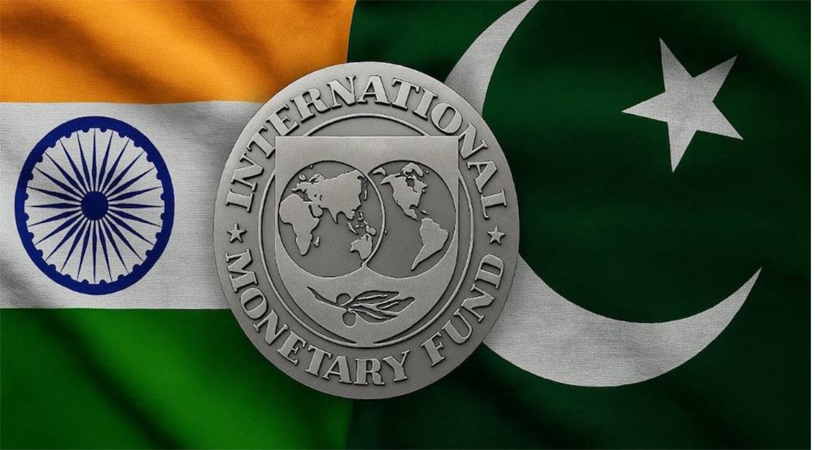
Apparent optics of the IMF’ GCDA report remained glued to corruption and bad governance primarily due to the peculiar political contestation between the government and opposition. Corruption has always been a hot issue in political culture of Pakistan. Former ruling party gained big political space with persistent corruption rhetoric against rival parties. Eventually, her ouster from federal government through a no-confidence motion switched the positions and triggered the accountability process against alleged corruption. IMF’ report in question has provided better chance to the already struggling opposition to target the ruling benches over misgovernance and alleged corruption. On external front, traditional rival India has got another chance to twist the report and falsely portray Pakistan as a poorly governed failing state.
Humiliation in the hands of Pakistan amid ill conceived “Operation Sindoor’ will continue to irk the BJP regime for a long time. Twisting and angling of IMF’ report by internal and external players has largely diverted the attention from long due need for structural reforms in Pakistan.
Much Needed Future Course
Pakistan’s strong inclination towards reformative course seems encouraging. Deliberate progress on following aspects is essential to address the core issues-:
One, denial is no option. all government, irrespective of political leanings, should pursue a consensus based corrective plan to plug-in the gaps identified by international partners like IMF.
Two, structural reforms in economic , taxation , public policy and accountability domains are unavoidable. A national reform plan is the only way forward to put the Pakistan back on the track.
Three, Reforms recommended in IMF’ report merit a holistic review and specific input from relevant departments working under respective ministries for target oriented corrective measures,
Four, observations on generalized assessments laid down in GCDA report should be discussed with IMF using evidence based input of relevant departments. This is the only appropriate way to improve the international image of country.
POSITIVE SIGNS
Pakistan on Reformative course Acceptance
of Gaps Positive engagement with
International partners