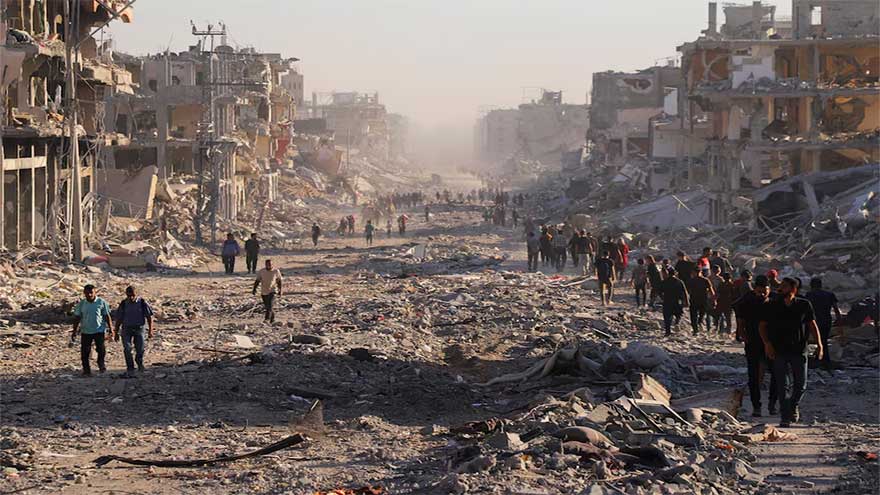
GAZA/CAIRO – The fragile ceasefire in Gaza has brought temporary relief from Israeli air strikes, but a severe cash shortage is crippling daily life for Palestinians struggling to survive amid war devastation.
Banks across Gaza, many damaged or destroyed during two years of conflict, reopened on October 16, six days after the ceasefire. However, residents found little to celebrate. “There is no money, liquidity at the bank,” said Wael Abu Fares, a 61-year-old father of six. “You just come, do paperwork, and leave.”
Read More: Palestinians say Israel targeting prisoners’ bank accounts
Since Israel blocked banknote transfers following the October 2023 Hamas attacks, Gazans have been forced to rely on electronic payments or exploitative middlemen. Economist Mohammad Abu Jayyab said some merchants now charge fees of up to 40% to cash salaries, calling it “greedy profiteering in a desperate time.”
Everyday essentials like food, medicine, and fuel remain difficult to purchase, with hyperinflation eroding the value of what little cash people can access. Many residents now use worn-out banknotes, barter goods, or pay digital transfer fees for even basic items like eggs or sugar.
Read More: As Trump team prepares Mideast plan, Palestinians face financial crisis
While the ceasefire has stopped the bombing, economic paralysis persists. With no clear timeline for allowing cash shipments into Gaza, families continue to face hunger and uncertainty. “I make 30 shekels a day just to buy bread and beans,” said Manal al-Saidi, who repairs damaged banknotes. “It’s not living — it’s surviving.”