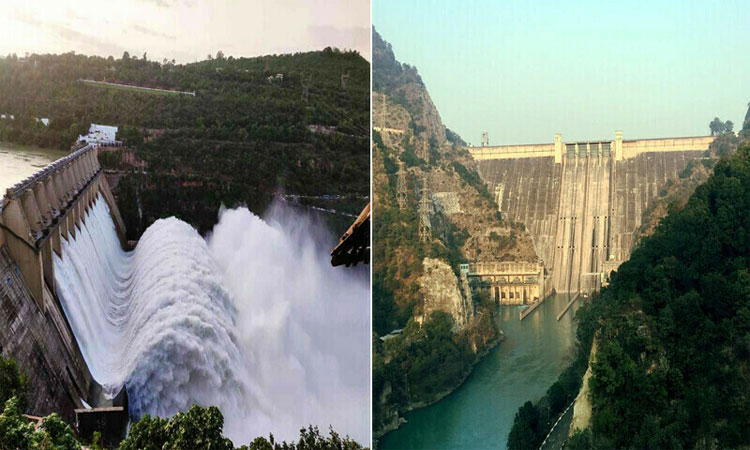
 Floods are a part of nature’s ecology. Rivers have overflowed their banks long before modern human activity, which is often blamed for today’s disasters. At some point, however, we stopped adapting to the natural cycles of rivers and the paths they carve for themselves. The cost has been more frequent and intense floods. Dams are a tool – but a blunt one. They manage water in the short term, often at the expense of long-term ecological balance. They are a human innovation that needs to be molded according to ecological needs. What matters most is finding a balance between human needs and nature’s rhythms.
This struggle to balance control and adaptation has a long history. In their earliest form, dams and irrigation systems emerged after the Agricultural Revolution as tools of survival – simple piles of earth and rock built by Neolithic farmers to channel river water onto their fields of wheat and barley. This simple irrigation turned arid land into cultivatable land, allowing villages like those in ancient Mesopotamia to domesticate crops and grow into permanent towns.
Over time, however, this control over water became a means of centralizing power and required a central authority. To manage large-scale canal systems, a class of overseers, engineers, and tax collectors emerged. In Pharaonic Egypt, where the Nile’s flood was the state’s lifeblood, this bureaucracy became a foundation of power. It gave rulers control over both water and people – what Karl Wittfogel later described as the basis of authoritarian ‘hydraulic societies’.
Twentieth-century mega dams – like the Hoover in the US or the Three Gorges in China – were no longer about survival. They became engines of national economic growth. They were designed to power factories and provide water for vast corporate farms-evolving into powerful tools of capitalism designed to maximize production and control resources. This progress came at a steep price: ancestral homelands were deliberately flooded, and millions were displaced. There were other more subtle impacts: the silent ecological debt of rivers that no longer reach the sea, starving downstream farmlands of nutrient-rich silt.
The story of the dam, therefore, is the story of this escalating intervention. It has gone from being a tool for survival, to an instrument of power, to an engine of modern economics-causing us to forget our relationship to water. Recognizing this history is the first step in reimagining our relationship with water-not as a resource to be fully controlled, but as a force we must learn to live with once again.
Now come to Pakistan, which has long treated its rivers as enemies to be tamed rather than forces to live with. This mindset has locked the country into a cycle of floods, displacements, and ecological degradation, and each flood has been harder and stronger than the previous one. Instead of investing in floodplain management and disaster preparedness, the public debate has narrowed to one point: building more dams, especially Kalabagh. Every flood season sparks the same hue and cry, with political blame games and calls for more dams. Yet the evidence shows otherwise: existing mega dams like Tarbela and Mangla have not prevented devastating floods. On the contrary, their construction has come with enormous costs – displacement of communities, ecological damage, and the choking of the Indus delta. This is not negating the economic benefits of these dams but putting in context their true cost. This fixation on dams reflects not only poor planning but also the politicization of water, where leaders find it easier to point fingers or invoke “Kalabagh” or blame India of “Water Terrorism” than to address the deeper structural and ecological realities.
In contrast, many countries facing similar flood risks have shifted from fighting rivers to living with them. The Netherlands, after recurring floods, abandoned the old approach of simply raising dikes and instead launched the “Room for the River program”. Thus, allowing the rivers to flood safely without devastating the infrastructure or human lives. Bangladesh, one of the most flood-prone countries in the world, has innovated with floating agriculture, raised homes, and community-based disaster preparedness, accepting floods as part of life. Germany and Japan have invested in river restoration and urban flood management systems. USA has dismantled over 1200 dams over the course of 30 years-though these were old and small dams, but the purpose was to reclaim the natural flow of water in those rivers. These examples show that resilience comes not from building higher walls, but from working with water’s natural rhythm. The case is not to start dismantling the dams but to reconsider the way we approach the problem and more importantly understand what the problem is.
Pakistan must break free from the illusion that dams are the cure to floods. The lesson from other countries is clear: resilience comes from adaptation, not domination. Pakistan can learn to designate floodplains where rivers can safely spread, restore wetlands that act as natural sponges, and improve urban planning so cities do not sit in riverbeds Community-based measures – from early warning systems to elevated housing – save lives. They are far more effective than concrete megastructures.. I understand that all of this comes at a cost but so do new dams. The additive advantage of these measures, however, is there will be, unlike in the case of dams, no ecological and social impacts, dislocated communities and disrupted flood cycles. Most importantly, the country needs to invest in knowledge and research rather than recycling the outdated “Kalabagh solution.” Rivers will always find their course; the question is whether Pakistan chooses to keep fighting them with concrete or finally learns to live with them.