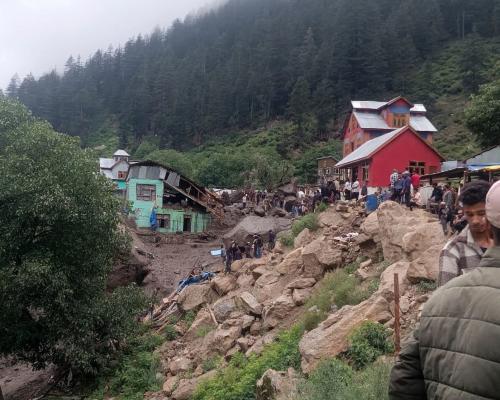
At least 34 people lost their lives and over 200 remain missing after sudden, heavy rainfall triggered devastating floods in Chasoti town, Kishtwar district, in Indian Illegally Occupied Jammu and Kashmir on Thursday. The disaster struck at 11:30 am local time, sweeping away homes, a community kitchen, and a security post along the pilgrimage route to the Machail Mata temple.
The tragedy occurred just days after a massive flood and mudslide in Uttarakhand, making it the second major disaster in the Himalayan region in a little over a week. Witnesses said a large number of pilgrims had gathered for lunch at the community kitchen when the powerful surge of water suddenly engulfed the area, leaving chaos and destruction in its wake.
Local authorities quickly mobilized emergency teams, with the police, disaster response units, army, and air force joining search and rescue operations. Officials confirmed that efforts were ongoing to locate missing individuals, though communication challenges and damaged infrastructure were slowing the flow of verified information from the disaster zone.
Television footage showed frightened pilgrims crying and clinging to each other as water surged through the village. Leaders called the situation “grim” and urged residents to stay away from unstable structures, electric poles, and old trees due to the continuing risk of mudslides and flash floods.
The Indian Meteorological Department defined the incident as a cloudburst — an intense downpour exceeding 100 mm of rain within an hour — known for causing sudden, destructive floods in mountainous regions during the monsoon season. Forecasters warned of more heavy showers in parts of Kashmir, including Kishtwar, in the coming hours.
Authorities stressed the urgency of rescue efforts, emphasizing that every minute was critical in finding survivors. The disaster has once again highlighted the vulnerability of the Himalayan region to extreme weather events and the urgent need for better preparedness in high-risk pilgrimage and tourist areas.