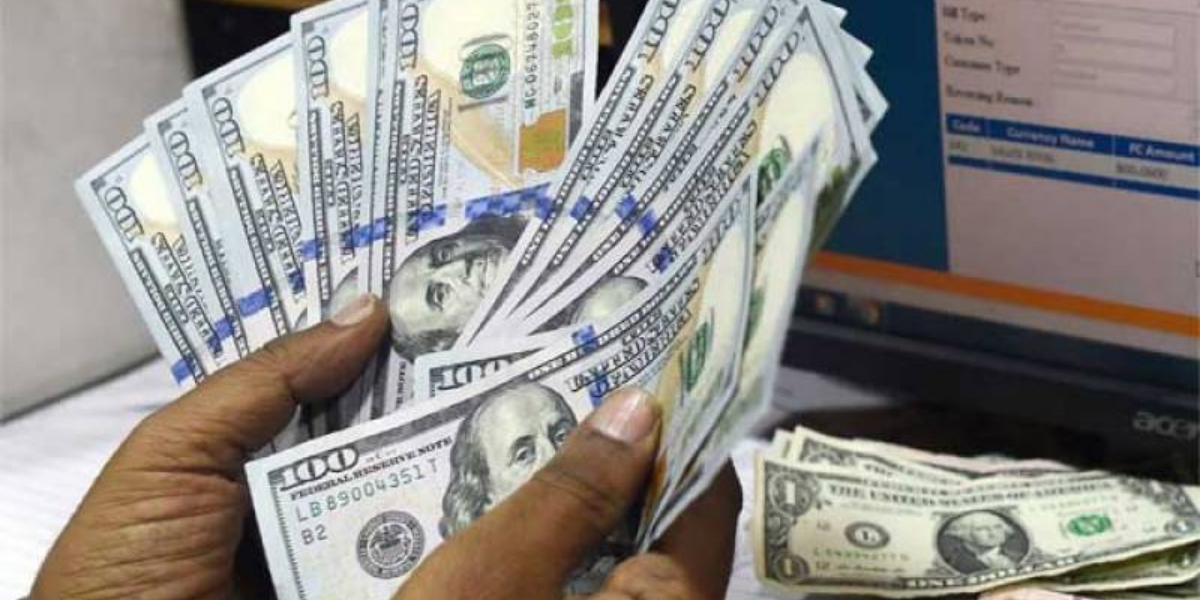
The Pakistani rupee continued to decline against the US dollar on Thursday in anticipation of the executive board meeting of the International Monetary Fund (IMF) on August 29 in Washington.
In the interbank market, the local unit was trading at 219 during the intraday trade after losing 0.62 paisas against the dollar.
Interbank closing #ExchangeRate for todayhttps://t.co/TN9mS4PdX8 pic.twitter.com/C2vLGnHtj0
— SBP (@StateBank_Pak) August 24, 2022
Although, the greenback ended yesterday at 218.38, up by 72 paisas.
According to economic experts, the rupee would remain under pressure until the IMF board approves the payment of Pakistan’s $1.17 billion tranche.
The sky-high inflation in the country, rising trade deficit and falling foreign exchange reserves are putting extreme pressure on the local currency.
The IMF tranche which is expected to reach Pakistan by the end-month is likely to give a much-needed boost to our economy and revive confidence in the value of the Pakistani rupee.
In an interview with Bloomberg TV, State Bank of Pakistan Acting Governor Murtaza Syed said that Pakistan is likely to receive a $1.17 billion loan tranche from the IMF within six days after the Executive Board’s approval.
The acting governor said that the country’s forex reserves will shore up to $16 billion by the end of the current fiscal year 2022-23 which dropped to $8 billion due to delay in the revival of the IMF agreement and external flows.
Once Pakistan gets the loan from the IMF, experts are predicting that the country will get additional funds from multilateral and bilateral organisations — giving a further boost to the depleting forex reserves.
Apart from the pressure of the IMF, the government has also lifted the months-long ban on the import of luxury items and the exports have not increased at desired pace — resulting in pressure on the rupee.
Moreover, the UAE has made it mandatory for Pakistani travellers to declare 5,000 dirhams at the airport when landing — leading to an increase in the price of the US dollar in the open market.