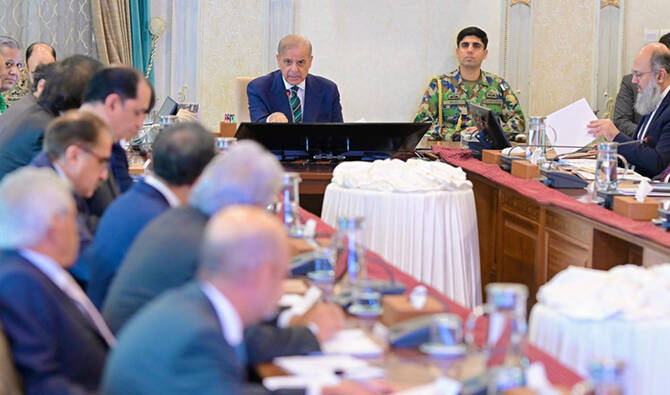
Prime Minister Shehbaz Sharif has reviewed Pakistan’s National Tariff Policy 2025–30 and directed authorities to accelerate economic reforms aimed at strengthening export-led growth. During the meeting, he emphasized that consistent policy support for industry, trade, and investment remains central to the government’s economic strategy.
Furthermore, the prime minister instructed officials to modernize the National Tariff Commission by integrating artificial intelligence and advanced digital tools. He said the commission must evolve into a more efficient institution that can respond quickly to industrial needs and improve investor confidence in Pakistan’s economic framework.
Read more : PM pledges public relief in meeting with top business leaders on …
Officials briefed the meeting on phased tariff reductions planned under the five-year policy, which will gradually lower duties across multiple sectors. These reforms aim to reduce production costs, enhance competitiveness, and support industries focused on exports and long-term economic expansion.
Moreover, significant relief measures were announced for key sectors, including pharmaceuticals, logistics, and construction. Customs duties on raw materials used in pharmaceutical manufacturing, including cancer medicines, will be removed to reduce costs and improve access to essential healthcare products.
Read more : Shehbaz Sharif pushes faster progress on Pakistan-China cooperation
In addition, the government decided to abolish duties on reefer containers and semi-trailers to strengthen supply chains and improve logistics efficiency. Duties on construction machinery and specialized vehicles will also be reduced to encourage infrastructure development and attract new investment in the sector.
Prime Minister Shehbaz Sharif stressed that the National Tariff Commission must actively facilitate investors and industrial growth through transparent and efficient policies. Ultimately, he said a modern tariff system supported by technology will help Pakistan expand exports and improve overall economic competitiveness.