• Skip to primary navigation
  • Skip to main content
  • Skip to primary sidebar
  • Skip to footer
Trending:
  • Kashmir
  • Elections
Sunday, June 7, 2026

Daily Times

Your right to know

  • HOME
  • Latest
  • Iran-Israel war
  • Gilgit Baltistan Election
  • Pakistan
    • Balochistan
    • Gilgit Baltistan
    • Khyber Pakhtunkhwa
    • Punjab
    • Sindh
  • World
  • Editorials & Opinions
    • Editorials
    • Op-Eds
    • Commentary / Insight
    • Perspectives
    • Cartoons
    • Letters to the Editor
    • Featured
    • Blogs
      • Pakistan
      • World
      • Lifestyle
      • Culture
      • Sports
  • Business
  • Sports
  • E-PAPER
    • Lahore
    • Islamabad
    • Karachi

AFP

Lessons from 2011 disaster help Toyota ride out chip shortage

Published on: May 13, 2021 6:28 AM

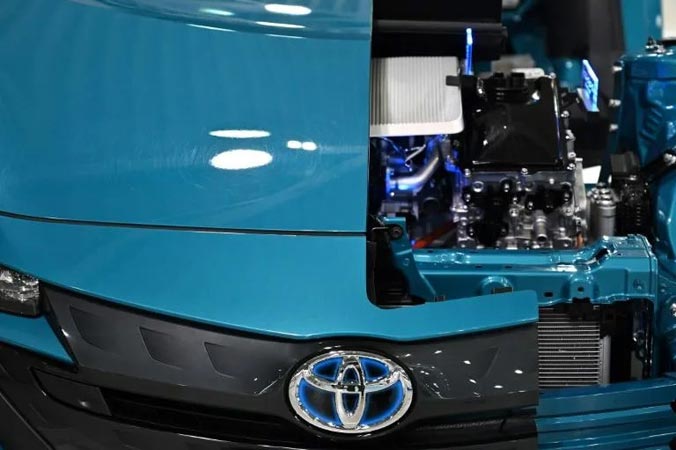
The global microchip shortage dragging on the auto industry has put barely a dent in production at Toyota, the world’s biggest automaker, thanks to lessons it learned after Japan’s 2011 tsunami disaster. While the latest crisis caused by skyrocketing demand for semiconductors has forced global car makers to revise production plans, Toyota exceeded its sales targets this year and expects to sell even more units in the next 12 months.

Its success lies in part, experts say, in its decision to prepare extensively for disruptions after the experience of Japan’s devastating earthquake, tsunami and nuclear crisis 10 years ago. The catastrophe left parts of Japan’s industry on its knees for months, especially vehicle makers, whose domestic supply chains were thrown into turmoil.

Toyota suffered like its rivals and took six months to return to normal production, but the firm resolved not to let the same thing happen again.

“Toyota learned the lessons of the 2011 earthquake probably better than anybody,” said Christopher Richter, an auto expert and managing director at the brokerage CLSA. The Japanese giant reviewed all its suppliers, even the most indirect, giving it a better understanding of its supply chain and allowing it to react quicker in times of crisis. Faced with a global semiconductor shortage this year, “they were just way better prepared than any other automaker in the world”, Richter told AFP. A source close to another Japanese carmaker agreed.

“We all took steps like that post-Fukushima, but Toyota did it best, and kept it up,” he said, referring to the nuclear plant that was crippled by the tsunami. The global auto industry has faced serious headwinds during the pandemic, with lockdowns fuelling declining sales, and a shortage of the chips used in modern vehicles has only compounded the woes. A surge in demand for home electronics that use semiconductors, as well as a US cold snap, a drought in Taiwan and a fire at Japan’s Renesas manufacturer have created a perfect storm throttling chip supplies.


Loyal suppliers

Toyota was a pioneer of the widely used “just-in-time” production model — where stockpiling is kept to a minimum to reduce costs.

Filed Under: Business

Submit a Comment


Primary Sidebar


Latest News

Israeli strike threatens fragile Lebanon truce

Pakistan, Russia sign major security accords

Saudi Arabia condemns Iran missile attacks

Five killed in South Waziristan firing

Revival takes shape as Pakistan football rebuilds under Mohsen Gilani

Pakistan

Pakistan, Russia sign major security accords

Five killed in South Waziristan firing

PM Shehbaz reviews Tehran visit with Naqvi

No talks with agitators, says AJK PM

Pakistan urges UN action on Kashmir

More Posts from this Category

Business

Govt considers tax relief for salons, gyms in Budget 2026-27

PESCO approves one-month salary bonus for employees

SBP’s ‘Go Cashless’ campaign saw Rs 34bn in digital transactions on Eid

Short-term inflation down by 0.56%

Saudi-Pak Business Council shows interest in infrastructure investment

More Posts from this Category

World

Israeli strike threatens fragile Lebanon truce

Saudi Arabia condemns Iran missile attacks

Palestinian infant killed in West Bank shooting

More Posts from this Category


Footer

Home
Lead Stories
Latest News
Editor’s Picks

Culture
Life & Style
Featured
Videos

Editorials
OP-EDS
Commentary
Advertise

Cartoons
Letters
Blogs
Privacy Policy

Contact
Company’s Financials
Investor Information
Terms & Conditions

Facebook
Twitter
Instagram
Youtube

© 2026 Daily Times. All rights reserved.

Manage Consent
To provide the best experiences, we use technologies like cookies to store and/or access device information. Consenting to these technologies will allow us to process data such as browsing behavior or unique IDs on this site. Not consenting or withdrawing consent, may adversely affect certain features and functions.
Functional Always active
The technical storage or access is strictly necessary for the legitimate purpose of enabling the use of a specific service explicitly requested by the subscriber or user, or for the sole purpose of carrying out the transmission of a communication over an electronic communications network.
Preferences
The technical storage or access is necessary for the legitimate purpose of storing preferences that are not requested by the subscriber or user.
Statistics
The technical storage or access that is used exclusively for statistical purposes. The technical storage or access that is used exclusively for anonymous statistical purposes. Without a subpoena, voluntary compliance on the part of your Internet Service Provider, or additional records from a third party, information stored or retrieved for this purpose alone cannot usually be used to identify you.
Marketing
The technical storage or access is required to create user profiles to send advertising, or to track the user on a website or across several websites for similar marketing purposes.
  • Manage options
  • Manage services
  • Manage {vendor_count} vendors
  • Read more about these purposes
View preferences
  • {title}
  • {title}
  • {title}
We use cookies to ensure that we give you the best experience on our website. If you continue to use this site we will assume that you are happy with it.