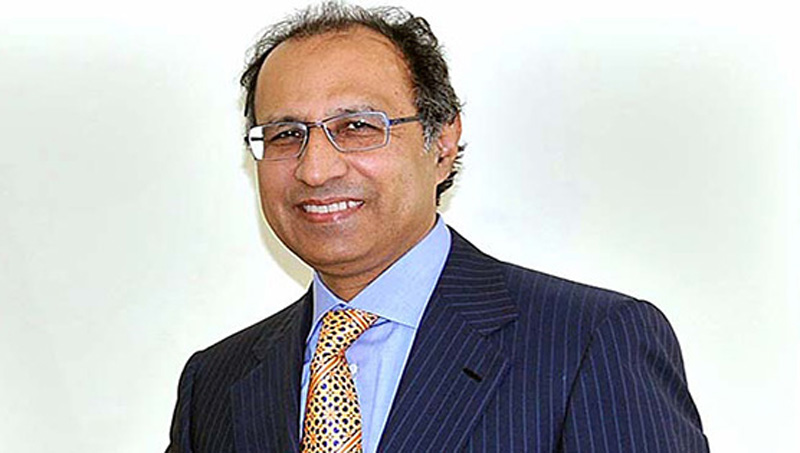
 With the Budget for the next year, 2020- 21, to be announced after a few days, Hafeez Shaikh and his team is confronted with a serious dilemma of how to balance off the revenues with the expenditures. A budgetary deficit of up to 9% of the GDP for the year is being predicted all around. This is but expected since, as per best predictions, the growth rate during the coming year,if not for the year thereafter, is likely to be negative for the first time in Pakistan’s history, after once being so in the 1950s.
Such a massive fiscal deficit will entail heavy bank borrowings and tapping of other debt sources. Despite the windfall gains from the sharp drop in world petroleum prices which will increase non tax revenues, the extra expenditures on health pursuant to the corona crises, the continuing pressures on industrial growth and sharp decline in investments, consumption and demand are likely to put serious pressures on budgetary resources, coupled with likely considerable shortfalls in tax collections.
The traditional solutions, with a few embellishments, will perhaps not deliver. The SPM for Finance is reported to be keen on keeping the number of taxes to a few, to incentivize SMEs and employment, besides improving the trade deficit by impetus to exports. In the FBR and MOF, the plethora of SROs to be curtailed has always remained an elusive goal, as well as the aim of plugging the gaps in the taxation system and the effort to make the revenue collection system fair, easier and transparent.
In the midst of such a difficult financial situation, it is high time Pakistan considers levy of a progressive capital or wealth tax on the super rich in the country for efficiency and equity considerations. This is essential to bring about greater equality of wealth and to tax rentier incomes and wealth; disposable incomes from capital are large enough to allow for a disproportionate share of incomes from wealth to be reinvested,after keeping a sizeable portion for consumption.Thus, theoretically, the new tax is unlikely to retard investments;in any case the returns to capital or wealth are mostly re-invested towards further increasing personal fortunes. Such a progressive tax on capital is essential any way in a society that claims to be based on the principles of economic justice and curtailment of inequalities arising from inheritances(as against incomes arising from work or merit) or large inequalities in incomes of the rich and the poor.Besides, such a tax is inescapable for augmenting state incomes to meet essential needs of development, social services improvement,heavy debt retirement and inevitable defence expenditure burdens on the economy.
In the absence of reliable data pertaining to the quantum of the wealth of the richest, one must look towards the situation prevailing in other countries. By all accounts the richest top decile of the population, more so the wealthiest percentile, and even more so the richest one thousandth( 0.1%) of the wealthiest own capital( real estate, stocks,dividends,profits and other income flows net of debts ) that generates annual incomes to them of nearly 40% of the total national income of the country. Their total wealth and capital assets in the shape of real estate, stocks, dividends and profits roughly equal 3.5 to 4.5 times the national income of the country, or 350 to 450 per cent of the total annual national output.If the assets held in tax havens,a portion of which have become public pursuant to revelation of the Panama Papers, which are available with the FBR and State Bank,are also accounted for, this figure is most likely to increase by 100% across the board.
On the other hand the bottom 50% of the population merely live on their meagre wages or salaries and own hardly 5% of national income as their total assets.If the debts of this class of the population are factored in,then their net wealth more or less touches zero.
This super rich class, by all accounts, is highly undertaxed. There is also the problem of wide divergences between their declared and real wealth and incomes therefrom. But the FBR, SECP, State Bank have or should have access to nearly all the required information and data on individual assets of this class of the rich.
What is required is a progressive tax on this capital and wealth so as to reduce inequality, create incentives for greater competition and investments, besides mobilizing essential resources for budgetary and fiscal needs. A possible tax rate could be zero to 1 % of the capital or wealth valued at between equivalent of $ 100,000 to $ 500,000, 1% to 2 % on wealth between $ 500,000 up to $ 5 million, a tax rate of 3% on capital worth $ 10 million to $ 50 million and 5% on wealth more than $ 50 million and above.
This tax would be imposed upon the top 0.1% of the wealth hierarchy or about 220,000 individuals and must be levied on the basis of ownership of wealth rather than the residence of the assessee . If the average wealth of this group of the wealthy is assumed at equivalent of roughly $ 100 – $ 200 millions per individual owner, then an average revenue of up to PKRs 400-450 billion can be generated by levy of only a marginal average tax rate of 2.5% annually.
The proposed tax may be countered by the argument that the country is already reeling under heavy taxation and the tax on capital or wealth of the top rich will further burden the common man.This is a totally untenable arguent.Firstly,Pakistan can boast to be one of the most undertaxed country in respect of direct taxes,and more so in the case of the abnormally rich,both in terms of income and capital or wealth tax.On the other hand our tax revenues mostly come from indirect, regressive levies that disproportionately impacts the common man and consumer.And finally and critically, the proposed progressive tax will be in the nature of a levy on idle wealth that increases without work to the tune of 4-5% annually whose affect is not passable onto the consumer in the street.
There does, however, exist a serious obstacle in the way of imposing such a tax on the super rich. A large number of the possible affectees, either directly or through a relationship of patronage with such extremely rich, are likely to be the very ones who will be asked to enact such a tax through elected assemblies.If past evidence is anything to go by, such groups of people usually have long hands that can enable such initiatives to be torpedeod at the time of law making, on one disingenuous ground or the other.Thus what will be required is a clear understanding of the merits and justifications of such a tax to carry the day.But most crucially this will require a clear and bold political will and commitment in order to take the country towards taxing wealth on which the people of the country have some common claim, the least of which is that sharp income inequalities are,in the last analysis only justifiable on the touchstone of ‘ common utility’ as spelled out in the American Decalaration of Independence.
The present government’s election agenda was predicated on the principles of justice and equality, which more than anything else, entails a society based on the principles of economic and income equity.The government that is dedicated to reducing inequality and ameliorating the plight of the poorest is morally and politically bound to give serious attention to this policy intervention.Besides the argument of economic democracy, the idea is patently both justified and reasonable as a revenue generation tool at this difficult time of an unprecedented national fiscal squeeze.
The writer authoried ‘The Dragonfly & Other Poems’