 J C Young claims that postcolonial takes place when things begin to move from South to the North and hence reverse the process of representation in the world of literature. He further claims that the writers from the former British colonies are now writing and attempting to represent their people. This representation is causing the postcolonial literature to become hybrid and liquid because of the two reasons: Firstly, As Young says that the representation that moves from South to North is only that much which is permitted by the North and, secondly, this representation becomes hybrid in the sense proposed by Bhabha. Bhabha suggests that this hybridity lends a third space to the representations by the postcolonial writers. It is because of this limitation and the hybridity of the third space, makes the voices of the subalterns even weaker and they experience even more difficulty in speech. This brings to another dimension of postcolonial fiction that comes from the subaltern studies wherein not only this is necessary that the Subaltern should speak but also the subaltern should be heard. If he is not heard, his efforts remain in the process of success but do not succeed in full.
 These confusions in the representation of the postcolonial writers are also because of their being ‘Others’ in comparison to the ‘US’ in the West when only West spoke and the ‘Other’ in the East and South listened. But when the ‘Other’ begins to speak, he becomes himself his own us and, in this case, partial marginalization occurs in case of the West. This causes problems to these representations. Bhabha therefore locates these problematic representations in a third space which is sometime termed as Liminality, some time the third space and some time the Duality and sometime alterity. Whatever the name may be given, in the modern Pakistani postcolonial fiction of Pakistan such a situation has been occurring and can be visibly explored and discussed.
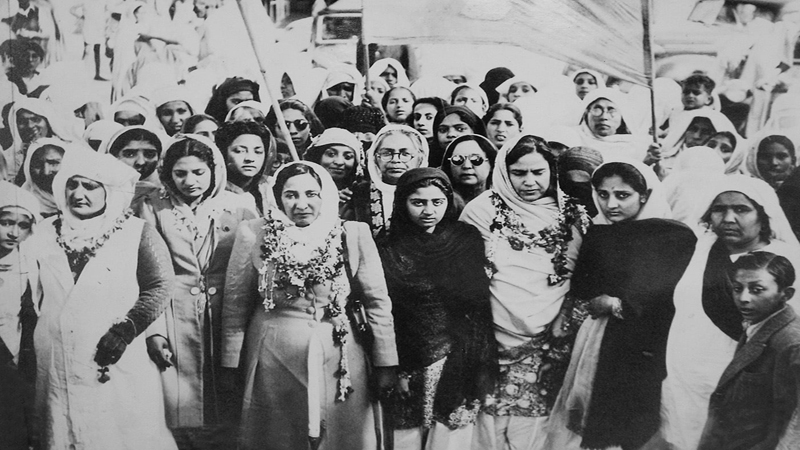
Pakistani fiction in English, like any other postcolonial literature, is the manifestation and evidence of all the above discussed literary developments. For example, Ahmed Ali in Twilight in Delhi, along with lamenting the loss of Mughal Muslim power and culture, spoke about the degeneration gradually seeping into the socio-political life of the Muslims individually as well as collectively. Mumtaz Shahnawaz brought Muslim women at the fore front by portraying the struggle of the Muslim women against the British regime. This role of women in resistance was found on individual level but never on a collective level.
Bapsi Sidhwa put men and women of Pakistan in the backdrop of our history of independence and post-independence. Zulifkar Ghose again condemned the way how the Other of the other days had assumed the role of reversal and himself became the Us of the post-independence Pakistan and developed his own Others. The new other found its voice in the fiction by Qaisra Shahraz in the portrayal of Zari Bano in the novel The Holy Woman. Tallat Abbasi and Aamir Hussain furthered this voice in their short stories. But the voice of these subalterns was also ignored when the writers got engaged with the new issues of diaspora, globalization, and ultimately post 9/11 phenomenon.
Pakistani fiction in English, like any other postcolonial literature, is the manifestation and evidence of all the above discussed literary developments. For example, Ahmed Ali in Twilight in Delhi, along with lamenting the loss of Mughal Muslim power and culture, spoke about the degeneration gradually seeping into the socio-political life of the Muslims individually as well as collectively
Pakistani postcolonial fiction is a blend of all these trends. For example, Bapsi Sidhwa in her fictions, like The Pakistani Bride and An American Brat gives voice to the subaltern and the subaltern is listened as well. Sidhwa makes her subaltern speak in the form of Zaitoon who succeeds in making the people listen to her and so follow the dictates of her mind, though she succeeds only after she has scaled the mountains after mountains. Similarly, another voice is available in the form of Ferouza, who not only speaks but also makes her audience listen her when she refuses to marry as per choice of her family and instead convinces her people that there was no harm if she marries a non-Parsee in USA. But immediately after this the same subaltern got silent and is no more heard when Nadeem Aslam speaks of the stories of Sorraya and Koukab in his novel Maps for the lost lovers. Sorrya in her attempt to be listened seeks riddance from Halala ritual to restore her marriage and is lost somewhere in the foreign land. Similarly, Koukab is traditionally Pakistani migrant to London attempts to cling on her culture and its voice but miserably fails. The subaltern once again is othered and it is found attempting to find not only the voice but also the audience.
This marginalized subaltern wakes and finds it voice in Kamila Shamsie’s fictions Burnt Shadows, Kartography and Home Fire. Hiroko is, for example, is a powerful voice and be seen reterritorializing herself, Raheen, in Kartography, also finds her way in the difficult circumstance like Isma in Home Fire, when she had to lose all she had built with much hard work and worries in the absence of her father and her brother Purvez’s escape to unwanted circumstances. Her sister Aniqa assumes of the powerful voice when she takes up the reins of life in her own hands.
So, this is the type of Pakistani postcolonial literature that keeps on living with the ever-changing circumstances of Pakistan like many other formerly colonized states of the world. It portrays the subaltern, other, marginalized and then their shifting roles from the marginalized to the powerful neo-oriental who is the new reality of the world.
The writer is a professor of English at Government Emerson College, Multan. He can be reached at [email protected] and Tweets at @Profzee