
 In February 2019, after a dog fight between India and Pakistan fighter jets, in which Pakistan downed two Indian air planes and captured a pilot, along the line of control (LoC) came into world spotlight as “two nuclear powers risk a war”. Pakistan maintained its position as “right to response in equal or excess force” while India was trying to cover its failure by giving a higher military award to the captured and then released pilot. Surprisingly, this time the world didn’t buy India’s “cross-border terrorism” claim which was a hug setback for Prime Minister Narendra Modi’s government, and it was just the beginning of year 2019 with a collapse of India’s “two faced secular state”.
On March 16, 2019, ex-chief minister of Jammu and Kashmir Omar Abdullah led a rally in Kulgam to protest Modi’s remarks about changing Jammu and Kashmir’s status of “autonomous state”
Following the incident, residents of Jammu and Kashmir, a region administered by India as a state and a part of the larger region of Kashmir which has been the subject of dispute between India and Pakistan, cheered for Pakistan which ignited hate against them. Every week there were news across India for lynching and some cases killing of Kashmiri descent citizen. In Lucknow, a large city in northern India, the police arrested four people on suspicion of beating up Kashmiri street vendors after a video went viral that showed the attack. Wearing saffron shirts, the color favored by many Hindu nationalists, the attackers called the street vendors “terrorists” and said, “You sell here and throw stones there,” referring to protests in Kashmir.Things got even worse when PM Modi, in his speeches, started giving indication of changing the laws for Jammu and Kashmir. On March 16, 2019, ex-chief minister of Jammu andor Kashmir Omar Abdullah led a rally in Kulgam to protest Modi’s remarks about changing Jammu and Kashmir’s status of “autonomous state”.
 On July 8, the United Nations published a reporttitled “Situation of Human Rights in Indian-Administered Kashmir” and outlined civilian killings and excessive use of force, continued use of pellet-firing shotgun, cordon and search operations, arbitrary detention, impunity for human rights violations, restrictions on freedom of expression, censorship and attack on press freedom, brutal torture, and targeting of Kashmiri Muslims outside Jammu and Kashmir.The report concluded saying that world needs to address urgently the past and ongoing human rights violations and to deliver justice for all people in Kashmir. The United Nations alsourged for the formation of a commission of inquiry into the allegations.
Later in July, Pakistani Premier Imran Khan met with US President Donald Trump in the White House where Trump shocked the world by saying Modi has requested him to help India in Kashmir. President Trump further elaborated saying that he has offered PM Modi “a mediation and facilitation” in Kashmir. PM Imran Khan had a big smile on his face, and he said,”Mr. Trump you will get prayers from over billion Muslims across the world if you do that”. Within less than an hour, the Indian home minister denied any such request from India. It was a hug dent on India’s position on Kashmir as “internal matter” or “bilateral issue”. PM Modi’s request to President Trump put India in an awkward position, moreover, even US Department of State was reluctant to give any statement about it.
“Kashmir dispute is an international issue”, “UN has a role [to play] in Kashmir”, “why international journalists and UN observers are not allowed in the valley?” and “communication ban should be removed immediately”, were coming from ranking congressional leaders
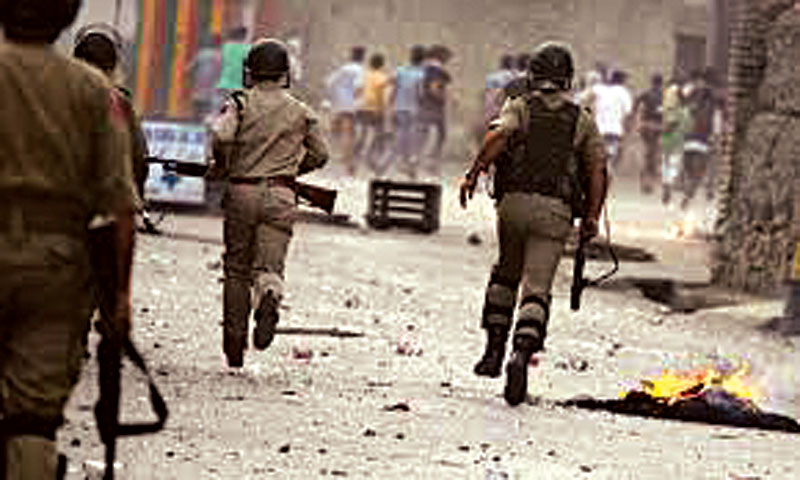
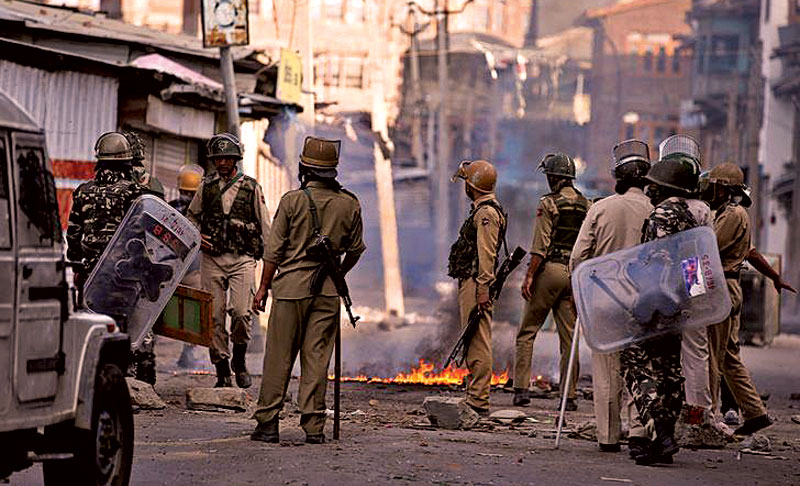
After PM Imran Khan’s visit to Washington, PM Modi started receiving a sharp criticism from all sides even within his own party. One of the election campaign promises of Modi was to change the status of Kashmir, once for all however seeking help from America for Kashmir was not only embarrassing for Modi but it exposed the reality to the world. To cover this fumble, in desperation, on 5 August 2019, the Government of India revoked the special status, limited autonomy, granted under Article 370 of the Indian Constitution to Jammu and Kashmir. For the next 150 days, the Kashmir Valley and entire Jammu endured a full curfew, communications blackout, with landlines, cell phones and the Internet suspended. Nine to 10 million people were pushed behind an iron wall. There was an absolute silence. Already one of the world’s most militarized regions, the Valley was flooded with tens of thousands of Indian troops. Thousands of young boys were pulled out of their houses, women rape allegations were cited everywhere, and local economy became almost zero. Doctors were killed and dragged on the streets for treating patients and shops set ablaze a giving horrifying messages to the residents.
 Western Media
The western world especially American media raised its voice on a historic note. In the month of August alone, there were 350 articles published in almost every newspaper across America. CNN, Fox, ABC, MSNBC and other leading TV channels had special segments on Kashmir on a daily basis. The Kashmir issue got so much momentum that US congressional leaders and congressmen started talking about it publicly. Despite pressure from Indian lobbyist and diaspora, strong statements started coming from these leaders.
Activism at US Congress and Senate
It didn’t just stop here; in October and November, the issue of Kashmir marked another historical foot print at the US capital. There were special hearings on the issue of Kashmir and grave human rights violations in the valley by the Indian Army. During these hours long hearing, strong statements, like “right to their [Kashmiris] own self-determination”, “Kashmir dispute is an international issue”, “UN has a role [to play] in Kashmir”, “why international journalists and UN observers are not allowed in the valley?” and “communication ban should be removed immediately”, were coming from ranking congressional leaders. Most recently, on December 06, Indian descent Congresswoman Pramila Jayapal has presented a bill in US Congress urging India to end the restrictions on communications and mass detentions in Jammu and Kashmir as swiftly as possible and preserve religious freedom for all residents.
Kashmir – another Palestine in the making
While you are reading this article aboutKashmir’s rollercoaster ride, one cannot help but see itssimilarity to Israel’s decades-long, brutal oppression of the Palestinians. On November 16, Sandeep Chakravorty, Indian consul-general to New York said in a private gathering of Kashmiri Hindus and Indian nationals, in New York, that India will build settlements modelled after Israel for the return of the Hindu population to Kashmir. “I believe the security situation will improve, it will allow the refugees to go back, and in your lifetime, you will be able to go back ….. and you will be able to find security, because we already have a model in the world. I don’t know why we don’t follow it. It has happened in the Middle East. If the Israeli people can do it, we can also do it,” said the consul general.
In my opinion, today we are living in a time where a country like India openly commits war crimes, cheers on its citizens bloodshed and literally gets away with it. The “world’s biggest secular democracy” glitters like fool’s gold on the tongues of world leaders. The US, UK and other so-called human rights champion regimes seem toothless in the face of the bold barbarisms of nation-states invested in repressing democracy. To ensure speedy justice to people of Kashmir and elsewhere, Western world needs to revisit their policies. Today, we see economic and trade benefits are taking priorities over humans which must change. But I do see a hope of light at the end of tunnel as the small but growing pockets of solidarity expressed for Kashmiris are heartening across America and Europe. As every issue has a specific shelf life, these small groups, like Pakistan American Political Action Committee (PAKPAC), are making a huge contribution to keep this issue and Kashmiri people’s voice alive.