
Sunil Janah and Henri Cartier Bresson were photojournalists who added to Partition history’s visual spectrum.
The events around the partition have a limited photographic record and evidence. Margaret Bourke-White clicked a majority of the images we see today. However, Sunil Janah was the only native to cover the violence while Henri Cartier Bresson arrived later to focus on refugees.
Sunil Janah was born in Assam and educated at the Presidency College in Kolkata. He is best known for his images of the 1943 famine in Bengal. It was largely due to his images that the rest of the country and the world came to know of the starving villages in Eastern India.
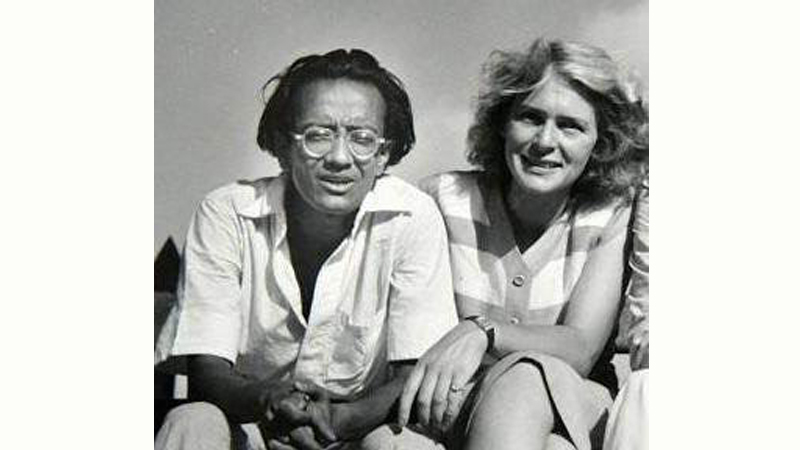
Janah covered the partition riots in association with Margaret Bourke-White. Together they covered the great migration. He later confessed he probably survived the violence because of the British security escort was given to Bourke-White. She also sponsored some of the trips and lent her equipment to Janah, who helped her with story ideas and access to rural India. Therefore, in Bourke-White’s photos, we can see a glimmer of Janah’s humanistic approach to photography. While in Janah’s photos we can see Bourke-White’s technical influence, particularly in lighting and subject arrangement.
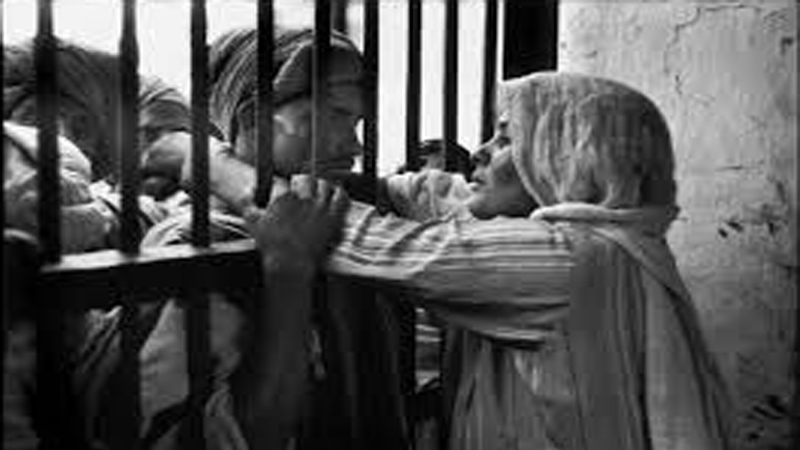
Sunil Janah captured the post-independence India in great detail. He also photographed Nehru, Jinnah and more famously, Gandhi in all their powerful glory. Many of the pre-partition images of Jinnah were actually clicked by him.
He gave the coal mine workers, rural peasants, and migrants a face while covering the horrors of their daily life in great detail. Eventually, Sunil Janah moved to England and became nearly blind due to glaucoma in the 1980s. He died in 2012 and received the Padma Bhushan for his services to Indian history.
He never made much money from his career but he did gain immense respect within his fraternity and beyond. He became friends with the likes of Satyajit Ray, many of the political figures and the villagers he photographed.
Janah covered the partition riots in association with Margaret Bourke-White. Together they covered the great migration. He later confessed he probably survived the violence because of the British security escort was given to Bourke-White
Henri Cartier Bresson was a Frenchman and widely hailed as the greatest “humanist photographer” of the last century. He pioneered the idea of street photography and his images are well-known for being casual, frank and spontaneous. He recorded the ordinary life in Mumbai of the 1940s. But he also toured the refugee camps and photographed refugees in trains, camps and on foot. Unlike Bourke-White who focuses on one or two subjects in the frame, Bresson takes a wider picture and captures many people together. His images capture not just the misery and the tragedy of that summer in 1947 but also details of the daily life.
In 1947, after covering partition, he held a solo exhibition at Museum of Modern Art in New York and established the Magnum agency. This is an international photographic cooperative that is owned by photographers around the world. Bresson defined it as the “a community of thought, a shared human quality, a curiosity about what is going on in the world, a respect for what is going on and a desire to transcribe it visually.”
However, his greatest honour is perhaps the images of Mahatma Gandhi he took just before his assassination. Eventually, he took images of Gandhi’s last rites, funeral and the transfer of his ashes across India on a train. He captures not just the man and his last journey in depth but also those who revered him. The world got the first and the most explicit glimpse of what Gandhi meant to Indians in those photos. They were published in the Life magazine and brought Bresson immediate fame.
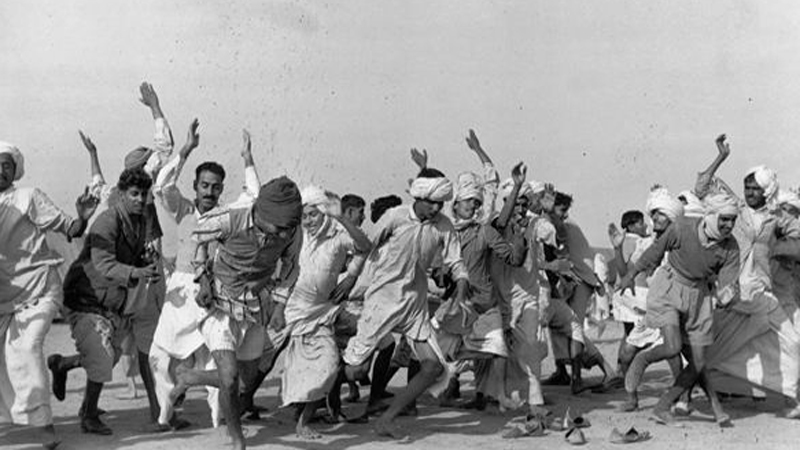
Bresson published these images in a book “Henri Cartier-Bresson: India in Full Frame” and the exhibition of his photographs with the same name travels the world. His other book, “The Decisive Moment”, carries imaged of the west in the first half and images from the east in the second. Bresson died in 2004. His oeuvre is dominated by images of refugees, border disputes, charismatic politicians, and funerals.
Published in Daily Times, August 6th 2018.