
The growing Hindu Nationalism, unrest and right-wing politics in India have greatly faded its so-called secular identity and are continuously unveiling the largest democracy in the world. The Indian claims of being a peaceful pluralistic nation seem false since the various religions prevailing in it are somewhat threatened.
There exists a permanent and eventual struggle between good and evil — and it always seems to be resisting each other eternally. The same phenomena apply on the relationship between Muslims and Hindus of the sub-continent. After Hindus were frustrated in their efforts to maintain the dominance of their religion and distinguish themselves from Muslims since the followers of Islam were on the rise in the region — a secular yet devoted Hindu named as Vinayak Damodar Savarkar presented a new or probably distorted version of the Hindu religion in his 1923 essay ‘Essentials of Hindutva’. Savarkar stressed that India is exclusively for Hindus and they must safeguard their religion — from Muslims. Again in 1928, Savarkar published a pamphlet ‘Hindutva: Who is a Hindu?’ and put forward the concepts of ‘Indian Nation’ and ‘Greater India’ and defined a Hindu on the basis of race, culture and nation. The essays and books of Savarkar served as the Bible for his followers and they relentlessly followed those arguments. Ever since Hindutva’s inception and introduction in India — a clear leaning can be observed in the Indian society that is perhaps driven by fear, intimidation and terrorisation.
Again in 1939 an extremist Hindu — MS Golwalkar put forward a new book titled as ‘We or Our Nationhood Defined’. Besides Golwalkar defined Hindu religion and nation, nevertheless, he also used virulent language especially aimed at Muslims. In the meantime, on September 27, 1925 — Dr Keshav Baliram Hedgewar — a physician by profession and a Hindu by religion — was deeply influenced and impressed by the teachings of Savarkar laid down the foundations of Rashtriya Swayamsavek Sangh (RSS) or the National Volunteers Movement in Nagpur, Maharashtra — then British India.
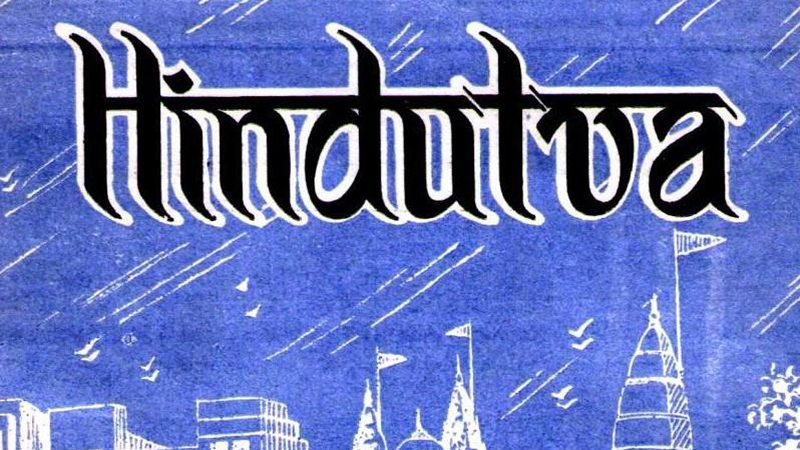
Ostensibly, Dr Hedgewar was driven by the notion of Hindu Rashtra or the Hindu Nation and wanted to organise Hindu Nation primarily to preserve its identity. The systematisation and organisation of Hindus were fundamentally fuelled by overt hatred and animosity towards Muslims and Islam. Instead of teaching Hindus the notion of ‘Civic Nationalism’ they were given a distorted version of radical Hindu religion flanked by extreme sentiments of ‘Hindu Nationalism’.
Indian media, politicians, academicians, diplomats, entrepreneurs and military men have always been busy propagating the secular, pluralistic and democratic identity of India worldwide and claim to be the world’s largest democracy. It is a fact that the dominant religion of India — Hinduism and its followers Hindus have striven hard to maintain their separate identity primarily due to the reality that the land has a unique ability of absorbing religions, cultures and ethno-linguistic foundations.
The past few decades have seen unparalleled terror in India in the name of Hindutva. The various affiliated organisations of RSS are the primary driving force behind this violence and terror
This open secret negates the popular discourse that Muslims of the sub-continent were fearful of their separate identity apart from the earnest desire of Muslims for a separate homeland that emerged in the early 1930s on the basis of unique set of religion, social values, economic system, history, law, living style and ultimate destiny. Even the demand of Muslims has its roots in the bias or perhaps over-consciousness and hyper-sensitiveness of Hindus regarding their identity and distinctiveness.
To assimilate and amalgamate or perhaps absorb Islam into Hinduism — the Hindu Pundits went to almost every length and argued that Rahim and Raam are nothing but different names of the same entity. Apparently, Hindus were threatened by Islam and Muslims and did everything out of desperation.
The past few decades have seen unparalleled terror in India in the name of Hindu religion. The primary driving force behind the violence and terror is nothing but the various affiliated organisations of RSS. Almost fifty three institutions and organisations are affiliated with RSS and have been propagating Hindutva ideology in many ways. The most dominant and political wing of RSS is Bhartiya Janata Party (BJP) — the incumbent political party in Indian Government. Apart from BJP, various affiliated militant organisations of RSS have been intimidating non-Hindus and all those who do not succumb to Hindutva ideology. Akhil Bharatiya Vidyarthi Parishad, Arya Samaj, Vishwa Hindu Preshad, Bajrang Dal, Shiv Sinha and Abhinav Bharat are among those Hindu fundamentalist and extremist militant organisations pursuing Hindutva ideology — resorting to Saffron Terrorism.
Ostensibly, Hindutva ideology founded the very pivots and foundations of a perpetual confrontation and conflict in India on the basis of race, culture and nation. This divergent ideology already has and will further Hindu Nationalism and will distort and destroy Indian Nationalism.
The writer can be reached on [email protected]
Published in Daily Times, January 5th 2018.