
What made India adopt the ‘look East policy’ and afterwards ‘act East policy’? Is the Nehruvian dream about India being a historic great power true? India perceives Pakistan to be an ideological rival, but why does it consider China an enemy? Isn’t it that India is following offensive realism relentlessly, but eventually it would resort to conflict instead of cooperation in a complex interdependence scenario? What are the underlying ambitions of the Indian Act East Policy? If India has historically been invaded from West, then why does the Indian leadership seem adamant of the fact that it just cannot maintain friendly relations with Pakistan; meanwhile quite contrary to this, India seems absolutely confident to have a leading role in Afghanistan? The Indian decision making towards its Western neighbours appears to be a pedestal of mockery and irony but at the same time it intends to spread its tentacles in the East.
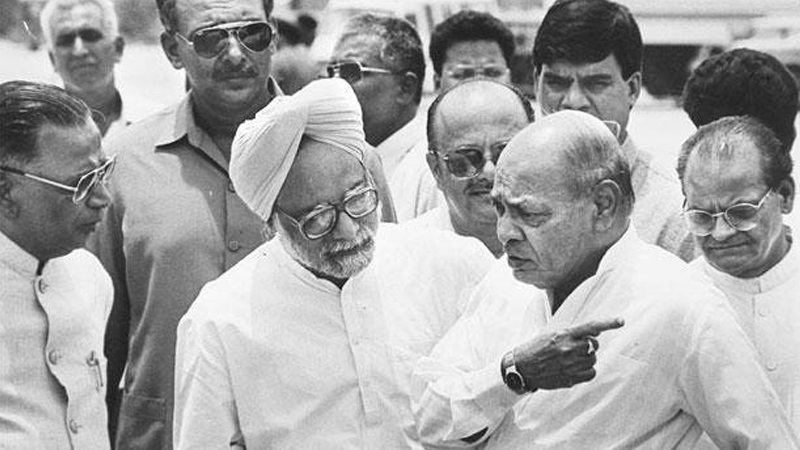
Former Indian Prime Minister Narasimha Rao is considered to be the chief architect of ‘Look East Policy’. In 1992, he actually conceived this strategic shift in Indian strategic thought with one fundamental principle to boost economic and strategic relations with the nations of East Asia and the Pacific. This policy has its foundations in Indian strategic culture since it is a historical fact that India has always been invaded by the foreign invaders from its West and North-West. Before the arrival of the great Mughals, the Central Asian warriors attacked India from the West, whilst some writers argue that these invasions were reactionary in nature due to the Hindu expansion. They present evidence to their claim with the etymology of the ‘Hindu Kush’ mountainous region which is often speculated to be the land of Hindu eliminators. The Indian geography is a complex one and is being protected by the Great Himalayas in the North and the formidable Indian Ocean in the South. The East of India remained peaceful and did not attack perhaps due to its lack of capability or economic reasons.
Former Indian Prime Minister Narasimha Rao is considered to be the chief architect of ‘Look East Policy’. In 1992, he actually conceived this shift in Indian strategic thought with one fundamental principle to boost economic and strategic relations with the nations of East Asia and the Pacific
Almost three years ago, PM Rao’s ‘Look East Policy’ was transformed into ‘Act East Policy’ by the current Indian Prime Minister Narendra Modi during his visit to Myanmar. Ostensibly, PM Modi intends to boost economic as well as security relations especially with ASEAN countries particularly with Japan and Vietnam. It is believed that these East-Asian countries were somewhat neglected by India in the past and that now is the time to engage.
Historically, many great powers entered alliances and sometimes double alliances to reinforce and strengthen their defences and economies. These alliances proved quite handy in maintaining the balance of power and even balance of threat in many cases. But forming or becoming a part of an alliance and an act of leaning and inclining are two separate entities working entirely at different levels. The joining of SEATO and CENTO alliances by Pakistan in mid 1950s was need of the hour of a nascent nation-state. Some may argue that it was an act of leaning since at that time Communist-spread and Truman Doctrine followed by Domino Theory left little choice for Pakistan. Interestingly, Pakistan has never claimed to be a great power or a regional policeman, unlike India.
Apart from Indian rhetoric of cooperation and economic integration, the dominant objective behind ‘Act East Policy’ remains to integrate American ‘Pivot to Asia Policy’ with ‘Act East Policy’ to counter-weight China. The Chinese leadership recently surprised Indian political top brass by presenting the concept to merge Indian ‘Act East Policy’ into Chinese ‘Belt and Road Initiative’. The idea was presented by Chinese Ambassador to India Lou Zhaohui during his speech at a think tank.
In addition to Pakistan and Afghanistan, the Indian Act East Policy is gravely dangerous for China since India wants to arm Vietnam and other apparent anti-China countries to create a bloc of its own. Russian Sputnik News reported in September 2017 that India is secretly supplying Brah Mos cruise missiles to Vietnam as a part of its Act East Policy. India has imperialistic designs, but while maintaining hostile relations with its immediate neighbours – whilst acting under Kautaliya Chanakya’s – the country is squeezing its action space and creating more enemies than friends. The foreign Muslim warriors who always invaded India came from Afghanistan and the Central Asia. The land of Afghans and Pashtuns has a tendency to respond towards Indian incursion and keeping in view the history, it can be predicted here that India would not be able to sustain its role in Afghanistan.
Apparently, India still maintains rhetoric of being a non-aligned state but the growing Indo-US strategic, security and diplomatic ties make one sceptical of such an Indian claim. Indo-US Civil Nuclear Deal, Malabar Naval Exercise, Logistics Exchange Memorandum of Agreement (LEMOA) and Indian active participation in the US ‘Pivot to Asia Policy’ along with its ‘Act East Policy’ – are among many indicators which make one believe that India intends to move East but actually it is leaning by the West.
The writer can be reached on [email protected]
Published in Daily Times, December 24th 2017.