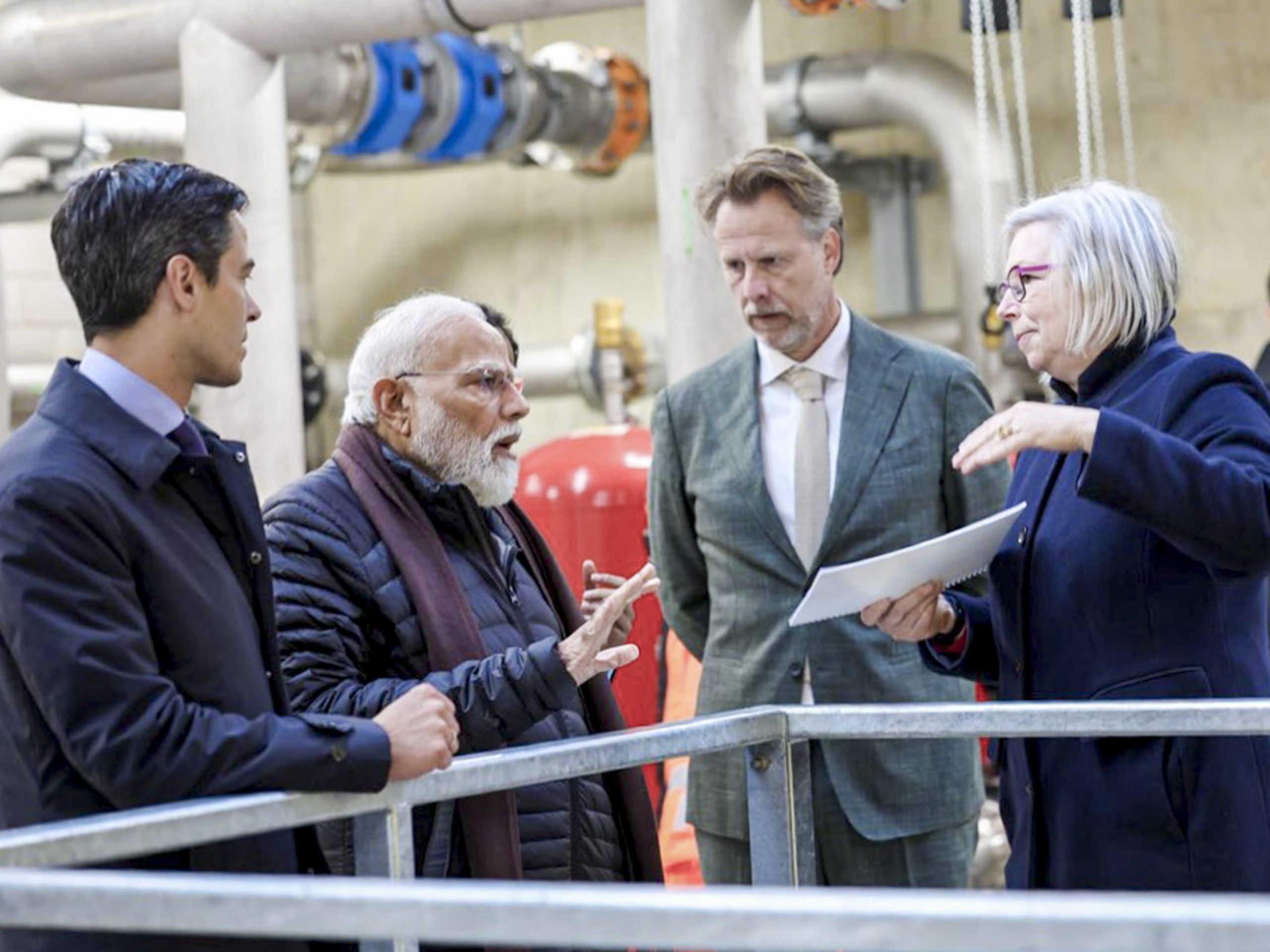
A recent press interaction during Indian Prime Minister Narendra Modi visit to the Netherlands has drawn international attention after a heated exchange between Dutch journalists and Indian officials highlighted concerns over press freedom, minority rights and tightly managed media briefings.
Read More: Modi’s election victory based on ‘celebrating 40 killed soldiers Dutch activist
The incident occurred in The Hague during Modi’s official visit, where the focus was on strengthening India–Netherlands relations, including cooperation in trade, defence and semiconductor technology. However, the diplomatic agenda was overshadowed when journalists questioned the Indian delegation about human rights and media access.
According to reports, Dutch journalist Ashwant Nandram of De Volkskrant asked why the leaders did not hold a joint press conference, a common practice in Dutch diplomacy. He also referred to remarks by Dutch Prime Minister Rob Jetten expressing concern over press freedom and minority rights in India.
In response, Indian Ministry of External Affairs official Sibi George defended India’s democratic system, citing its large electorate, high voter participation and cultural diversity. He argued that India’s pluralistic society and historical tradition demonstrated its commitment to inclusivity.
However, the exchange intensified when journalist Merel Thie of NRC challenged the official’s remarks, clarifying that concerns raised were based on statements made by the Dutch prime minister himself. The official responded that he had not seen the statement and reiterated India’s position, describing the country as a vibrant democracy.
The confrontation quickly gained attention in international media, with observers noting the contrast between India’s official messaging and the scrutiny it faced from European journalists. Critics argue that such exchanges highlight long-standing concerns about India’s approach to press conferences and media questioning during high-level diplomatic visits.
Supporters of the government maintain that India remains a strong democracy with active participation and diverse media, while critics point to its ranking of 157th out of 180 countries in the 2026 World Press Freedom Index by Reporters Without Borders.
Read More: Pakistan will not get water over which India has rights: Modi
The episode underscores ongoing tensions between India’s global diplomatic image and questions raised abroad about press freedom and governance practices.