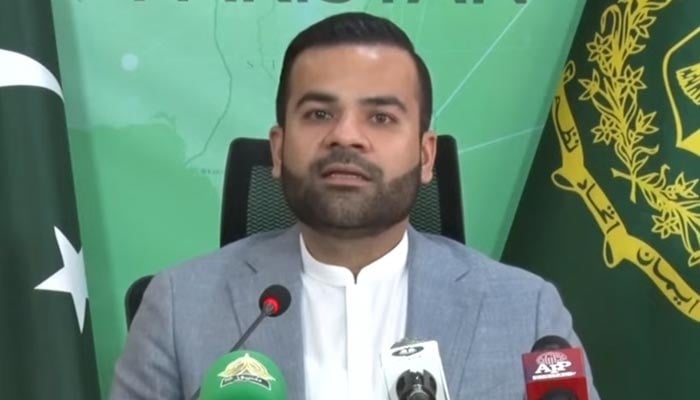
The federal government has defended the Judicial Commission of Pakistan’s (JCP) decision to transfer three judges of the Islamabad High Court (IHC), rejecting criticism that the move undermines judicial independence.
Read More: JCP approves transfer of three IHC judges
Minister of State for Law and Justice Barrister Aqeel Malik said the transfers were “not a punishment” but part of a long-standing administrative practice of judicial rotation supported by bar associations. He added that the process was carried out in accordance with the Constitution and legal provisions.
Speaking during a television interview, Malik said judges, like other officers in the system, are subject to administrative processes and rotations where necessary. He argued that such movements help prevent the formation of informal groupings within courts and ensure institutional balance.
The JCP recently approved the transfer of Justice Mohsin Akhtar Kayani to the Lahore High Court, Justice Babar Sattar to the Peshawar High Court, and Justice Saman Rafat Imtiaz to the Sindh High Court. The decision was made through a majority vote in a meeting chaired by Chief Justice of Pakistan Yahya Afridi.
The government maintains that the transfers are administrative in nature and do not affect judicial independence. Malik further stated that judges were given due consideration and that constitutional procedures were followed during the commission’s deliberations.
However, the move has sparked debate within legal and political circles. Critics, including opposition leaders, have raised concerns that such transfers could weaken judicial autonomy and create perceptions of external influence over the judiciary.
Opposition figures argued that high court judges are appointed with security of tenure and should not be moved without consent, warning that arbitrary transfers could impact institutional stability.
The JCP clarified that the proposals for additional transfers were withdrawn during the meeting and that any vacancies created would be filled through further transfers rather than fresh appointments.
Read More: Judicial Commission transfers 3 IHC judges to other courts
While the government insists the process is routine and lawful, the controversy highlights ongoing tensions over judicial appointments, transfers, and the balance between administrative control and judicial independence in Pakistan’s legal system.