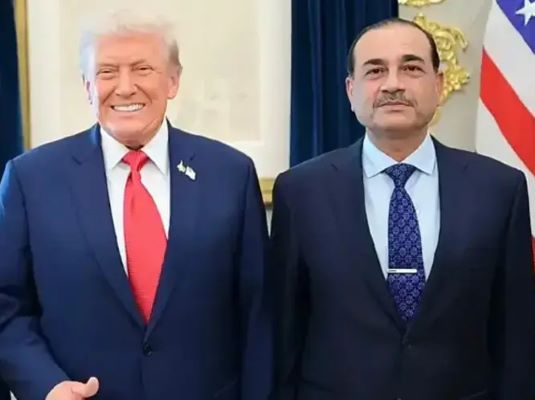
US President Donald Trump said he will consider advice from Pakistan’s army chief Asim Munir on the Strait of Hormuz blockade. The issue matters because it complicates ongoing peace efforts with Iran and risks further regional instability. Pakistan, the United States, and Iran are directly affected by the evolving diplomatic situation.
A Pakistani security source said the two leaders discussed the blockade during a recent phone call. The source added that Munir highlighted how restrictions in the Strait of Hormuz are hindering progress in talks with Iran. Trump responded that he would review the concerns as part of broader US policy considerations.
Read more: Trump rejects Iran’s attempt to blackmail US over Hormuz
The Strait of Hormuz remains a crucial global shipping route, especially for oil exports from the Gulf region. Any disruption in the waterway can quickly impact global energy markets and increase geopolitical tensions. Therefore, the blockade has drawn attention from multiple international stakeholders.
Meanwhile, US-Iran relations remain strained amid ongoing disputes over security and regional influence. Efforts to revive diplomacy have faced repeated setbacks due to military incidents and mutual distrust. The latest development adds another layer of complexity to already fragile negotiations.
Read more: Iran talks could resume over next two days in Pakistan, says Trump
Pakistan has increasingly positioned itself as a diplomatic intermediary in regional conflicts. Analysts say its engagement reflects a broader attempt to promote stability while maintaining strategic ties with both Washington and Tehran. However, it remains unclear how much influence Islamabad will have on future US decisions.