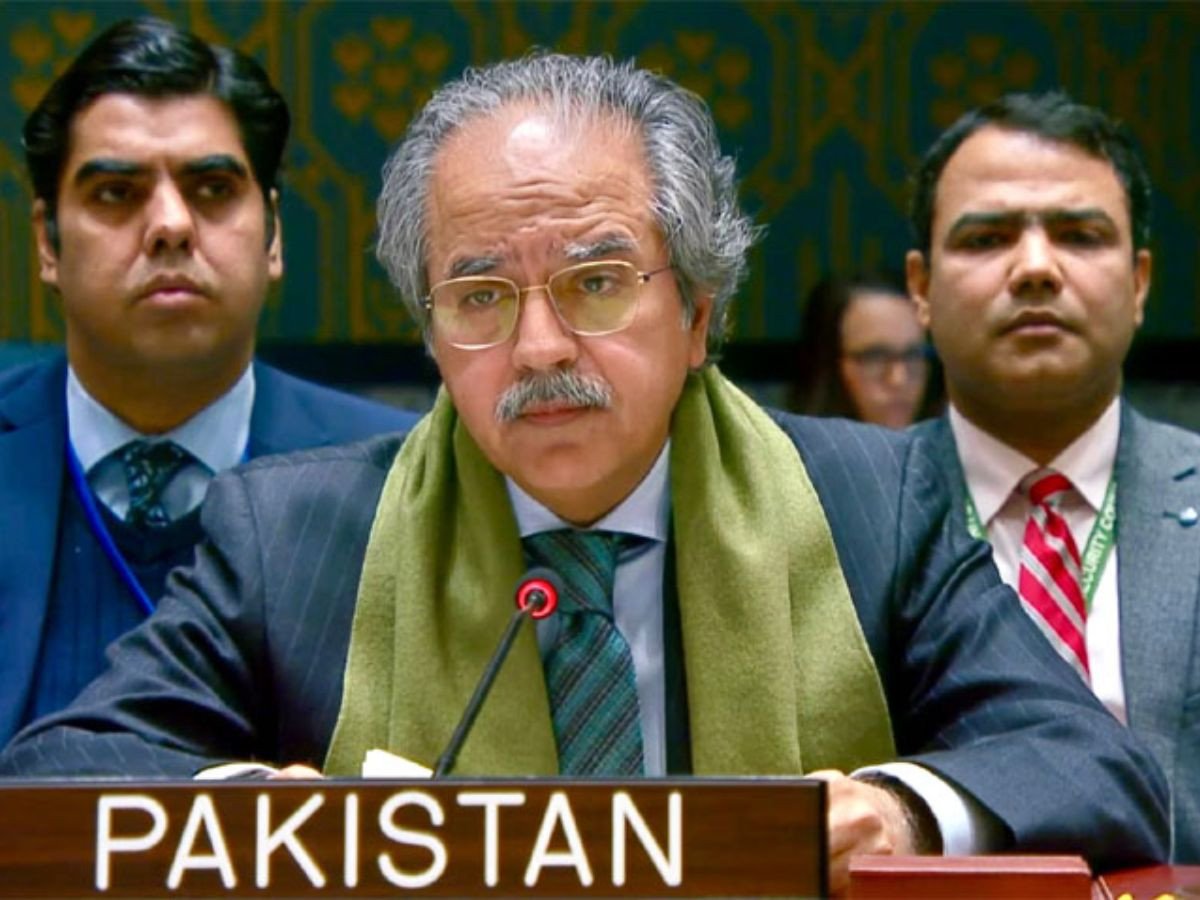
ISLAMABAD – Pakistan told the United Nations Security Council (UNSC) on Thursday that the breakdown of diplomacy in the Middle East has further complicated the Iranian nuclear issue, with Secretary-General António Guterres warning that the escalating crisis poses a “grave threat to international peace and security.”
Read More: At UNSC, Pakistan highlights humanitarian fallout of ME conflict
Speaking at a briefing on the 1737 Committee, which oversees UN sanctions related to Iran’s nuclear program, Pakistan’s Permanent Representative, Asim Iftikhar Ahmad, highlighted deep divisions within the Council over sanctions implementation. “The Council remains divided on the 1737 Committee issue,” he said, noting that disagreements were delaying the appointment of Chairs of Subsidiary Bodies and significantly hindering their work.
The unfolding crisis in the Middle East constitutes a grave threat to international peace and security and has caused immense suffering for civilians.
De-escalation and dialogue are the only way out.
I strongly urge all parties to cease the hostilities, uphold international…
— António Guterres (@antonioguterres) March 12, 2026
Ambassador Ahmad stressed that procedural disputes must not obstruct the routine functioning of the Council. He warned that recent “unprovoked and unwarranted attacks on Iran” have complicated an already sensitive nuclear file, emphasizing that the principles of the 2015 Joint Comprehensive Plan of Action (JCPOA) and Security Council Resolution 2231 remain valid.
Guterres cautioned that military escalation risks triggering a wider conflict and urged all parties to pursue dialogue and de-escalation. UN agencies have also highlighted the humanitarian impact, reporting that more than 1,100 children have been killed or injured, with millions facing disrupted schooling and displacement.
Pakistan reiterated its opposition to the use of force, condemning strikes on civilian infrastructure and nuclear facilities under IAEA safeguards. Ambassador Ahmad warned of the environmental and safety risks associated with attacks on nuclear sites and stressed the need for the IAEA to resume its verification mandate in Iran unimpeded.
Read More: Pakistan’s Strategic Role at the UNSC
Referring to Security Council Resolution 2788 adopted in July 2025, he urged the Council to “revive the spirit of the Charter” and pursue peaceful dispute resolution. “The JCPOA charted a roadmap for addressing concerns of all parties through reciprocal action, embodying the peaceful resolution of disputes,” Ahmad said, calling for renewed diplomatic efforts to prevent further escalation in the region.