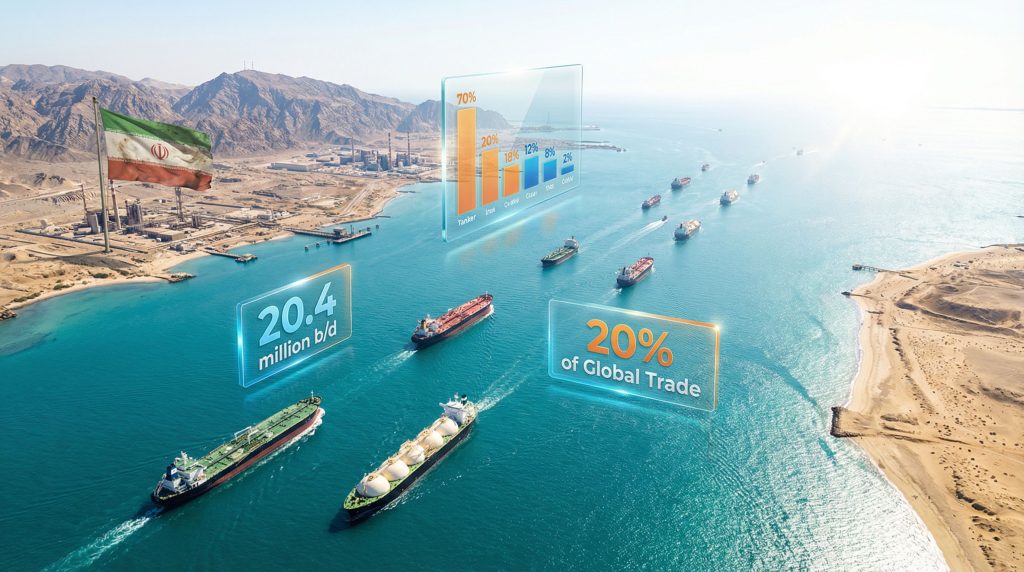
The Strait of Hormuz, a critical chokepoint for global oil and gas, is facing unprecedented disruption as regional conflict intensifies in the Gulf. Roughly 20 percent of the world’s seaborne oil passes through the strait, making it vital to energy markets, while container traffic to major ports like Dubai’s Jebel Ali also depends heavily on this narrow passage. Shipping companies are now rerouting or halting operations, creating widespread uncertainty for regional and international trade.
Major shipping firms, including MSC, Maersk, CMA CGM, Hapag Lloyd, and Cosco, have ordered vessels to seek safe anchorage as Israeli and US strikes on Iran escalate tensions. On tracking maps, clusters of tankers appear near Kuwait and off Dubai, while Iran’s merchant navy remains near Bandar Abbas. Analysts describe this “freeze” on shipping as unprecedented, surpassing even disruptions during the Iran-Iraq war of the 1980s.
Read more : Strait of Hormuz: key oil route in middle of US-Iran crisis
The strait also supports trade beyond oil, enabling exports of cars, machinery, agricultural products, luxury goods, and pharmaceuticals from Europe to the Middle East. Germany, France, and Italy rely on Hormuz for industrial and consumer shipments, while the region sends oil, gas, fertilisers, plastics, and aluminium to global markets. Interruptions threaten both supply chains and commodity availability, heightening economic pressure worldwide.
Retail and e-commerce companies have already warned of delays, with platforms like Temu, Shein, and Amazon citing extended delivery times due to rerouting and limited maritime access. Freight costs are rising as companies charge extra for alternative transit routes. Ships now avoiding the Red Sea and Suez Canal due to Yemen-based threats must take the longer Cape of Good Hope route, adding roughly ten days and increasing costs by about 30 percent.
Read more : Iran halts shipping through Hormuz Strait
Energy analysts warn that prolonged closures could push oil prices higher, while businesses dependent on Gulf exports may face shortages of key raw materials. Companies are closely monitoring developments in the strait, balancing risk and logistics as regional hostilities continue. Governments and international organizations are urging caution, but no resolution appears imminent as military actions persist.
The disruptions highlight the global vulnerability of maritime trade to geopolitical conflicts, especially in narrow and strategic waterways. Even brief closures can ripple across multiple industries, emphasizing the need for contingency planning and diversified supply chains to mitigate economic impact.