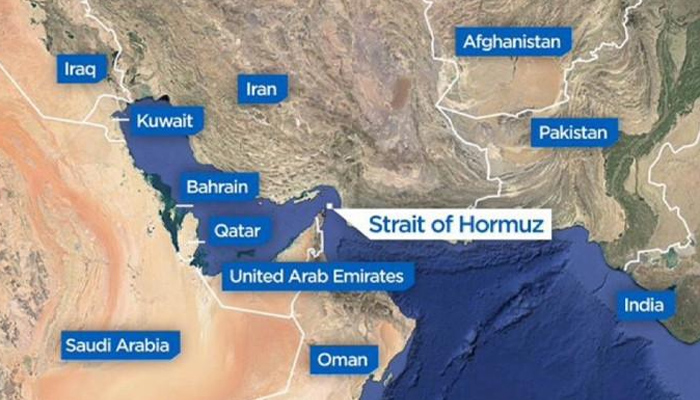
Iran’s Revolutionary Guards announced the closure of the Strait of Hormuz, barring all ships from passing through the narrow 40-kilometer waterway. The move comes amid escalating Middle East tensions following US and Israeli strikes on Iran, and marks a significant escalation in the region’s military and economic standoff.
British media reports that nearly one-fifth of the world’s crude oil passes through the Strait of Hormuz, making it a vital global energy chokepoint. The strait connects the Persian Gulf with the Gulf of Oman, facilitating oil and gas shipments to international markets.
Read more: Trump announces major operation against Iran
Oil exports from Saudi Arabia, the UAE, Kuwait, and Iran rely heavily on Hormuz. Qatar also depends on the strait for its LNG exports, which supply major Asian and European buyers. Analysts warn that even temporary closures could spike global oil and gas prices and disrupt shipping schedules.
OPEC member countries use the strait to export most of their crude, particularly to Asian markets. The closure could impact millions of barrels of oil daily, affecting global energy security and economic stability.
Read more: Trump’s Iranian missile claim unsupported by US intel, say sources
Experts say Iran’s closure demonstrates its strategic leverage amid ongoing military tensions. International authorities and shipping companies are closely monitoring the situation to prevent further disruptions.