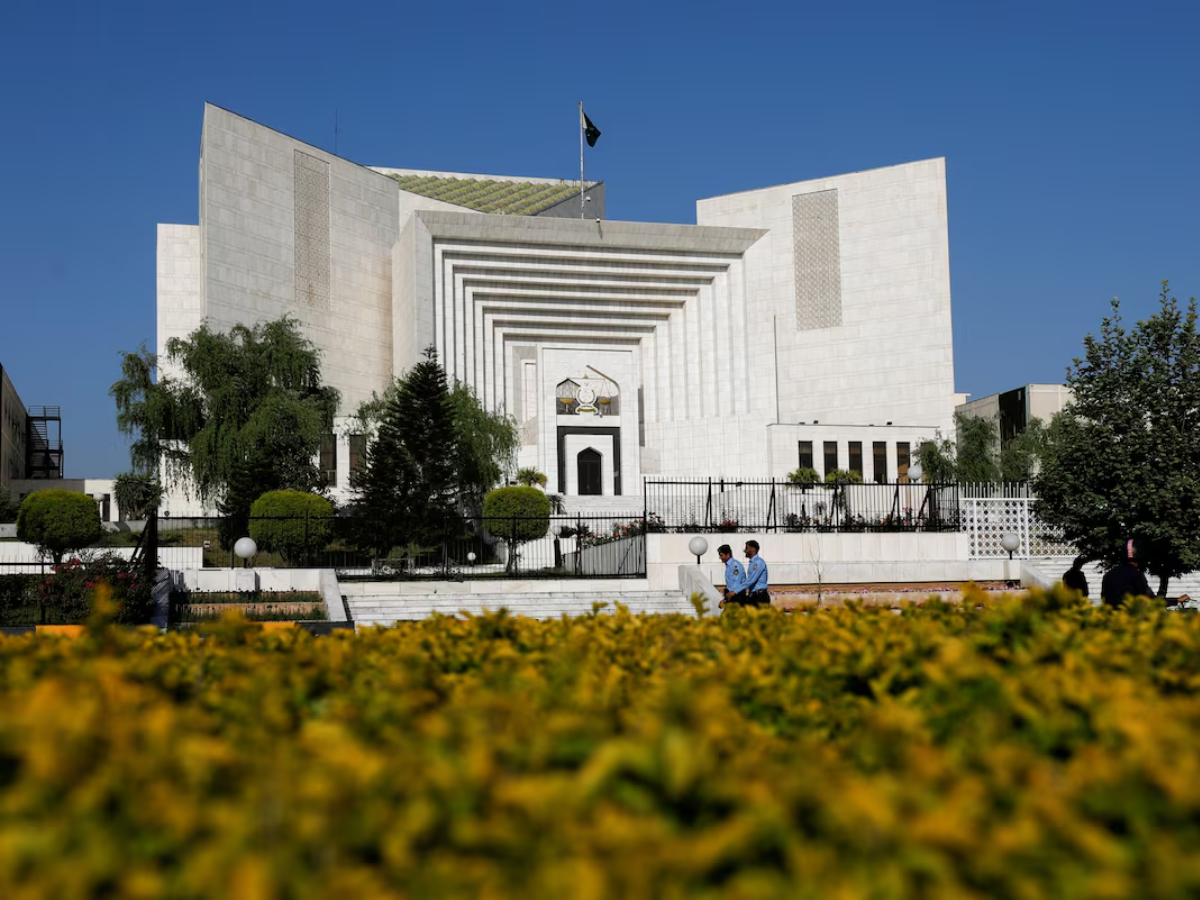
In a landmark ruling, the Supreme Court reduced the life imprisonment of a murder convict to 15 years and issued guidelines on personal information in police records. The decision emphasizes equality and human dignity for all citizens.
A three-member bench comprising Justice Hashim Kakar, Justice Salahuddin Panhwar, and Justice Ishtiaq Ibrahim announced the verdict, authored by Justice Hashim Kakar, addressing both criminal sentencing and social discrimination concerns. The judgment reinforces constitutional protections for all individuals regardless of background.
Read more : SC rejects distinction between ‘new Muslim’ and ‘Muslim’ –
The court ruled that describing anyone as “new” or “separate” due to religious conversion is unlawful, highlighting that human dignity is a fundamental right, not a privilege, in both law and society. It stressed equal respect for converts in every legal and social context.
Derogatory terms such as “Bhangi,” “Choora,” and “Masali” were condemned as offensive expressions rather than caste identifiers. The court noted that measuring a person’s worth based on occupation reflects a deep societal moral failure.
Read more : Supreme court approves rules 2025 amendments
The Supreme Court directed provincial Inspectors General of Police and Islamabad Police to ensure FIRs, arrest memos, recovery reports, and charge sheets do not include caste, community, tribal, or conversion labels. Exceptions require written justification from the investigating officer.
The case involved Arshad alias Billu, who murdered Muhammad Tufail in October 2004. The trial court had sentenced him to death, later commuted to life imprisonment, now reduced to 15 years. The judgment reiterates that equality and respect are fundamental rights guaranteed by the Constitution.