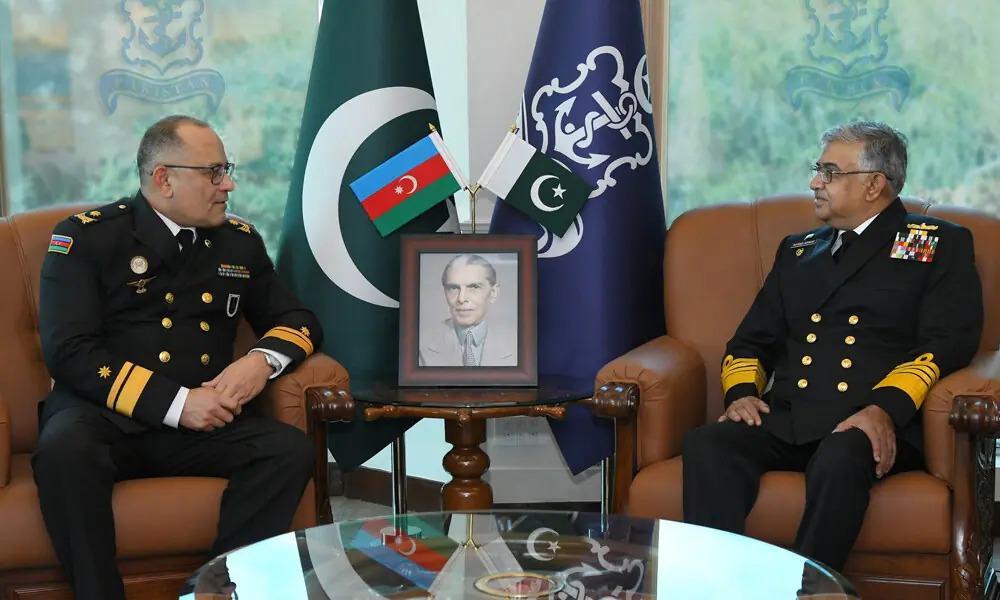
Pakistan and Azerbaijan have pledged to strengthen and diversify their bilateral defence cooperation during a high-level naval meeting in Islamabad. The two countries agreed to deepen collaboration across defence training, maritime security, and regional stability initiatives. Officials emphasized that the partnership reflects longstanding brotherly relations between the nations.
The understanding was reached during talks between Chief of the Naval Staff Admiral Naveed Ashraf and Commander Azerbaijan Naval Forces Rear Admiral Shahin Mammadov at Pakistan Navy Headquarters.
The leaders discussed matters of mutual interest, including regional maritime security challenges, joint exercises, and potential defence technology cooperation. A detailed briefing on Pakistan Navy’s ongoing projects and capabilities was also provided to the visiting dignitary.
Read more: PM, Azerbaijan official discuss ties
Both naval chiefs explored avenues for enhanced collaboration in naval training, defence modernization, and strategic coordination. Pakistan highlighted its experience in coastal security and joint maritime operations, while Azerbaijan expressed interest in expanding its naval capabilities and knowledge sharing. ISPR noted that the discussions would help both navies align their operational priorities for future regional challenges.
The visit included ceremonial honours, with a smartly turned-out contingent presenting the Guard of Honour to the Azerbaijani naval chief. Rear Admiral Mammadov also laid a floral wreath at the Shuhada’s Monument, paying tribute to Pakistan’s martyrs.
Read more: Azerbaijan to finalise investment in Pakistan’s oil, gas sector by Feb
The engagement follows recent diplomatic talks between Prime Minister Shehbaz Sharif and President Ilham Aliyev to expand cooperation across defence, trade, energy, and connectivity sectors.
This naval-level meeting signals a broader commitment to fortifying Pakistan-Azerbaijan defence ties. Analysts say such collaboration could enhance regional maritime security and foster joint military preparedness. Both countries plan to continue regular high-level exchanges, joint exercises, and strategic consultations in the coming months.