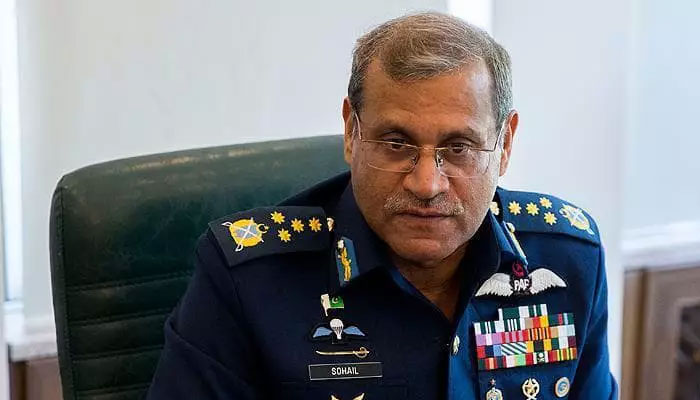
Former Chief of the Air Staff Air Chief Marshal (retd) Sohail Aman said India made a strategic miscalculation by underestimating Pakistan’s military capability during the escalation in May this year. Speaking at a seminar in Islamabad, he stated that Pakistan’s response defied Indian expectations and altered regional perceptions of power.
Read More: Pakistan ranked among top 15 global military powers
He said India assumed Pakistan would not respond decisively, an assumption that proved incorrect once a measured yet effective reply was delivered. According to him, the outcome challenged the narrative of India’s military superiority and highlighted Pakistan’s preparedness.
The seminar was organised by an overseas Pakistanis group led by Barrister Shehzada Hayat in collaboration with the Pakistan Ex-Servicemen Society (PESS). The event paid tribute to national martyrs, expressed solidarity with the armed forces, and marked the 149th birth anniversary of Quaid-i-Azam Muhammad Ali Jinnah.
Air Chief Marshal Aman dismissed claims that Pakistan’s response depended on external assistance, particularly from China. He noted that while Pakistan operates JF-17 aircraft, India also fields advanced platforms such as the Rafale, underscoring that outcomes depend on strategy and integration rather than equipment alone.
Highlighting the role of air power, he recalled Quaid-i-Azam’s emphasis on a strong air force as essential to national security. He added that modern warfare extends beyond aircraft and armour, relying heavily on support assets, technology, and coordinated capabilities.
The former air chief stressed the importance of education, institutional development, and indigenous innovation. He cautioned against involvement in external conflicts, urging a clear focus on national interests and inclusive development across all provinces.
Read More: ‘Pakistan ranked 22nd most powerful country’
Federal Minister for Investment Qaiser Sheikh said the gathering reflected Pakistan’s values of unity and resilience. He praised the armed forces and highlighted the role of overseas Pakistanis as economic contributors and goodwill ambassadors.