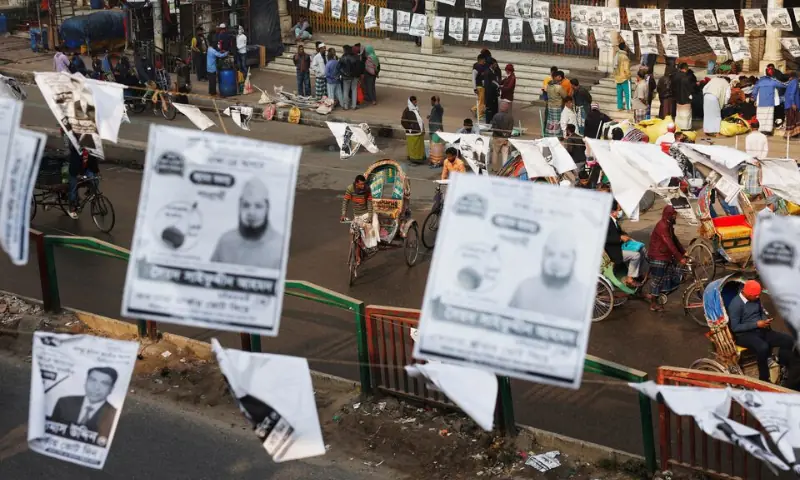
DHAKA: Bangladesh’s interim government announced it would send student leader Sharif Osman Hadi to Singapore for medical treatment after he was critically wounded in an assassination attempt. The shooting occurred on Friday as Hadi left a mosque in Dhaka, injuring his ear.
Read More: Bangladesh airlifts wounded leader after election shooting
Hadi, a senior leader of the student protest group Inqilab Mancha, is a candidate in upcoming elections and a vocal critic of former Prime Minister Sheikh Hasina. The attack came a day after authorities announced the country’s first elections since the 2024 student-led uprising that ousted Hasina’s government.
: https://t.co/aKziISwitn pic.twitter.com/D2Nu1nGnuC
— Punch Newspapers (@MobilePunch) December 15, 2025
Guess what?
He was able to flee from Bangladesh and run away to India. Currently, the attacker is in Guwahati, Assam, India.
Awami League leader Jahangir Kabir Nanok’s PS, Md. Masudur Rahman Biplob, is giving him shelter there.
India is undoubtedly our enemy!#IndiaOut https://t.co/v7mLubSicg pic.twitter.com/7yZDoianZd
— Nishir (@Fateh_E_Bangla) December 14, 2025
The interim government said an air ambulance and medical team were on standby to transport Hadi for advanced treatment. Hundreds of protesters gathered in Dhaka on Monday to condemn the attack, calling it an assault on political solidarity.
Inqilab Mancha joined supporters of Jamaat-e-Islami and the National Citizen Party (NCP) at the rally, highlighting the broad opposition coalition against Hasina’s ousted Awami League. Protesters warned that such attacks threaten democratic processes ahead of key elections scheduled for February.
Meanwhile, Bangladesh police arrested veteran journalist Anis Alamgir under the Anti-Terrorism Act for alleged “anti-state activities.” Authorities accused him and three others, including actress Meher Afroz Shaon, of promoting the banned Awami League and spreading propaganda through social media and talk shows.
The interim government had banned Hasina’s party in May under amendments to the Anti-Terrorism Act, a move criticised by Human Rights Watch as “draconian.” Rights organisation Ain o Salish Kendra condemned Alamgir’s arrest, stating that using anti-terrorism laws to curb freedom of expression violates democratic principles.
Read More: Students call for Nobel winner Yunus to lead Bangladesh after Hasina flees
The incidents underscore growing tensions in Bangladesh as the country prepares for its first elections since the student-led revolution, raising concerns over political violence and restrictions on free speech.