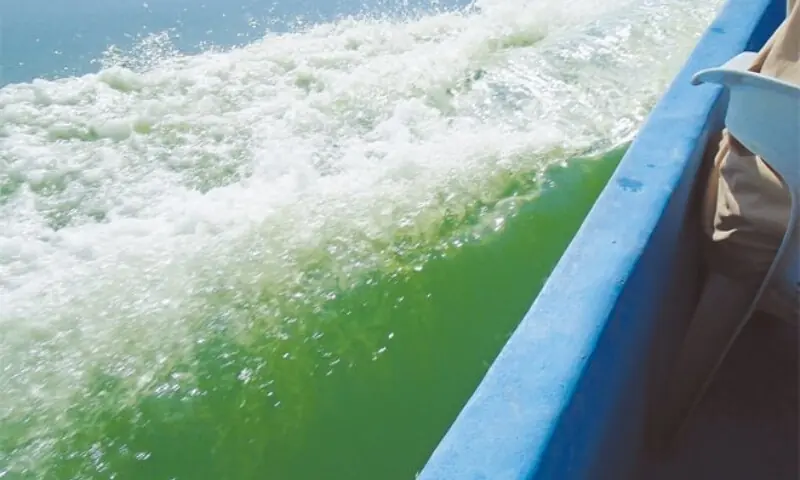
KARACHI: The recent greenish discoloration of seawater and night-time glowing along Karachi and parts of the Balochistan coast is caused by a naturally occurring bloom of Noctiluca scintillans, widely known as sea sparkle, the World Wide Fund for Nature-Pakistan (WWF-P) clarified on Wednesday. Officials said the phenomenon is non-toxic and not related to pollution or harmful algal blooms.
Read More: Arabian Sea low-pressure system at 985km distance from Karachi
WWF-P explained that the green hue is produced by the internal symbiont of Noctiluca, Protoeuglena noctilucae, which enables the organism to photosynthesize and grow rapidly. Although the organism itself is not green, its blooms can appear in green or orange shades depending on seasonal conditions and environmental factors.
WWF-Pakistan has clarified the reason behind the recent greenish colour of seawater and the glowing light observed at night along the coasts of Karachi and Balochistan — a phenomenon that had caused concern among fishermen and local communities.
Many people had assumed that the… pic.twitter.com/zPKLRTca2g
— The Express Tribune (@etribune) November 26, 2025
The organisation also highlighted that Noctiluca is naturally bioluminescent, causing the shimmering glow observed at night. Similar blooms have been documented along the coasts of Yemen, Oman, Iran, Pakistan, and western India, often spreading extensively depending on the season.
WWF-Pakistan has clarified that the recent sea discolouration and glowing night-time waters reported along Karachi and parts of the Balochistan coast are caused by a natural sea sparkle bloom, not pollution. The sea sparkle bloom in Pakistan continues to draw attention from… pic.twitter.com/XAfDLxevhb
— Times of Karachi (@TOKCityOfLights) November 26, 2025
Fishermen and coastal communities had recently reported unusual green waters during the day and glittering blue lights at night, leading to concerns about environmental hazards. WWF-P reassured the public that these events are part of natural seasonal patterns and do not pose a threat to marine life or human health.
Read More: Coastal development and its direct impact on Pakistan
Experts further noted that such blooms are temporary and generally decline as water temperatures and nutrient conditions change. The organisation encouraged local communities and authorities to monitor seasonal occurrences without unnecessary alarm while continuing to maintain general marine environmental safeguards.