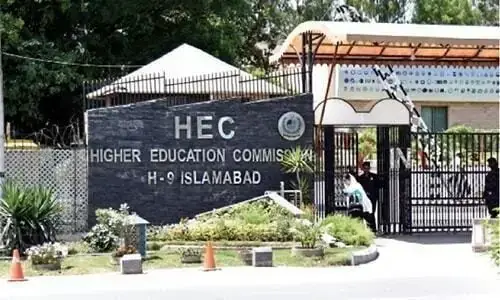
ISLAMABAD: The Higher Education Commission (HEC) is facing financial constraints due to a stagnant budget allocation, which experts warn could impede universities’ progress towards financial self-sustainability and force an increase in tuition fees, creating barriers for underprivileged students.
The education ministry’s reply to the National Assembly, presented by Minister Dr Khalid Maqbool Siddiqui, stated that federal recurring allocations for universities have remained stagnant since 2018-19, despite a significant rise in student enrolment, faculty, and staff. The HEC also noted a 35 percent cut in development grants—from Rs61.116 billion in FY2024-25 to Rs39.5 billion in FY2025-26—adversely affecting scholarship awards to deserving students.
Read More: HEC budget reduced to mere Rs25bn
Minister Siddiqui highlighted that, in addition to local scholarships, 27 foreign scholarship programmes are being offered in collaboration with international universities, allowing Pakistani students to pursue studies abroad at undergraduate, postgraduate, doctoral, and postdoctoral levels.
The ministry also addressed concerns over Pakistan’s low literacy rate. According to the 2023 Population and Housing Census, the literacy rate increased from 58.9% in 2017 to 60.7% in 2023, while the population grew at an annualized rate of 2.55%. Officials noted that although literacy is improving gradually, population growth continues to outpace it, posing challenges to national education targets.
Currently, HEC is functioning under ad hoc leadership. The appointment process for the executive director is near completion, with Prof Dr Ziaul Haq of Khyber Medical University set to assume the role shortly. Interviews for the HEC chairman position are scheduled next week, with around 30 shortlisted candidates.
Read More: PSDP 2025-26: Govt earmarks over Rs39bn for higher education sector