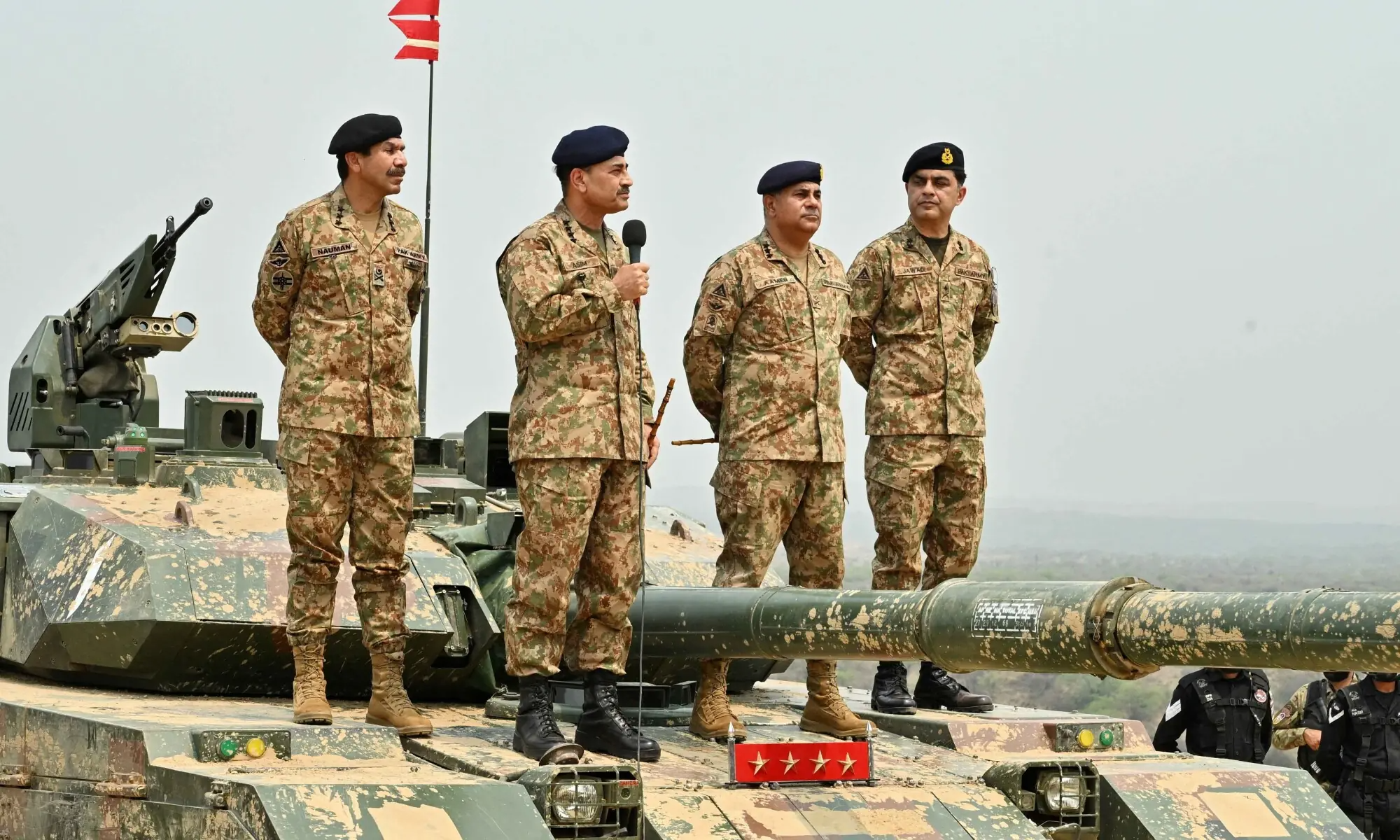
Pakistan has introduced the most sweeping transformation of its Higher Defence Organisation (HDO) since 1976, reshaping the architecture of national security through major constitutional and legislative changes. A newly amended Article 243 and revisions to the Army, Air Force, and Navy Acts now place unprecedented authority in the office of the Chief of the Army Staff (COAS), who will also assume the title of Chief of the Defence Forces (CDF). Supporters call this modernisation essential for meeting multi-domain threats, but critics warn it marks an alarming shift toward centralisation.
Read More: National assembly approves 2025 Army, Navy, and Airforce
The restructuring abolishes the post of Chairman Joint Chiefs of Staff Committee — a pillar of tri-service balance since its creation after the 1971 War. Its dissolution has raised concerns among retired officers and defence analysts who argue that global militaries strengthened joint institutions, not individual offices, when pursuing reform. By contrast, Pakistan’s new model channels “jointness” upward into a single role, potentially diluting the institutional space traditionally occupied by the Navy and Air Force.
Another major point of contention is the sweeping exclusion of judicial review in the appointment and extension of the Commander of the National Strategic Command (CNSC), a role overseeing nuclear forces. Legal experts say this ouster clause contradicts constitutional guarantees of equality and access to justice. Meanwhile, amendments to the Pakistan Army Act further consolidate the CDF’s influence, even over the delegation of his own powers — a shift that observers believe could shape all future four-star appointments.
Read More: Army Chief now Chief of Defence forces, term extended to five years
While the government insists the overhaul brings clarity and eliminates duplication, senior veterans argue that reforms should have strengthened neutral joint command structures rather than expanding the authority of a single office. Analysts warn that the new system risks becoming overly dependent on the personality and preferences of the CDF, reducing the autonomy of the other services at a time when maritime and airspace threats are rapidly evolving.