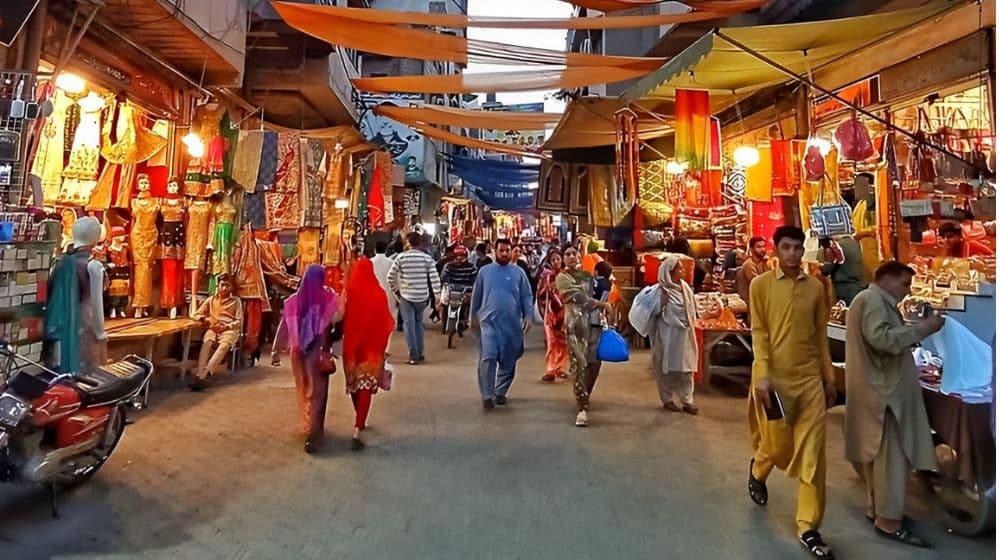
The Lahore High Court (LHC) has ordered a complete ban on all commercial activities every Sunday in Lahore as part of emergency measures to counter the worsening smog crisis gripping the city. Justice Shahid Karim issued the directive while hearing multiple petitions related to environmental pollution. The court also ordered the strict enforcement of a 10pm closure deadline for markets, restaurants, and marriage halls, stressing that the orders must be implemented effectively rather than remaining on paper.
During the proceedings, Deputy Commissioner Lahore Musa Raza informed the court that notifications had already been issued mandating early business closures. Justice Karim, however, emphasised that enforcement was crucial, warning that mere notifications would not improve the situation. The court further directed a director-level official from the Environment Department to attend each hearing to provide updates on progress and compliance with anti-smog directives.
Read more : LHC proposes Sunday shutdown to fight Lahore’s worsening smog
Lahore’s air quality continues to deteriorate, making it the world’s most polluted city once again this week. The city recorded a hazardous Air Quality Index (AQI) level of 372 on Tuesday morning, far exceeding safe limits for human health. Authorities say toxic smog has blanketed the region due to a combination of industrial emissions, vehicular pollution, and crop residue burning across Punjab and neighbouring Indian states. The situation has severely reduced visibility and triggered widespread respiratory problems among residents.
The court also reviewed reports on ongoing public works contributing to congestion and dust pollution. A commission member informed the bench that excavation near Khayaban-e-Firdousi was causing daily traffic jams, worsening air quality in the area. In response, the Water and Sanitation Agency’s (WASA) legal adviser, Irfan Akram, stated that the city’s sewerage network was being upgraded and assured the court that detailed progress reports would be presented in the next hearing scheduled for November 7.
Experts warn that the combination of cold weather, stagnant winds, and heavy emissions is trapping pollutants close to the ground, worsening the smog blanket across Punjab’s plains. Environmentalists note that this seasonal phenomenon is intensified by low-grade fuel use and post-harvest crop burning. Prolonged exposure to toxic air can lead to severe health issues such as heart disease, lung cancer, stroke, and chronic respiratory problems, highlighting the urgent need for strict and sustained policy action.
The court’s decision marks a significant step toward enforcing environmental discipline in one of the world’s most polluted urban centers. However, experts stress that long-term solutions—such as cleaner fuel standards, mass transit development, and industrial regulation—must follow to ensure that the fight against smog extends beyond temporary shutdowns and leads to real improvement in Lahore’s air quality.