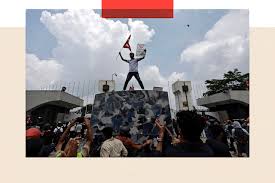
South Asian Youth Lead Digital Protests Amid Economic Frustration
Recent mass uprisings across South Asia, including Nepal, Bangladesh, and Sri Lanka, highlight a growing wave of youth-led political activism driven by economic hardship and digital mobilization. Analysts note that millions of young people, frustrated by unemployment and limited opportunities, are taking to social media and the streets to voice their demands, echoing patterns seen during the 2011 Arab Spring.
In Nepal, protests erupted after the government banned social media platforms, restricting a key space where young citizens rely on gig work and digital engagement. Similar movements have emerged in Pakistan, where online platforms have been central to mobilizing youth, including supporters of the Pakistan Tehreek-i-Insaf (PTI). However, despite widespread digital support, experts warn that these movements lack on-the-ground organization, leaving them vulnerable to state repression.

The trend raises concerns about the future of political change in the region. While youth digital activism provides a platform for expression, analysts argue that without structured grassroots movements and ideological unity, such efforts may not translate into meaningful policy reforms or systemic change. Observers also caution that external influences and elite co-option, reminiscent of “colored revolutions” in Eastern Europe and the Arab Spring, could further undermine the goals of these uprisings.
Experts emphasize that addressing the root causes of unrest—youth unemployment, economic inequality, and lack of political representation—is crucial for sustainable change. Until then, South Asia’s youth are expected to continue using digital platforms to challenge existing power structures, even as the path to lasting reform remains uncertain.