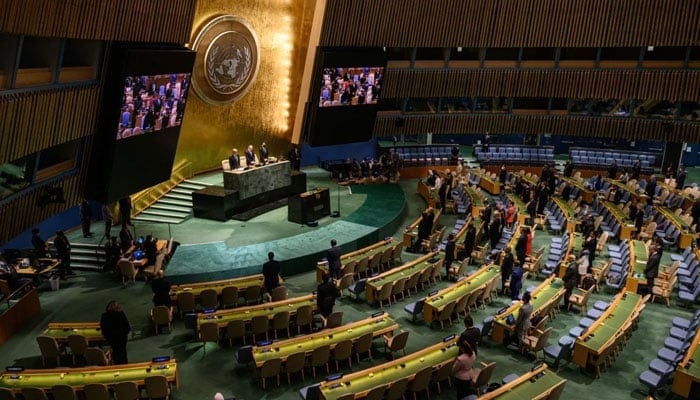
Pakistan is preparing to approach the United Nations Security Council (UNSC) to seek the designation of the Balochistan Liberation Army (BLA) and its armed wing, the Majeed Brigade, as terrorist organisations. This move follows a major diplomatic gain in Washington, where the United States recently declared the Majeed Brigade a terrorist group, having already listed the BLA in 2019. Officials believe this step could strengthen Pakistan’s stance and boost security forces’ morale ahead of intensified operations against the insurgent groups in Balochistan.
The Majeed Brigade, the BLA’s deadliest affiliate, is notorious for carrying out high-profile suicide attacks, a tactic rare among secular militant outfits. It has even deployed female suicide bombers against military convoys and installations. Pakistan’s position as vice-chair of the UNSC Counter-Terrorism Committee offers greater access to influential decision-makers, creating a strategic opportunity to push the case at the global forum. Diplomatic sources emphasise that this is the ideal moment to act after Washington’s decision.
However, experts caution that UNSC designation processes are slow and require extensive lobbying among member states. In the past, groups like Jaish-e-Muhammad, Lashkar-e-Taiba, and Tehreek-e-Taliban Pakistan faced similar listings only after years of negotiations. Delays often occurred due to political considerations, with some proposals facing opposition or vetoes. Pakistan’s diplomats acknowledge that a veto is possible this time too, particularly if any country seeks to balance ties with India.
At the same time, analysts note that India’s resistance to the move could harm its own narrative, as opposing the listing may be perceived internationally as indirect support for Baloch militants. Pakistan has long accused India of backing the insurgency in Balochistan, pointing to the capture of Indian spy Kulbhushan Jadhav as evidence. The BLA has previously expressed open support for India, even offering cooperation during heightened tensions between the two countries earlier this year.
The United States has pledged deeper counterterrorism cooperation with Pakistan, naming the BLA alongside ISIS-Khorasan and Tehreek-e-Taliban Pakistan as priority threats. A joint statement from recent counterterrorism talks highlighted the importance of coordinated strategies to tackle these dangers. This alignment suggests that Pakistan and the US may coordinate actions against these groups in the coming weeks, marking a potentially significant escalation in joint counterterrorism efforts.