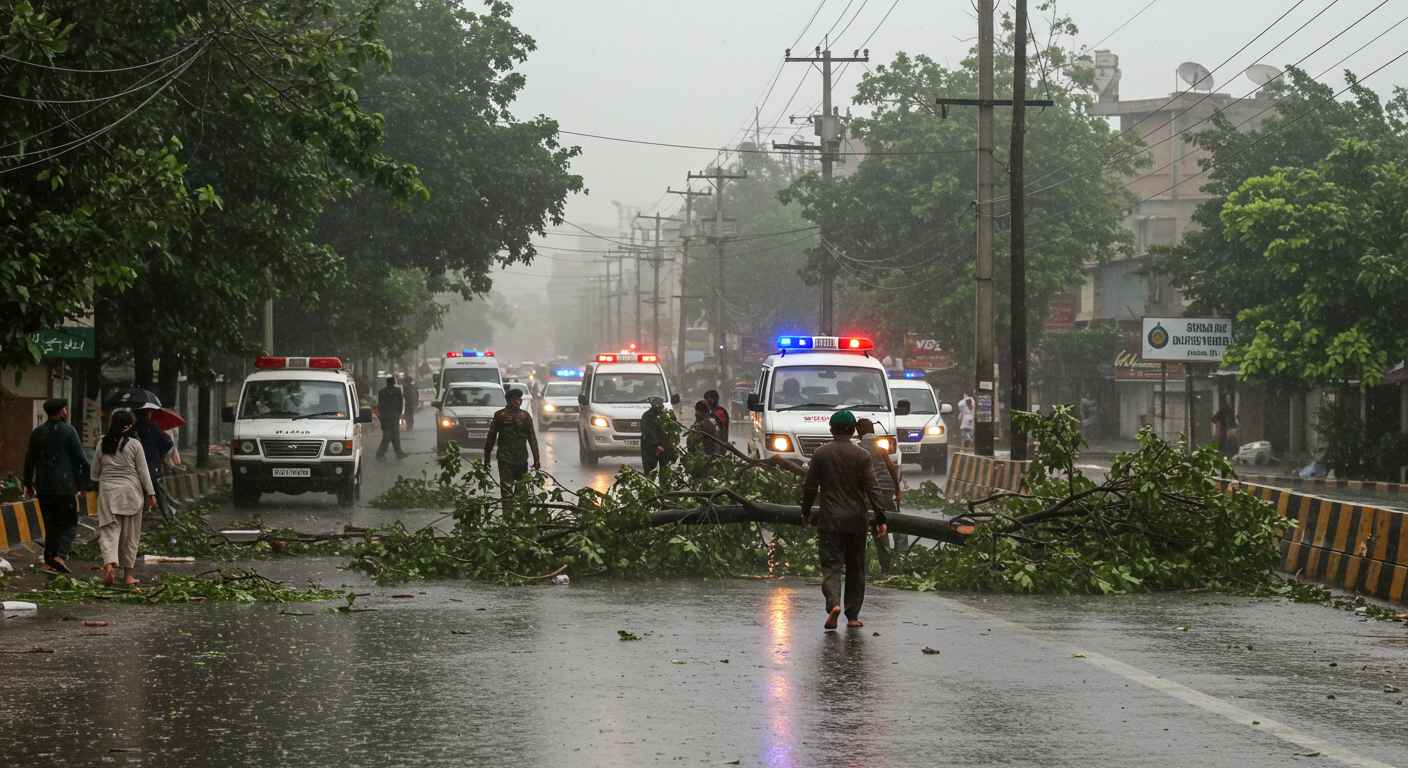
Widespread rain across Lahore and various cities in Pakistan has disrupted daily life, causing major power outages and flooding in low-lying areas. The downpour, which includes both light and heavy spells, is expected to continue until July 17, according to the Meteorological Department.
In Lahore, the rain brought some relief from humidity as the temperature dropped to a minimum of 27°C, with a maximum forecast of 33°C. However, the comfort was short-lived as several neighborhoods experienced power breakdowns. Many areas also reported poor drainage, leading to water accumulation on streets and roads.
Faisalabad saw a similar pattern, where rainfall and a light breeze turned the weather pleasant. But in Dera Ghazi Khan, Kamalia, and Kohlu, the rain was much heavier and caused severe flooding. Water entered homes and shops, particularly in Dera Ghazi Khan and Taunsa, forcing residents to take emergency precautions.
In Kamalia, major roads like Iqbal Bazaar and areas around the Assistant Commissioner’s office were submerged. Several electricity feeders also tripped, cutting power to entire neighborhoods. The local sewage system near Mamu Kanjan Road collapsed under the pressure, worsening the situation for residents.
Over 20 villages in eastern Taunsa have been submerged, leaving families stranded and searching for safer ground. Although local authorities claim to have emergency plans in place, many residents are hesitant to leave their homes. Floodwaters have blocked roads, leaving people and animals trapped.
Meanwhile, in Khyber Pakhtunkhwa and Gilgit-Baltistan, heavy rains are expected in several districts, raising the risk of flash floods and landslides. In contrast, Sindh and Balochistan remain hot and humid, though light rain may fall in cities like Sukkur and Larkana. Authorities have urged the public to stay alert as the weather continues to challenge many parts of the country.