

Once a Persian speaker was asked about the cause of his ecstasy, he said: “We are all coming nigh to destruction.” His ecstasy filled with the love of God at one hand compelled him to fear God and on the other hand made him believe in the mortality of man as human beings are believed to be the travelers in this mortal world, a concept relatively derived from the Sufi doctrine. Robert Browning’s Love among the ruins complements this Persian aphorism. Browning in the poem while standing at the site harks back to the glory of a fallen city that once was crowded with people and famous for its distinctiveness but now it lives through a ‘single turret’. Browning ends the poem with a message that among this destruction only love is immortal, the possible outcome of ecstasy.
Interestingly, in Quran Allah Almighty also insinuates the destructive nature of humans who have been at loss throughout history. God hints about it in one of the most revolutionary sura of the Quran, the 103-sura Al-Asr. In this short chapter, God not only talks about the failures of human efforts but also gives pleasant news to those who manifest belief, truth and establish a just system with their efforts for the collective benefit. So any system that work for the nourishment of handpicked individuals has been discouraged in the holy Quran.
As of systems, unlike capitalism, which is in rapid decline as it has turned out over time as an anti-workers economic model, due to its focus on the individual’s progress, as predicted by Marx that capitalism will itself trigger a proletarian revolution as it maliciously exploits the labor; especially, the way it has increased poverty globally and forced the people to live from hand to mouth, it is important to talk about Marxism and Islam as both talks about the collective welfare of people and favor public ownership.
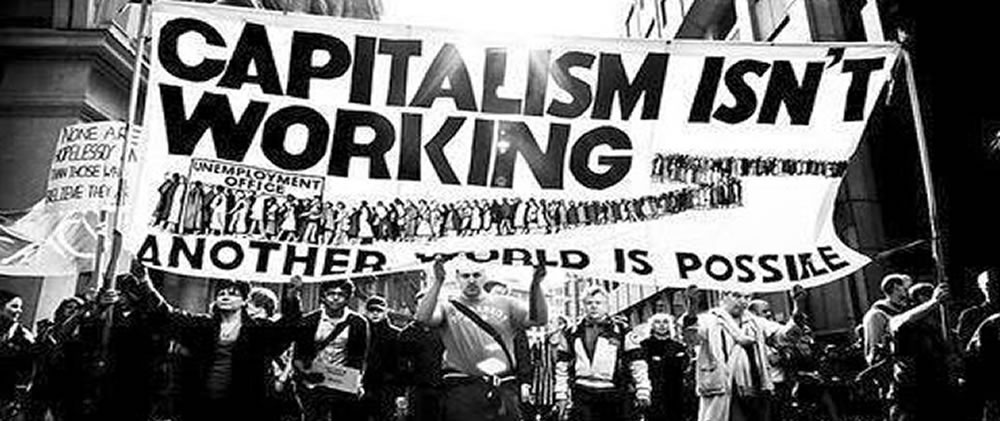
But before highlighting the similarities and departures in both schools of thought, it must be mentioned that the name Marxism has earned in the non-western societies is not pleasing as it is often cited as ‘anti-Islam’ theory by the religious figures. That’s why most of the literature that has been written against Marxism finds its premises on religion. Now the question is it really against the religion or particularly Islam? If yes then how? If not, then how can we reconcile Marxism with Islam? It is an attempt that I have named as a Pakistani reading of Marx or indigenizing Marxism.
It is also relevant here to discuss that why there is any need to indigenize Marxism? Why can’t we accept it as it is? In the eastern or particularly Muslim societies, Marxism is considered as a ‘western theory’ which is of course a genuine objection. Marxism was originated in the mid of 19th century in Europe, that’s why all its analysis is Eurocentric. Although Marx had written various articles on India during its colonization by the British, that were published in various e-magazines, his reliance was mainly on the information provided by the English newspapers. However, in response to this allegation of being western, some Marxists argue that Marxism is not a western theory. It was there even before Marx just found it as the gravitational force was present even before Newton just discovered it. So labeling Marxism as western is malicious propaganda by those who oppose it.
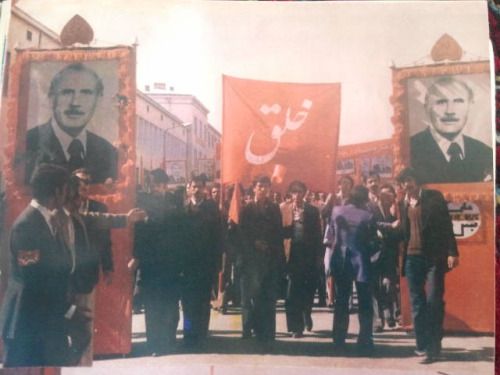
Anyhow, if we look back in the annals of history, the fact is that any Marxist movement in the Muslim societies has come to nothing. If few parties successfully conducted a communist revolution, they failed to sustain it for long. The more evident example is of PDPA (People’s Democratic Party of Afghanistan), a Marxist party in Afghanistan founded by Babrak Karmal and 27 others at the house of Noor Muhmmad Taraki as leftists gathered at the house of Dr Mubashir Hassan to set up a new party came to be known as Pakistan People’s party, a pseudo-socialist party. However, Babrak Karmal and his party did some radical changes in Afghanistan after the revolution without understanding the decades-long culture of Afghanistan and their association with religion. These radical changes caused insurgency in a few parts of Afghanistan and taking benefit of the situation capitalist America strengthened those miscreants to topple the communist government. Likewise, the Tudeh Party in Iran founded by The Fifty-Three also failed to start a revolution and had to stand with Imam Khomeini to overthrow Muhmmad Raza Shah Pahlavi’s monarchy. Surprisingly in Pakistan, the situation is no different as the Marxists, who are already divided into fractions, never find space in the hearts of Pakistani people at large just because of their lack of regional understanding and sole reliance on the western orientation of Marxism. And hence even after the passing of 74 years, Pakistani communists never thought about these loopholes and became victims of the foreign conspiracies against Marxism.
So it’s need of the hour to have a Pakistani understanding of Marxism. Dr Ali Shariati in his book The History of Civilizations categorizes six fundamental components that play a fundamental role in shaping the social identity. These components include religion, culture, history, past civilization, education and tradition. So anything that we borough from the other countries will be first made compatible with these factors. Otherwise, it will never be honored by the indigenous people.
(To be Continued)
The writer is a political and investigative journalist.