Growing up in the West, Pakistan was the smell of dadi’s (grandmother) food, the sound of baba’s (father) music, and a source of constant bad news.
But when the Asia Society hosted the Lahore Literary Festival this past Saturday in New York, I, like many of us born abroad, was introduced to a Pakistan that is unfamiliar, resilient, and hopeful.
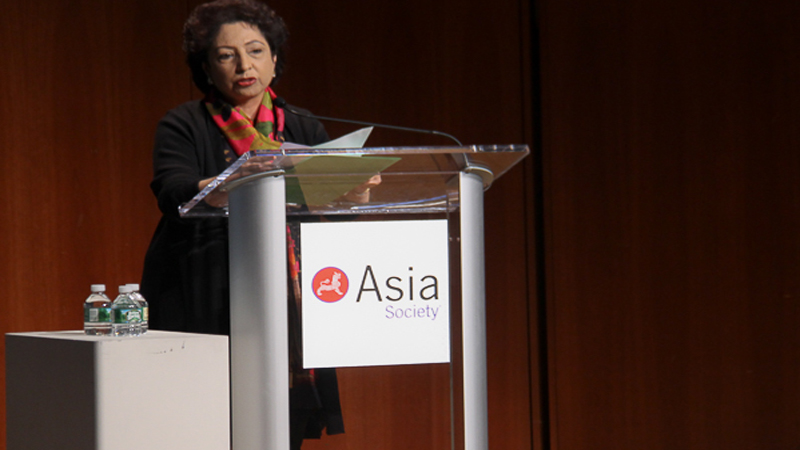
In her opening remarks, Pakistan’s Permanent Representative to the United Nations Maleeha Lodhi said that in a world “afflicted with tension, confrontation, and conflict,” culture serves as a “powerful bridge” that allows us to “achieve a greater understanding of the other and pursue our shared vision, ambition, and aspiration for peace and harmony.”
With her message still echoing through the hall, the day commenced with a series of panels exploring Lahore’s dynamic art scene. The first panel highlighted the city’s Mughal aesthetics and its impact on contemporary artists.
Later, authors Maha Khan Phillips, Kiran Desai, H.M. Naqvi, and Sabyn Javeri engaged in a fruitful discussion on how South Asian literature is healing and humanising a region racked by crime and volatility.
Responding to a question, the panelists pondered upon whether writers now have a greater responsibly to shape political consciousness in a time when fake news is abundant and everyone is telling their story.
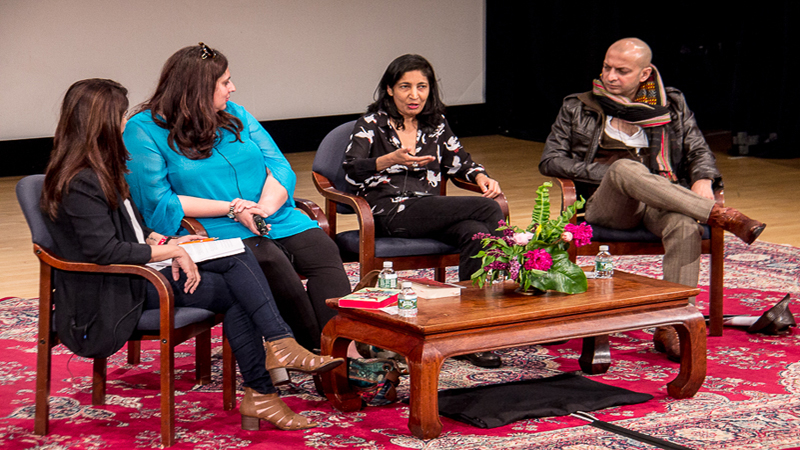
However, touching upon the issue of censorship and polarisation, they admitted that in “our parts of the world, writing may be freeing but writing is not free – and there’s no way to escape that.”
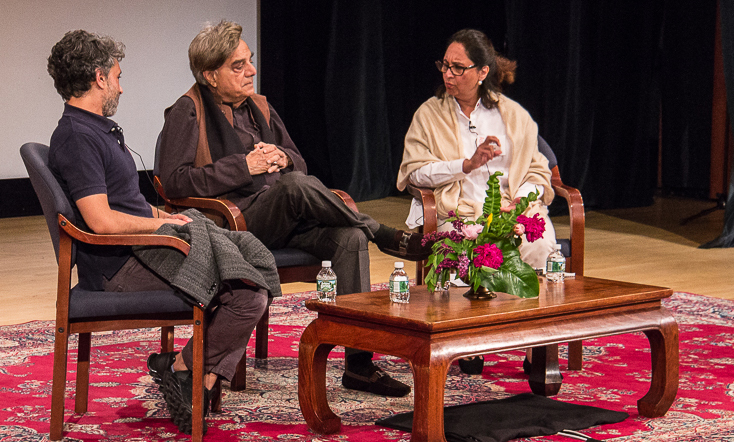
Speaking on what makes Lahore extraordinary, Aga Khan Award-winning architect Nayyar Ali Dada bemoaned that now, “we have barbed wires, high walls, and barriers, a gift of the Afghan War. We have mutilation, a gift of modern commercialisation.”
On Afghanistan, former Senior Advisor to the Special Representative for Afghanistan and Pakistan in the U.S. Department of State Barnett Rubin remarked that, “achieving peace was not the reason the United States went into Afghanistan – they went in to punish the terrorists and those who caused harm to the US.” This, however, enraged the crowd.
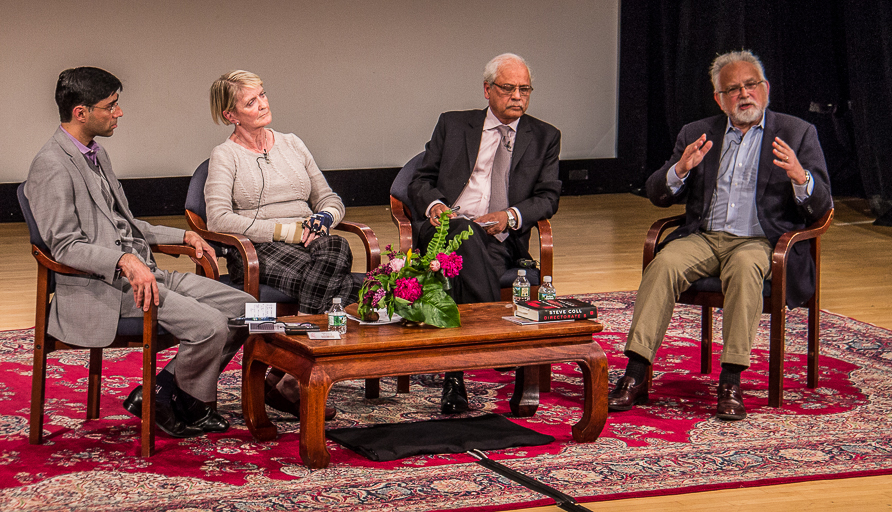
During the question and answer session, one attendee claimed how “all the crooked people around the Middle East were brought into Pakistan to help the Americans fight the Russians.”
Associate Vice President of the Asia Center at the United States Institute for Peace Moeed Yusuf initially asked the questioner to sit down but when she applauded Ambassador Lodhi for her role in “preventing Pakistan from being declared a ‘Terrorist State,’” the crowd cheered and he relented.
Once the cheers subsided, Yusuf reflected that, “no policymaker has ever given me a solution to Afghanistan in which Pakistan and the US don’t work together.” He also emphasised how central the relationship was to stability in the region.
After a riveting keynote address by the infamous Ayesha Jalal on “Liberalism and the Muslim Question,” she joined Daily Times Editor Raza Rumi, Pakistani Representative for Human Rights Watch Saroop Ijaz, and NPR journalist Bilal Qureshi for a forward looking discussion on “Pakistan at 70 – Has Pakistan come of age?”
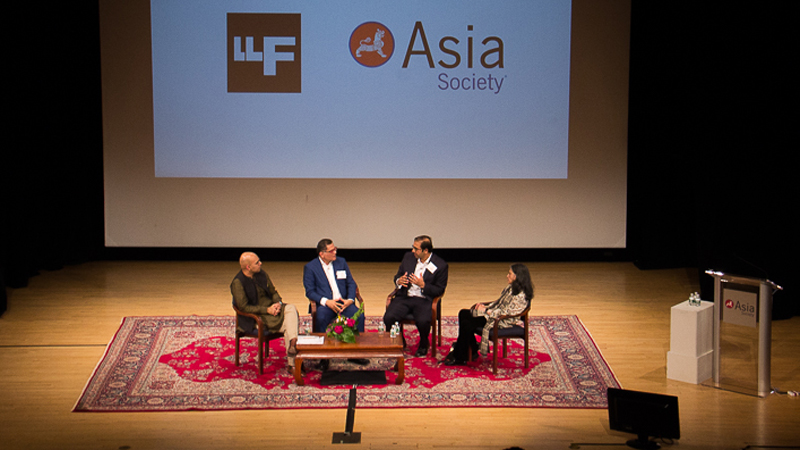
Today, Rumi sees a “new Pakistan” that is physically and ideologically different from the Pakistan of 47 and 71, thanks to the rising middle class, the increase in access to education, the ongoing cultural renaissance and, most importantly, the youth.
The country’s population is over 200 million, the average age is around 24 and the youth, he says, are part of a “demographic revolution” that is trying to “set a course for the future.” This, Rumi added, will help the nation “come of age.”
Also, on the issue of censorship, Rumi sees change. “Unlike the 70s and 80s, we now have the new media which is enabling people to express themselves.” He added that “if a movement is being censored or blacked out, we go on Facebook live and that is becoming difficult for the state to negotiate.”

But despite the optimism, the panelists acknowledged the nation’s remaining challenges.
This year, Pakistan lost her foremost human rights defender Asma Jahangir. “People like Asma don’t come every decade or to every nation,” Saroop Ijaz remarked. “Because she took up blasphemy cases, none of us (lawyers) had to – and we could do that with a clear conscious” but now that she’s gone, there is a vacuum and the democratic struggle must be built by a new movement of people, institutions, and systems.
Ayesha Jalal, who was one of Jahangir’s closest friends, said that those who seek to fill Jahangir’s shoes should engage in politics rather than just “talk about the good ideas of human rights.”
After a short break, the festival concluded with a two-hour Qawalli session that saw the room exceed capacity as people tried to sneak in for a peek of Pakistan.
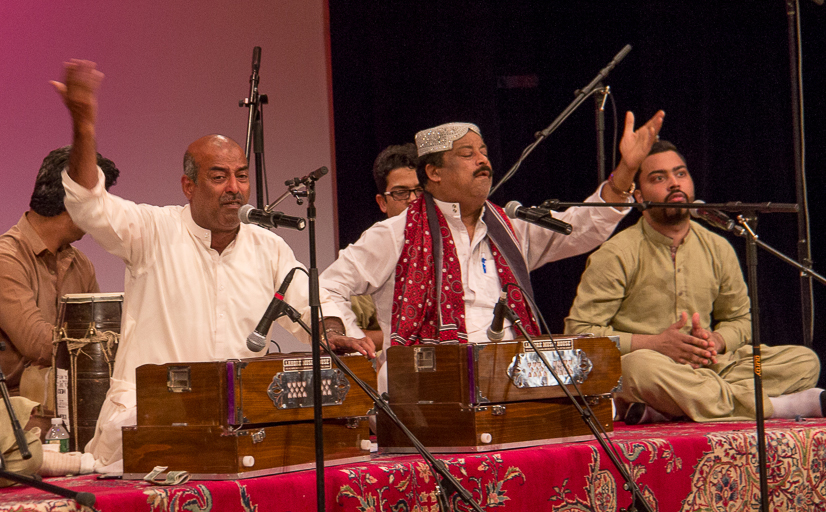
On the day, I felt more Pakistani than all the times I visited my grandparents or practiced my Urdu watching Bollywood films.
And as I stepped back onto the streets of New York City, I found myself wondering: “When will I go to Pakistan next?”
The writer is studying at Boston University and can be reached at [email protected] or on Twitter @Ibrahim_Rashid1