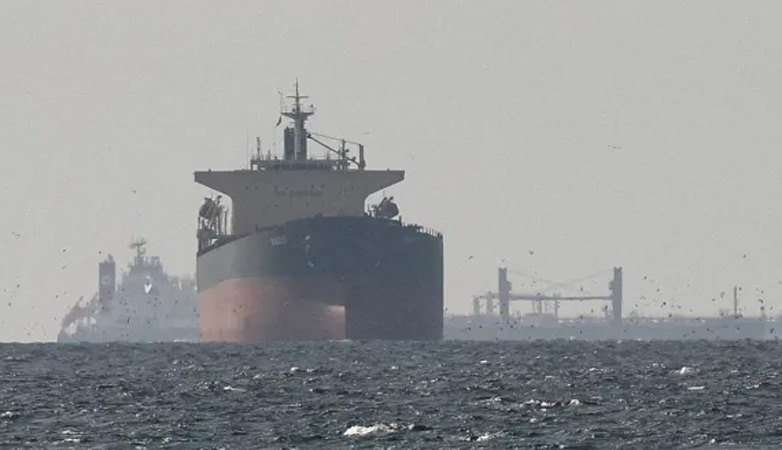
 NATO allies and other Western nations pushed back Monday on US President Donald Trump’s demand that alliance members help reopen the Strait of Hormuz, the critical conduit for crude oil that Iran has effectively closed.
UK Prime Minister Keir Starmer said London was working with allies to craft a “viable” plan to reopen the waterway, but ruled out a NATO mission, while Berlin insisted it was “not NATO’s war”.
Polish Foreign Minister Radoslaw Sikorski noted the country’s president had already “ruled out the participation of the Polish Armed Forces in this operation” as Spanish Defence Minister Margarita Robles said Madrid was “absolutely not” mulling a military contribution.
The lukewarm response from European capitals came after Japan and Australia voiced similar sentiments earlier Monday, with Canberra noting it would not be sending a navy ship to the Strait of Hormuz.
Trump over the weekend called on countries including China, France, Japan, South Korea and Britain to send warships to escort tankers through the strait, warning refusing would be “very bad for the future of NATO”.
Oil prices have jumped after the strait was closed and Monday remained above $100 as the Iran war moved into a third week. The volatility further underlined the importance of ensuring safe passage for tankers through the vital transport route.
Starmer, who has faced stinging criticism from Trump over Britain’s refusal to join the US and Israel in offensive attacks on Iran, told reporters he had discussed the waterway with the US leader Sunday.
“We’re working with all of our allies, including our European partners, to bring together a viable collective plan that can restore freedom of navigation in the region as quickly as possible and ease the economic impacts,” he said in Downing Street.
“Let me be clear: that won’t be, and it’s never been envisioned to be, a NATO mission,” Starmer said, while also stressing Britain “will not be drawn into the wider war”.
“That’ll have to be an alliance of partners,” he added of any Strait of Hormuz mission.
In Berlin, German Chancellor Friedrich Merz’s spokesman said the conflict has “nothing to do with NATO”.
“NATO is an alliance for the defence of territory” and “the mandate to deploy NATO is lacking” in the current situation, Stefan Kornelius told reporters.
Meanwhile German Defence Minister Boris Pistorius said there would be “no military participation” from his country, but added the country was prepared to support diplomatic efforts “to ensure safe passage through the Strait of Hormuz”.
Following Trump’s demand for military support, some other European countries sought to appear open-minded while remaining non-committal.
“We did not want this war. From day one, we have called for de-escalation,” Denmark’s Foreign Minister Lars Lokke Rasmussen told Danish media in Brussels before an EU foreign ministers’ meeting.
“That said, I believe we need to keep an open mind and look at how we can contribute,” he said, describing the situation as “very, very serious”.
Lithuanian Foreign Minister Kestutis Budrys told reporters in Brussels “NATO countries should consider” a US request for help but cautioned “we need to see the entire operational environment and the capabilities with which we could contribute”.
His Estonian counterpart struck a similar tone, saying Tallinn was “always ready for discussions with the US, including now regarding the situation in the Strait of Hormuz”.
“However, this primarily means we need to understand the US’ objectives and plans in the ongoing conflict,” Markus Tsahkna added.
On Monday, United States President Donald Trump said on Monday that over 7,000 Iranian targets were hit as the conflict between the two countries drags on.
Trump was briefing reporters on the latest on Iran ahead of a lunch meeting with board members of the Trump Kennedy Centre. He said the US military operations in Iran had continued “in full force” over the past few days, adding that the US had stuck more than 7,000 targets across Iran.
“They have been literally obliterated,” the US president said.
“Since the beginning of the conflict, we’ve struck more than 7000 targets across Iran. And these have been mostly commercial and military targets. We’ve achieved a 90% reduction in their ballistic missile launches and a 95% reduction in drone attacks.” He added that the US military hit three missile and drone manufacturing sites on Monday.
Meanwhile, Iran’s Revolutionary Guards said they would target US industries in the region in the coming hours, asking people to evacuate nearby areas, Tasnim news agency reported.
“We warn the failed American regime to evacuate all American industries in the region, and we call on the people of the areas surrounding the industrial plants in which the Americans are shareholders to evacuate those areas so that no harm comes to them. These industries will be attacked and hit in the coming hours,” the Guards said in a statement carried by the state media.