)
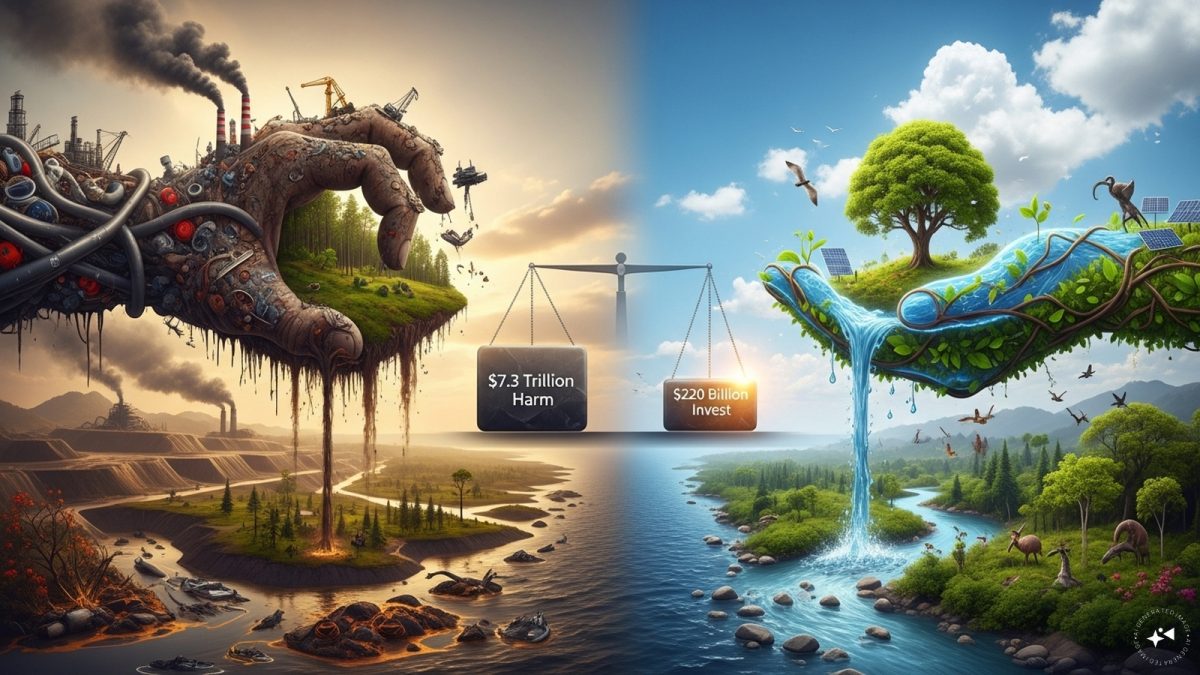
The world spends nearly $30 destroying nature for every $1 invested in its protection, according to a new report by the United Nations Environment Programme (UNEP), highlighting a deep imbalance in global financial flows that threatens ecosystems and economic stability.
Read More: Pakistan sends dossier to UN on ‘eco-terrorism’ by India
The State of Finance for Nature 2026 report estimates that total nature-negative finance reached $7.3 trillion in 2023. Of this amount, $4.9 trillion came from private sources, largely concentrated in sectors such as energy, utilities, industrials and basic materials. Public environmentally harmful subsidies, mainly supporting fossil fuels, agriculture, water, transport and construction, accounted for the remaining $2.4 trillion.
While funding to protect nature is growing, much more is invested in destroying it.
UNEP’s latest report calls on governments and the private sector to increase investment in protection and restoration: https://t.co/UtcPYjGtxA pic.twitter.com/6xt8wchfkV
— UN Environment Programme (@UNEP) January 22, 2026
In contrast, global investment in nature-based solutions (NbS) totalled just $220 billion in 2023. Nearly 90 per cent of this funding came from public sources, reflecting growing government support but limited engagement from private investors.
UNEP warned that continued dominance of nature-negative finance is eroding ecosystems, increasing economic risks and undermining human well-being. The report noted that almost half of global economic activity is significantly dependent on nature, yet financial systems continue to prioritise investments that degrade natural capital.
The report called for a fundamental shift in global finance, urging governments and financial institutions to phase out environmentally harmful subsidies and redirect capital toward nature-positive investments. According to UNEP, scaling up NbS financing could deliver strong economic returns, reduce exposure to climate and environmental risks, and improve long-term resilience.
To meet international commitments under the Rio Conventions on biodiversity, climate change and land restoration, investment in NbS must rise to $571 billion annually by 2030 — more than two and a half times current levels. At the same time, harmful financial flows must be gradually repurposed or eliminated.
Read More: Urban canopy trees: Nature’s defense against polluted skies
While funding for nature-based solutions has increased in recent years, the report stressed that current levels remain far below what is required to halt environmental degradation and meet global sustainability goals.