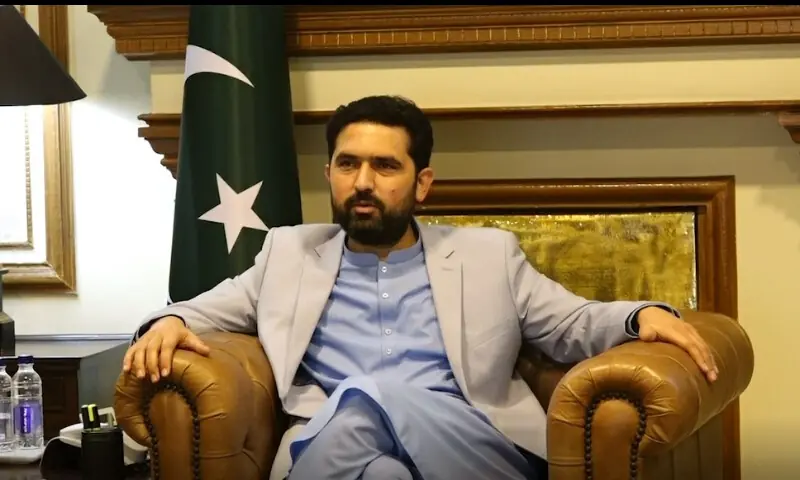
Khyber Pakhtunkhwa (KP) Chief Minister Sohail Afridi on Monday reaffirmed the provincial government opposition to military operations in the region, warning that decisions taken behind closed doors and imposed on the province could raise serious concerns among stakeholders.
Afridi emphasized that issues in KP should be resolved through political, social, and consultative processes rather than the use of force, echoing the unanimous stance taken during a “grand peace jirga” held in November last year.
Read More: Security forces kill nine terrorists in two separate KP operations
The jirga, convened at the KP Assembly, issued a 15-point declaration underscoring that a military operation was not a solution to the province’s challenges. Afridi stated that sustainable peace required a comprehensive policy including all institutions, political and religious parties, tribal and Pashtun elders, and community leaders, ensuring that decisions were made through mutual consultation. He added that the provincial government would not allow any military operation under any circumstances.
In addition to security and peace measures, the KP cabinet approved several initiatives across governance, social welfare, health, and education. Key decisions included establishing special courts to resolve property disputes involving overseas Pakistanis, releasing Rs900 million for the desilting of irrigation channels, and funding youth engagement programs such as the Grand Kurram Youth Convention.
Read More: Tirah elders agree to vacate homes ahead of military operation
Financial approvals were also granted for health sector projects, including structural heart and cardiac transplant programs, replacement of hemodialysis machines, and continuation of services for key hospital staff.
The cabinet further endorsed policies for environmental protection, transportation for children under the Zamung Kor initiative, and procurement of vehicles for national parks, wildlife, and merged district forest staff. Afridi highlighted that inclusive consultation and transparency were essential to restoring public trust and ensuring long-term peace in KP, contrasting sharply with decisions imposed without stakeholder involvement.